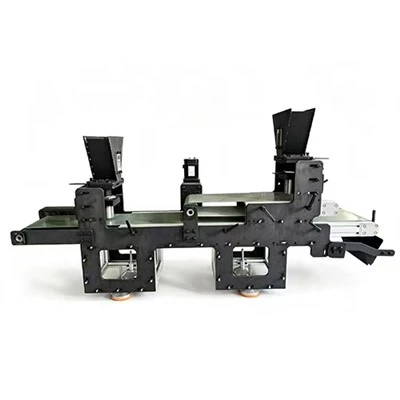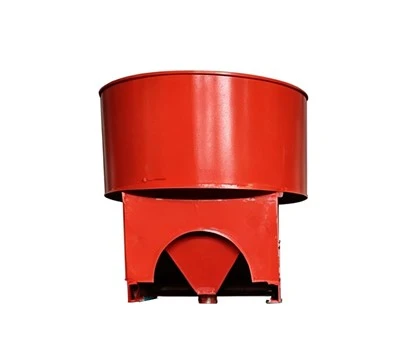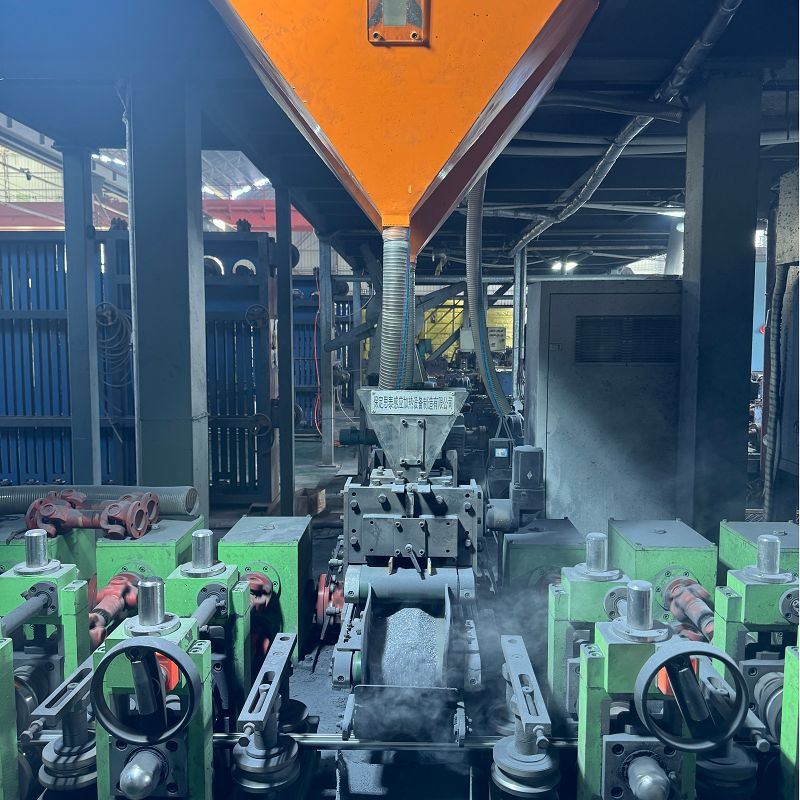
Baoding Sitai Induction Heating Equipment Manufacturing Co., Ltd. is one of the leading manufacturers and suppliers of cored wire powder filling machine in China. We are committed to providing high quality customized products with competitive price. Welcome to contact us for quotation.
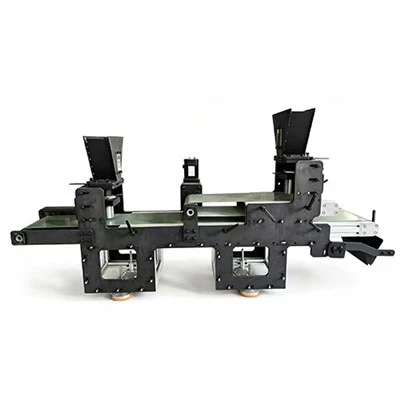
Powder filling is one of the most sensitive stages in metallurgical cored wire production. Variations in powder flow can change the mass per meter and create unstable downstream forming conditions. The filling machine therefore has to coordinate material storage, controlled discharge and production-line speed. Depending on the core material, SiTai can evaluate suitable dosing architecture, hopper geometry, agitation or anti-bridging measures and line-control logic. The final design is confirmed after the customer's powder characteristics and target filling rate are reviewed.
Key Features
- Continuous powder feeding for metallurgical cored wire manufacturing.
- Dosing system configured according to powder density, particle size, flowability and required mass per meter.
- Synchronized feeding logic to match the roll-forming line speed and reduce filling fluctuations during acceleration or deceleration.
- Hopper and discharge design intended to reduce bridging, rat-holing and irregular powder flow where applicable.
- Adjustable feeding rate for product changeover and process tuning.
- Compact installation above or adjacent to the forming section, depending on line layout.
- Optional monitoring and alarm logic can be integrated into the line control system according to project requirements.
- Contact surfaces and enclosure details selected according to material characteristics and cleaning requirements.
Typical System Configuration
|
Module / Component |
Function |
|
Storage Hopper |
Provides controlled storage of the core material before dosing. |
|
Dosing / Feeding Unit |
Meters powder or granules into the open formed strip at the required rate. |
|
Discharge Guide |
Directs material into the correct filling position with minimal spillage. |
|
Agitation / Flow Assistance |
Selected only when required by the powder's flow characteristics. |
|
Drive System |
Provides adjustable and repeatable feeding output. |
|
Control Interface |
Coordinates powder feed with the cored wire line speed and operator settings. |
|
Support Structure |
Positions the filling system accurately relative to the forming mill. |
Applications
- CaSi and other metallurgical alloy cored wire
- FeSi, FeTi and ferroalloy powder cored wire
- Inoculant and treatment-wire production
- Special metallurgical additive wire, subject to material review
-
New cored wire lines and powder-feeding retrofits
Technical Parameters
Final technical parameters are confirmed according to the customer's product drawing, material, required output and factory conditions. The table below defines the main engineering inputs without creating unverified fixed claims.
|
Parameter |
Configuration / Required Data |
|
Core material |
Powder or granular metallurgical material; engineering review required |
|
Powder bulk density |
Customer to provide |
|
Particle size distribution |
Customer to provide |
|
Target filling mass per meter |
Customer to provide |
|
Feeding method |
Selected according to material behavior and accuracy requirement |
|
Hopper capacity |
Project-specific |
|
Line speed interface |
Matched to production line |
|
Control method |
Standalone or integrated line control |
|
Electrical standard |
Customized for destination-country power supply |
Why Choose SiTai
Equipment is designed around the actual powder and wire process instead of using a generic feeder.
01
Close coordination with the roll-forming section helps maintain consistent filling position and stable production.
02
Custom dosing strategy can be selected for difficult-flowing powders after material data are reviewed.
03
Integration support is available for complete cored wire lines or filling-system upgrades.
04
Project documentation can define the material data and acceptance conditions before manufacturing.
05
What We Need to Prepare a Technical Proposal
For a fast and accurate proposal, please send the relevant product drawing and the following information: Core material, Powder bulk density, Particle size distribution, Target filling mass per meter, Feeding method, Hopper capacity. Existing-line photos, layout drawings and destination-country electrical requirements are also helpful for retrofit or integration projects.
Request a Custom Solution
For a Cored Wire Powder Filling Machine proposal, provide the powder composition, particle-size range, bulk density, target filling mass per metre, strip channel geometry and line-speed range. The feeder concept is then matched to the actual material rather than selected from a generic capacity figure.
- SiTai powder feeding equipment for metallurgical cored wire
- SiTai industrial powder metering equipment
- customized cored-wire powder filling equipment
Frequently Asked Questions
Q: How is the required powder flow converted into a mass-per-metre target?
A: Start with the specified core weight per metre of finished wire. At a known line speed, that value can be converted into the feeder's mass-flow requirement. The calculation is only the starting point: the result should be verified by collecting a measured length of wire or a timed powder sample and weighing it. Calibration is repeated after a meaningful change in powder bulk density, feeder geometry or production speed range.
Q: Which powder properties most strongly affect feeder selection?
A: Bulk density, particle size, particle-size spread, moisture, flowability and the tendency to bridge or compact are all relevant. Two powders with the same chemical composition can behave differently if their physical form changes. Before deciding between belt, screw or another metering principle, the actual material should be reviewed and, where necessary, tested rather than selecting a feeder solely from the alloy name.
Q: Why can a hopper be full while the wire is still underfilled?
A: A visible material level does not guarantee that powder is reaching the metering device consistently. Bridging above the outlet, rat-holing, packed material, a blocked transition or an incorrect agitator setting can interrupt flow. The diagnostic sequence should follow the material path from hopper to strip and compare feeder output with the line-speed signal. This avoids treating a material-flow problem as a control-system error.
Q: How often should the filling machine be calibrated?
A: Calibration is recommended when a new powder batch has noticeably different physical properties, after maintenance on the metering mechanism, after a significant recipe change, or whenever mass-per-metre checks show a systematic shift. The interval can then be adapted to production experience. A short, repeatable verification procedure is usually more useful than relying on a fixed calendar interval regardless of material changes.
Q: What happens to powder dosing during a line stop?
A: The feeder logic should have a defined stop relationship with the main line so powder does not continue accumulating in a stationary strip channel. Restart behavior is equally important because a delayed feeder can create a short-filled section. During commissioning, emergency stop, controlled stop and normal restart should be tested separately, with the affected wire length identified for inspection or rejection according to the customer's quality plan.
Q: How can cross-contamination be reduced when switching alloy powders?
A: Design the changeover around accessible hoppers, discharge points and metering components. Remove retained powder, clean ledges and transfer zones, and verify that the next material is not mixed with residue from the previous recipe. For sensitive products, use a documented cleaning sequence and hold the first production length for analysis. The required cleaning level depends on the metallurgical effect of the residual material.
Q: What information should be sent for a powder-filling machine proposal?
A: Provide the powder composition, particle-size range, bulk density, target grams per metre, line-speed range, strip channel geometry and the number of recipes to be produced. Also describe refill method, dust-control requirements and available installation space. These details allow the feeder capacity and control method to be matched to the real process instead of quoting a generic hopper by volume alone.
Q: How can feeder pulsation be detected before it becomes a large mass-per-metre error?
A: Use repeated short-interval samples or trend the metering signal while the line runs at steady speed. If the average over a long period looks correct but individual samples alternate high and low, inspect the metering mechanism and material flow for periodic slip, bridging or screw fill variation. Early detection is important because a stable long-term average can hide unacceptable local variation inside the finished wire.
Q: Why should refill behavior be included in a powder-feeder trial?
A: Adding powder changes the material head above the metering zone and may disturb flow, especially with compressible or poorly flowing powders. A production trial should include a normal refill event while monitoring output rather than testing only with a full, undisturbed hopper. This confirms whether the feeder can maintain mass-per-metre control during the routine action operators will perform many times in a shift.
Hot Tags: cored wire powder filling machine, China cored wire powder filling machine manufacturers, suppliers, factory