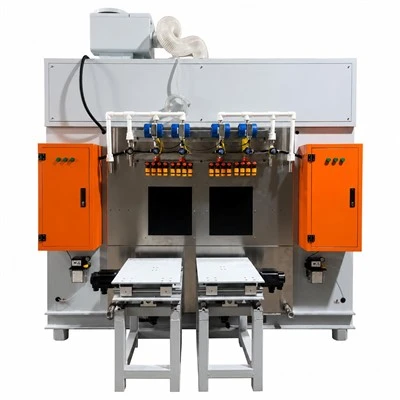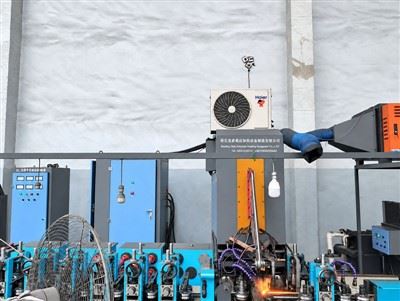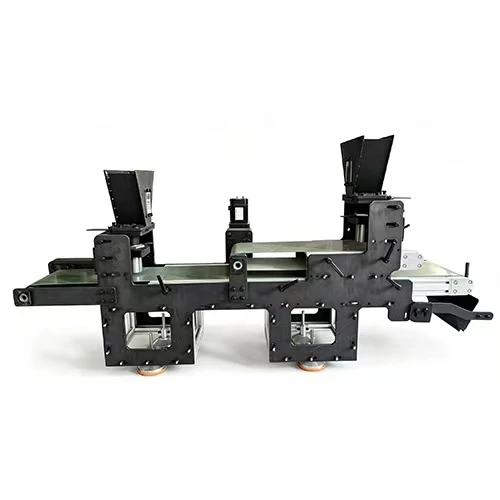


Baoding Sitai Induction Heating Equipment Manufacturing Co., Ltd. is one of the leading manufacturers and suppliers of cored wire powder feeding machine in China. We are committed to providing high quality customized products with competitive price. Welcome to contact us for quotation.
Technical Specifications
Cored Wire Powder Feeding Machine is intended for controlled metering of metallurgical powders used in ladle-refining cored wire. The two feeding channels can be adjusted independently when the confirmed recipe requires separate material control.
Powder Characteristics
Round or approximately round particles, with a relatively narrow particle-size distribution, uniform particle size, and no agglomeration or foreign matter. Powder-weight control accuracy is related to the particle-size distribution of the powder.
01
Operating Speed
Operating speed range: confirmed according to powder characteristics, target filling mass per metre, feeder configuration and production-line conditions.
02
Minimum Powder Adjustment
Minimum setting increment: confirmed according to the selected control and weighing configuration.
03
Powder Feeding Accuracy
Feeding repeatability is verified with the customer's actual powder and calibration method. Particle-size distribution, bulk density, moisture condition, flowability and segregation tendency can all affect the result.
04
System Configuration
For the Cored Wire Powder Feeding Machine, the final supply scope is confirmed from the powder properties, required filling mass per metre and selected metering arrangement. A typical configuration can include:
- Two large-capacity powder hoppers
- Dual-belt powder conveying system
- Electrical control cabinet
- Operator control box
-
One set of dedicated servo-control cables
-
Speed sensor and mounting bracket
Key Technical Features
High Control Accuracy
Line-speed compensation coordinates dosing with strip travel. Material-specific correction parameters can be established from calibration results to reduce feeding deviation when powder properties change. The control system does not infer particle size unless a dedicated measurement device is included in the agreed project scope.
Low-Material Alarm
A low-material or feed-abnormality alarm can be configured according to the selected sensing method. Alarm logic and delay should be commissioned with the actual powder so normal material movement is not mistaken for a blockage.
Easy Parameter Setting
After changing the powder material, the target powder weight per meter can be conveniently set through the touchscreen, and the parameters are automatically stored.
Equipment Description
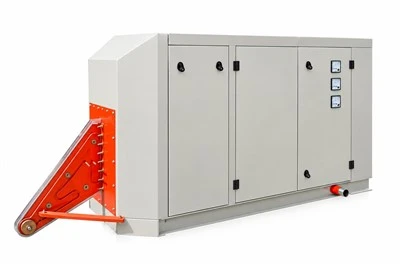
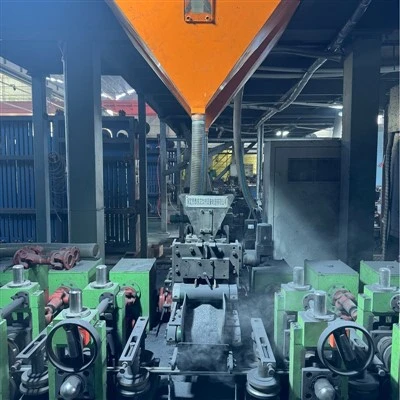
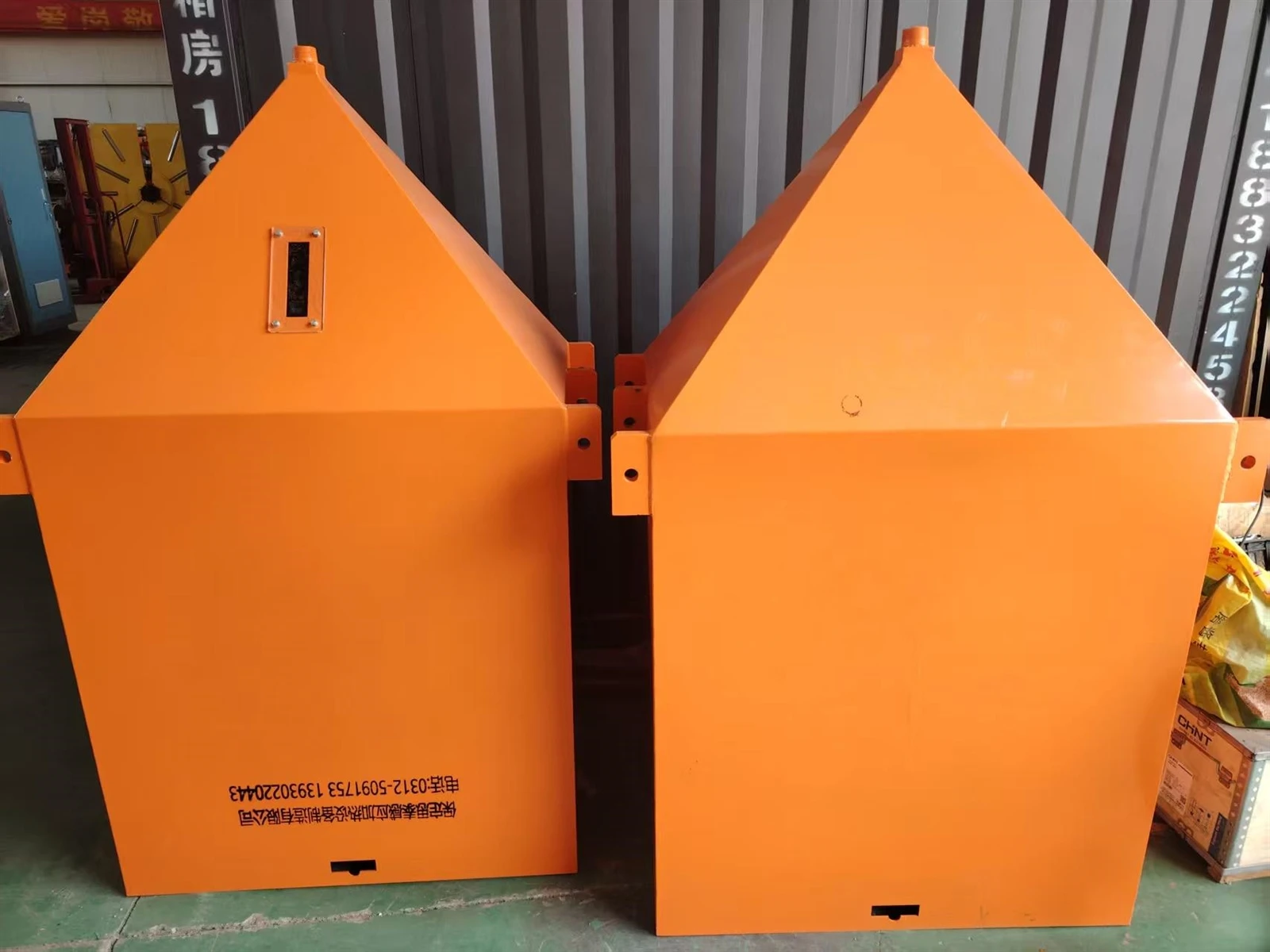
(1) Powder Storage Hopper
Structure: upper rectangular hopper with divided compartments and lower pyramidal section.
Hopper capacity: selected according to required refill interval, available space and powder bulk density.
Outlet size: matched to powder flow characteristics and the downstream feeder interface.
(1) Powder Storage Hopper - Equipment Photo
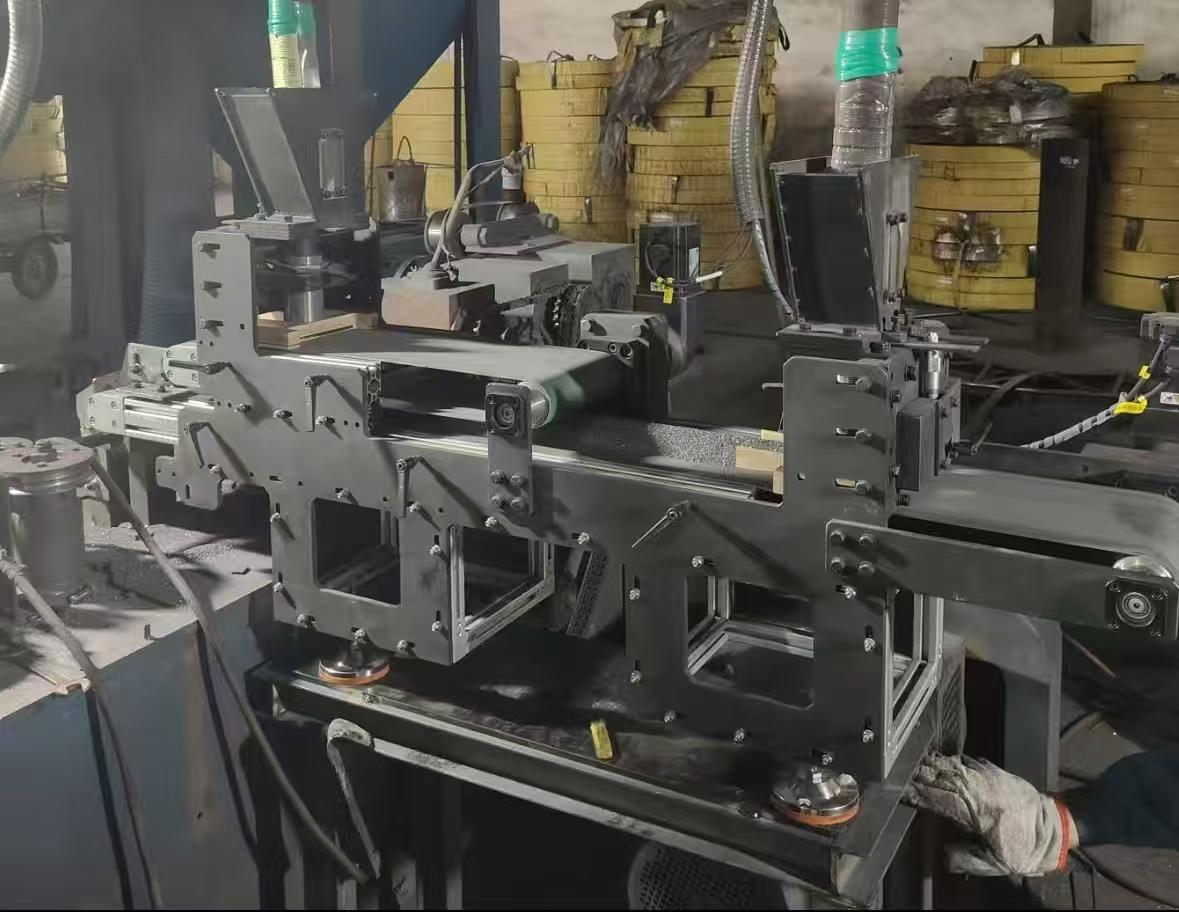
(2) Dual-Belt Powder Conveying System
Belt width: selected according to the required feeding range and material behavior.
Belt arrangement: upper/lower configuration
Servo drive and gearbox: sized according to conveyor load, required dosing response and operating range.
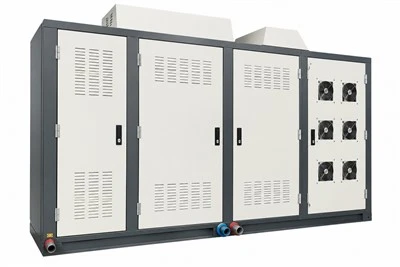
(3) Electrical Control Cabinet
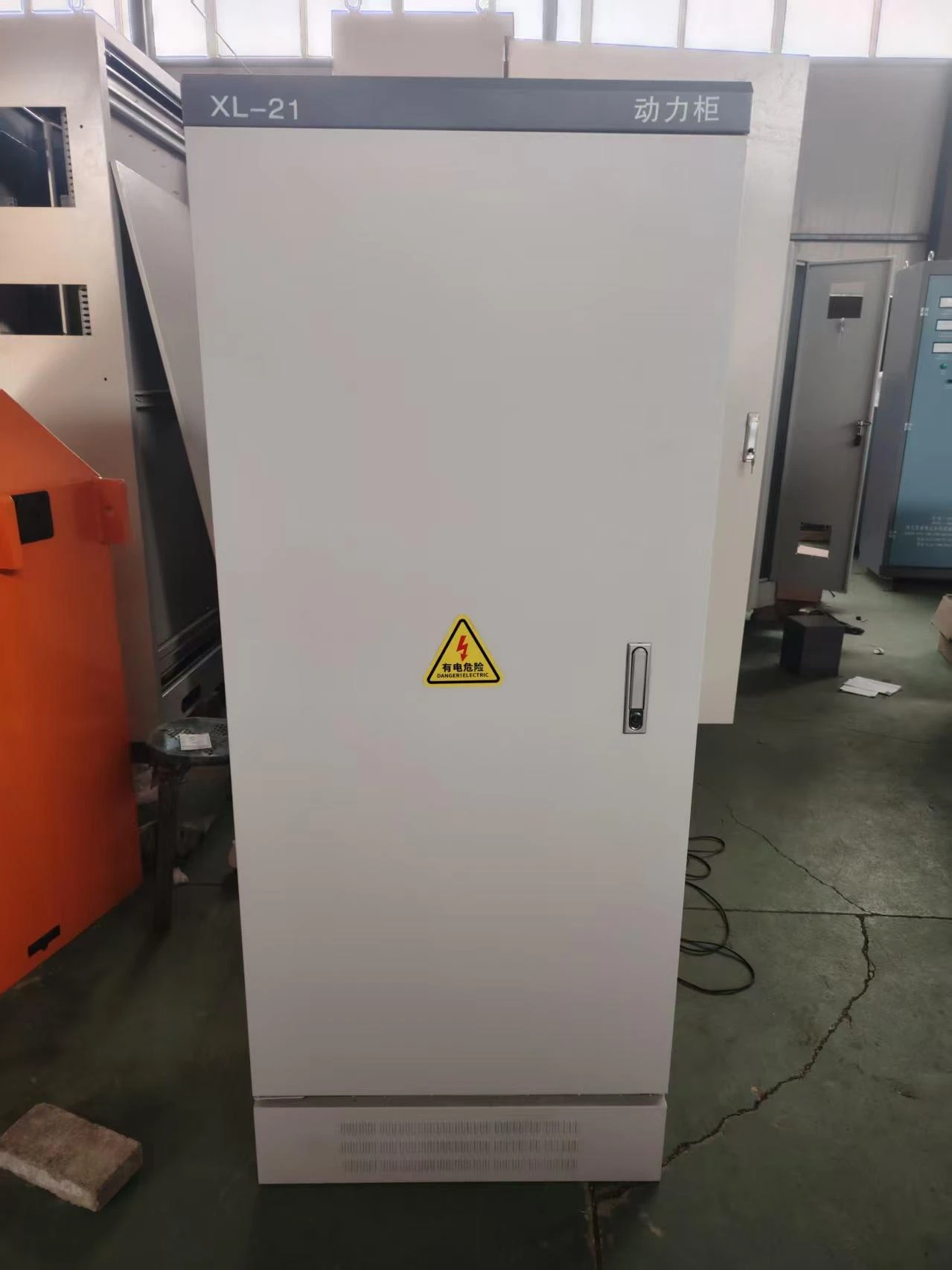
The control cabinet contains the servo motor controller and PLC system, combined with relay control circuits. It receives the speed signal from the speed sensor and, after PLC program processing, controls the operation of the servo motor.
(3) Electrical Control Cabinet - Equipment Photos
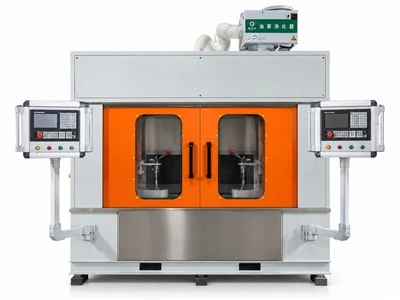
(4) Operator Control Box
The system uses a Kunlun Tongtai (MCGS) touchscreen with a three-screen interface for convenient normal operation and simulation/testing. After changing powder material, operators can conveniently test and set the powder weight per meter.


(5) Dedicated Servo-Control Cables
A dedicated set of control cables is supplied to improve the system's resistance to electrical interference.
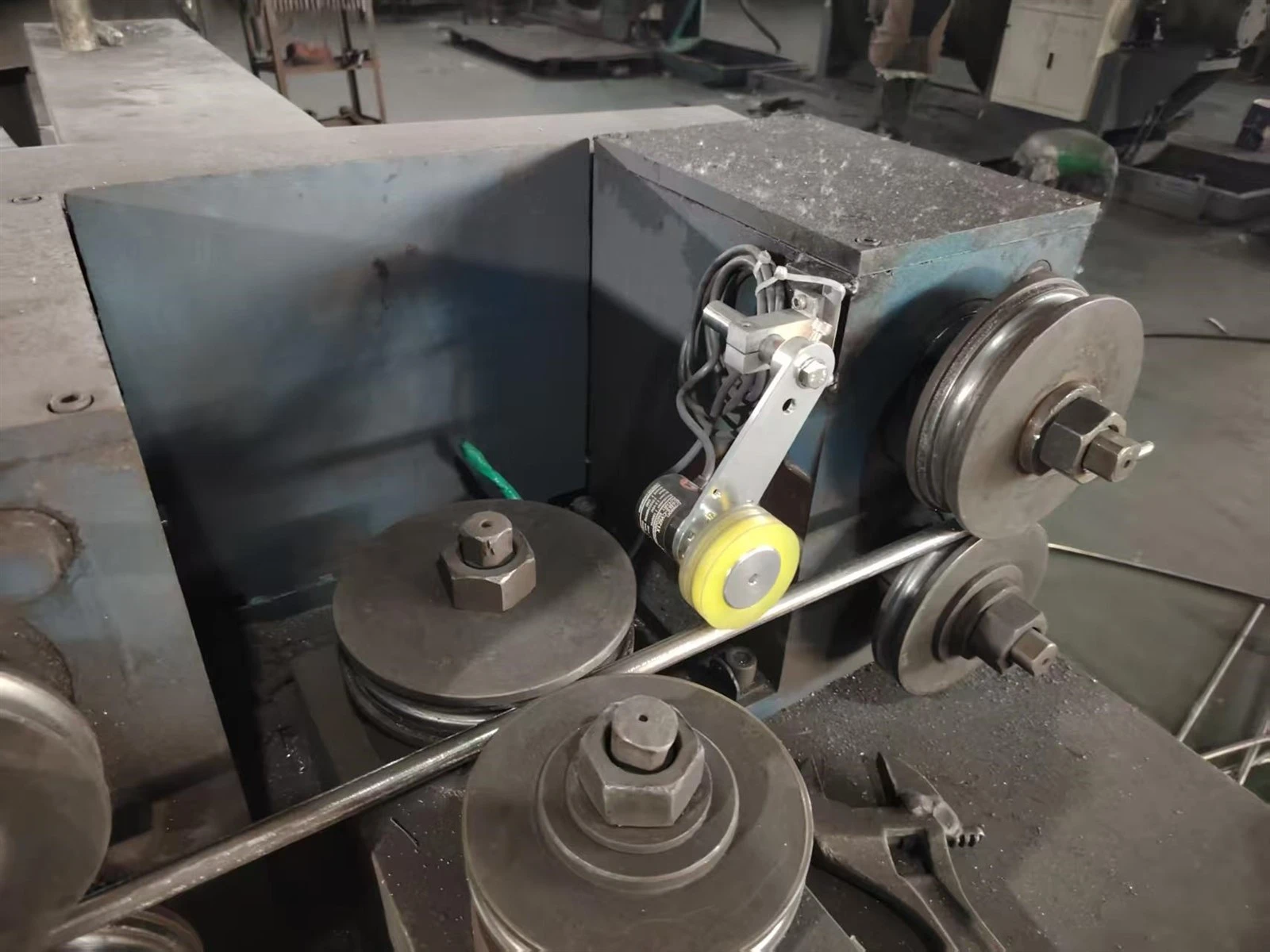
(6) Speed Sensor and Mounting Bracket
An Omron photoelectric encoder is supplied. Differential-signal transmission is used for the speed signal to improve resistance to electrical interference.
Powder Feeding System
Stable powder mass per metre helps keep cored wire within the agreed filling specification and reduces the need for correction or rework. Final performance should be verified by sampling the actual product under the customer's powder, strip and line-speed conditions.
The feeder is therefore engineered around repeatable material delivery rather than a single nominal accuracy number. The following design measures are used or evaluated according to the selected material and production route.
Measures to Reduce the Influence of Powder Head Pressure
A staged hopper arrangement and internal load-bearing or overflow structure can be used to reduce changes in feeder loading caused by powder head pressure. The final arrangement is selected after reviewing bulk density and flow behavior.
Solution to Particle-Size Segregation
Pre-screening can keep the particle-size distribution within an agreed range. Hopper geometry and discharge layout are also reviewed to reduce segregation during storage and discharge rather than assuming that segregation can be completely eliminated.
Real-Time Synchronization of Wire Speed and Powder Feeding
The servo drive and PLC use the production-line speed reference to coordinate feeder output with strip travel. Control parameters can be tuned for acceleration and deceleration so that mass per metre remains stable through normal speed changes.
Material-specific correction values can be entered after calibration when a change in powder properties produces a repeatable feeding offset. Automatic identification of particle-size changes requires dedicated measurement hardware and is not assumed as a standard function.
Control Accuracy
Encoder resolution, display resolution and calculation method are confirmed in the selected control configuration and documented in the final electrical specification.
A PLC performs the speed and dosing calculations. The final controller brand and model are confirmed in the project bill of materials.
Power Requirements
Incoming power requirements are confirmed from the final electrical configuration. The control system should receive a stable supply within the limits stated in the project electrical documentation.
If three-phase auxiliary equipment is included in the selected scope, its phase-balance and supply requirements are specified separately.
Scope of Supply and Responsibilities
Supplier Responsibilities
- Commission the equipment, assist the buyer with installation, and provide technical training.
- Provide comprehensive after-sales service and ongoing technical consultation.
- Provide self-manufactured components and spare parts at preferential prices.
Buyer Responsibilities
- Provide incoming power cables, machine platform, and supports for the belt conveying system.
- Provide an electronic scale for weighing and measurement.
Installation and Commissioning
- The buyer installs the equipment; the supplier provides installation assistance.
- The supplier is responsible for equipment commissioning. The buyer shall provide all necessary support other than the supplier's equipment.
- The supplier's technical personnel shall comply with the buyer's factory management rules and follow the buyer's organizational arrangements.
Technical Documentation
- Equipment operation manual (supplied with the equipment).
Complete System Configuration and Price
|
No. |
Equipment |
Quantity |
|
1 |
Large-capacity powder hopper |
2 sets |
|
2 |
Dual-belt powder conveying system |
1 set |
|
3 |
Electrical control cabinet |
1 set |
|
4 |
Operator control box |
1 set |
|
5 |
Dedicated servo-control cables |
1 set |
|
6 |
Speed sensor and mounting bracket |
1 set |
Frequently Asked Questions
Q: How does the dual-belt feeder maintain powder delivery as the production line changes speed?
A: The feeder uses the line-speed signal as part of its dosing control so powder output can follow the moving strip instead of remaining at a fixed mass flow. During acceleration and deceleration, the control relationship should be tuned so mass per metre remains within the qualified range. The usable process window is confirmed from powder behavior, filling target and the mechanical capability of the complete line.
Q: What determines powder-feeding repeatability in actual production?
A: Particle-size distribution, bulk density, moisture, agglomeration and the ability of the powder to move consistently onto the belt all influence repeatability. Performance should therefore be confirmed with the customer's real material and calibration procedure. A powder that bridges or separates during handling may need conditioning or a different feeding arrangement before a stable operating window can be established.
Q: Why are two independent powder-feeding channels useful?
A: Independent channels allow each stream to be adjusted and checked separately. This is helpful when two materials require different feed rates or when the production recipe needs controlled addition from two hoppers. Independence also makes calibration clearer because the operator can verify the output of each channel before combining the streams. The final mixing or deposition point should be arranged to avoid one material masking a fault in the other feeder.
Q: How should a feeder setting increment be interpreted in production?
A: A setting increment describes the resolution of the operator command, not a guarantee that every commanded change produces an identical physical mass change under all powder conditions. Actual mass per metre must be checked by timed or length-based sampling. When the material changes, the feeder should be recalibrated with the new powder and intended line speed rather than relying only on the previous numeric setting.
Q: What is the purpose of the speed sensor in this powder-feeding system?
A: The speed sensor provides a reference from the moving production line so powder delivery can be coordinated with strip travel. If that signal is incorrect, delayed or mechanically slipping, the feeder may appear stable in kilograms per hour while the product varies in grams per metre. Sensor mounting, pulse stability and scaling should therefore be verified during commissioning and after any modification to the line drive.
Q: How should a low-material alarm be set to avoid false stops?
A: The alarm level should provide enough remaining material for the operator to react without allowing the hopper to run so low that feeding becomes irregular. Its setting depends on hopper geometry, powder flow and the refill method. During initial trials, observe how the material surface behaves near the outlet and confirm that the alarm is triggered before the dosing zone becomes starved.
Q: What cleaning procedure is recommended when changing powder recipes?
A: Stop the feeder safely, isolate the remaining material, empty the accessible hopper and belt area, and remove retained powder from corners or transfer points that could contaminate the next batch. The exact method depends on the powder's reactivity and dust characteristics. For products that cannot tolerate cross-contamination, a documented cleanout check and a short purge or verification sample should be included in the changeover routine.
Hot Tags: cored wire powder feeding machine, China cored wire powder feeding machine manufacturers, suppliers, factory