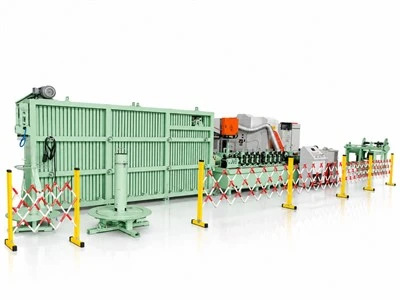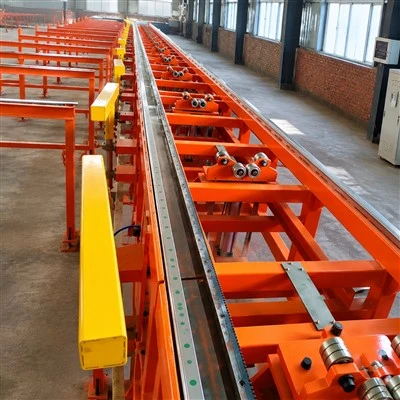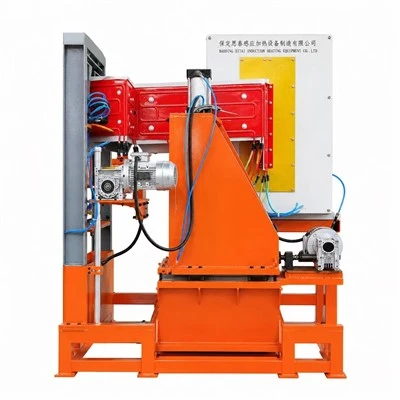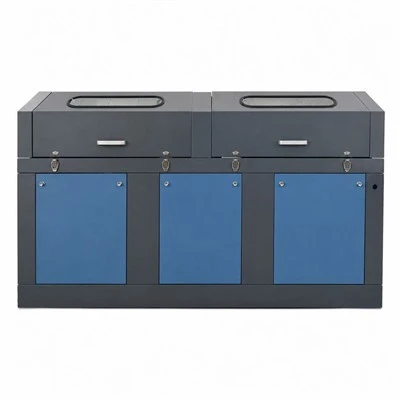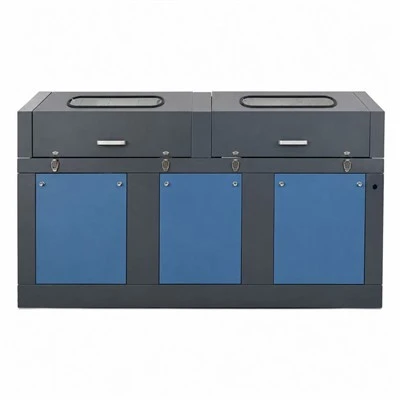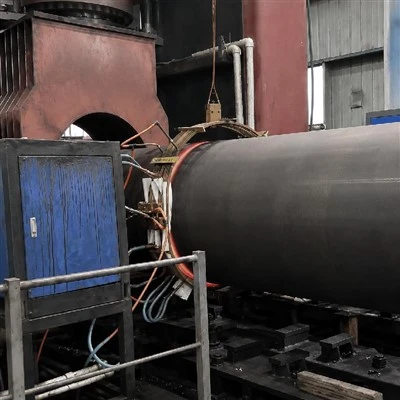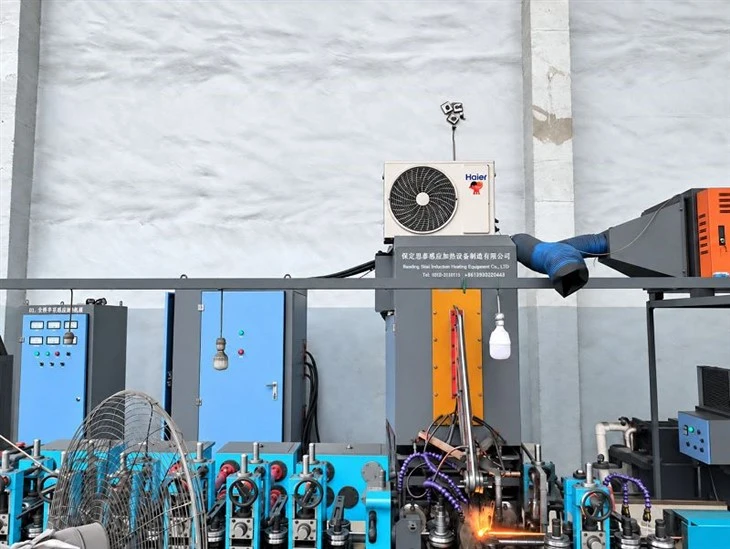
Baoding Sitai Induction Heating Equipment Manufacturing Co., Ltd. is one of the leading manufacturers and suppliers of inline annealing for seamless cored wire in China. We are committed to providing high quality customized products with competitive price. Welcome to contact us for quotation.
Cold drawing can raise strength and hardness while reducing ductility. Whether annealing is required, and how far the properties should be restored, depends on the alloy and the next manufacturing step.
The induction section heats the moving wire without direct flame contact. Power, frequency, active heating length and line speed are coordinated so the wire receives the required thermal cycle without relying on one fixed temperature or residence time for every product.
On an existing line, the annealing section also has to respect wire tension, available straight-line length, cooling distance and the temperature that downstream equipment can safely accept.
Working Principle
The metal wire passes continuously through the induction heating coil, where electromagnetic energy is converted into heat energy inside the wire.
The heating process includes:
Wire Feeding → Induction Heating → Temperature Control → Cooling → Wire Collection
Because the wire itself couples with the electromagnetic field, heating responds quickly to power changes. Actual temperature uniformity still depends on centering, coil design, wire diameter and stable line speed.
Induction is useful when localized, on-demand heating and rapid control response are important. Any energy or cycle-time comparison should be made against the customer's existing process for the same wire and property target.
Process points that matter
Heating zone matched to the wire
Coil geometry and frequency are selected from material, diameter and coupling conditions. A recipe that is stable on one diameter should not be assumed to transfer directly to another.
01
Speed tracking and temperature verification
When line speed changes, residence time changes with it. The control strategy can use speed information and, where appropriate, temperature feedback so the qualified thermal cycle is maintained during normal acceleration and deceleration.
02
Wire guidance and tension
The wire should remain centered through the active coil without rubbing insulation or oscillating. Upstream and downstream tension arrangements are reviewed because unstable tension can shift the wire path and disturb heating repeatability.
03
Cooling route
Cooling is selected from the required metallurgy and surface condition. Natural cooling, controlled gas or liquid cooling may be considered, but the choice is project-specific and must fit the next line operation.
04
Line integration
Installation length is confirmed from the heating zone, electrical connection, cooling, guarding and maintenance access. Existing centerline, line speed and control signals are needed before a retrofit layout is finalized.
05
Applications
Inline annealing for seamless cored wire can be engineered for the following wire families when the required thermal result is defined:
Steel Wire
For suitable steel grades, the process can be used for stress reduction or a specified annealing cycle after cold work.
Stainless Steel Wire
Stainless-steel applications are reviewed from grade, cold-work condition, target properties and surface requirements.
Copper Wire
Copper wire commonly uses annealing to restore ductility after drawing; the required temper and surface condition should be specified.
Aluminum Wire
Aluminum wire requires its own temperature and cooling window because overheating can change the desired temper or surface condition.
Welding Wire
Welding-wire applications are evaluated from alloy, diameter, coating or surface condition and downstream feeding requirements.
Alloy Wire
Other alloys are reviewed case by case from material data and required mechanical properties.
What should be confirmed before design
- Material grade and incoming wire condition
- Minimum and maximum wire diameter
- Normal and maximum line speed
- Target mechanical properties or qualified thermal cycle
- Required surface condition and oxidation limit
- Cooling method and temperature allowed at the next process
- Available line length, centerline and control interface
Project inputs
Different materials need different thermal cycles. For equipment selection, the project should define:
- Wire material
- Wire diameter range
- Production speed
- Annealing temperature requirements
- Cooling method
- Production line configuration
The unit can be supplied as a standalone station or integrated into an existing line after the mechanical, electrical and cooling interfaces are confirmed.
Acceptance basis
Process acceptance should be tied to the customer's measurable requirement, for example hardness, tensile properties, elongation, temper or a qualified metallurgical specification. Typical objectives include:
- Improved wire flexibility
- Reduced material stress
- Stable mechanical properties
- Higher production efficiency
- Continuous automatic processing
The final equipment scope and acceptance method are agreed for the actual wire family rather than stated as a universal performance claim.
Frequently Asked Questions
Q: How does induction annealing differ for steel, copper and aluminum wire?
A: Each material family has different electrical, thermal and metallurgical behavior, so the required frequency, energy and temperature window are not the same. Steel annealing may target stress relief or microstructural change, while copper and aluminum often focus on restoring ductility after cold work. The machine platform can be flexible, but every material and diameter needs a qualified recipe rather than a universal annealing setting.
Q: What determines the heating length of a continuous wire annealer?
A: Heating length is related to line speed, required thermal cycle, induction coupling and the amount of energy that can be transferred without overheating the surface. A faster line may need more power, a longer active zone or both. The design should also provide enough downstream distance for the selected cooling method so the wire reaches the next process at a suitable temperature.
Q: How can oxidation be controlled during wire annealing?
A: The solution depends on material, temperature and the required final surface. Options can include controlled atmosphere, protective tubes or a process route that limits exposure time before cooling. Some products do not require a bright surface and can use a simpler arrangement. Surface-quality expectations should therefore be defined along with mechanical-property targets when the annealing system is specified.
Q: Why is wire tension important through the induction zone?
A: The wire must pass the coil on a stable centerline without touching it or oscillating. Too little tension can create vibration and changing coupling; too much tension can stretch a hot, softened wire or influence final diameter. Entry and exit drives or passive guides should be coordinated so the heat-treatment section receives a controlled product path over the full speed range.
Q: What indicates that the annealing recipe is too aggressive?
A: Signs can include excessive surface discoloration, loss of strength beyond the target, local deformation, unstable diameter or evidence that the wire is too soft for the downstream handling process. Temperature data should be compared with mechanical testing or bend behavior. Reducing power alone may not be sufficient if the real issue is low line speed or an incorrectly centered wire.
Q: Can a continuous annealer be added to an existing wire drawing or forming line?
A: A retrofit can be evaluated if there is enough straight-line space and the existing drives can provide stable speed and tension through the new heating and cooling sections. Electrical supply, cooling utilities, guarding and control integration also need review. The line controller should share speed and stop information with the annealer so the wire is not left stationary under active heating.
Q: How should a new wire material be qualified on the machine?
A: Begin at conservative speed and power, establish stable centering and cooling, then take samples for the required mechanical or metallurgical checks. Increase productivity only after the treatment result is repeatable. Record diameter, material condition, speed, power, coil setup and cooling parameters as a dedicated recipe so future runs can start from a controlled reference.
Q: Which mechanical tests are useful for qualifying annealed metal wire?
A: The appropriate tests depend on the product, but tensile properties, elongation, bend response, hardness or electrical-performance checks can be specified. The purpose is to connect the heating recipe with the property the customer actually needs. A temperature reading by itself does not demonstrate that a cold-drawn copper, steel or aluminum wire has reached the required annealed condition.
Q: How should annealing be controlled when incoming wire hardness varies between coils?
A: Incoming condition should be recorded because two coils of the same nominal material can respond differently if their drawing history or reduction is different. If the required final property is critical, the production plan can include periodic verification and controlled recipe adjustment rather than assuming one power setting will erase all upstream variation. Large unexplained differences should first be traced to raw material and drawing history.
Q: Can an annealing machine be designed for both bare and coated wire?
A: Only after the coating material and its temperature limit are reviewed. Some coatings can discolor, decompose or interfere with induction-zone guides long before the metal itself reaches the desired annealing temperature. If coated product is required, the project should define coating type, thickness and acceptable surface change so the thermal cycle and atmosphere can be evaluated specifically.
Q: How can copper-wire conductivity be considered when setting an annealing process?
A: Copper wire is often annealed to restore ductility while preserving the electrical performance required by the final product. The qualification plan can therefore include both mechanical properties and electrical resistance or conductivity when those values are part of the specification. The process window should be established from the customer's actual alloy and prior cold-work condition rather than from color or softness alone.
Q: What cooling method is suitable after aluminum-wire annealing?
A: Cooling must bring the softened wire to a stable handling temperature without introducing surface damage or excessive tension. The choice between air, water or another controlled method depends on alloy, diameter, line speed and surface requirement. Because hot aluminum can deform more easily, downstream guides and take-up tension should be reviewed together with the cooling section during commissioning.
Q: Can the annealer compensate for inconsistent wire drawing reduction upstream?
A: It can reduce work hardening, but it should not be used to hide major variation in incoming diameter, surface condition or cold-work history. If one coil repeatedly needs a different recipe, compare drawing reduction and raw material before expanding the annealing window. Stable heat treatment starts with a defined incoming condition so the final properties can be reproduced from coil to coil.
Q: How should the annealed wire be handled before it is fully cooled?
A: Avoid sharp bending, excessive tension and guide pressure while the material is still hotter and softer than its normal handling condition. The exit path should support the wire smoothly into cooling and collection. For very fine or soft products, the take-up strategy may need lower tension than the same wire before annealing, which is why the heat-treatment section and coiler should be commissioned as one continuous route.
Q: What records help compare annealing quality across different production lots?
A: Link each lot to incoming material, diameter, line speed, power recipe, coil or inductor setup, cooling condition and the measured final property. If a deviation occurs, those records show whether the thermal process changed or whether the incoming wire condition was different. A useful history is based on property results and process variables, not just the operator's saved recipe name.
Q: How does wire diameter influence induction frequency selection?
A: Smaller diameters generally require attention to how deeply and uniformly electromagnetic energy couples into the cross section, while larger wire carries more thermal mass. Frequency is selected together with power, coil geometry, material conductivity and magnetic behavior. The objective is the required through-temperature profile, not the highest available frequency. Trials and temperature or property measurements confirm whether the chosen combination heats the wire uniformly enough for the specified anneal.
Q: What should be done with drawing lubricant or surface residue before annealing?
A: Residue can smoke, carbonize or affect surface appearance when the wire is heated. The need for cleaning depends on lubricant chemistry, annealing temperature and the final surface requirement. If the upstream drawing process leaves significant material on the wire, include a cleaning or wiping step in the line review rather than expecting the induction coil or protective atmosphere to remove contamination during heating.
Q: Can stainless steel wire and carbon steel wire share the same annealing recipe?
A: They should be treated as separate material families. Alloy content, magnetic response, transformation behavior and required final properties differ, so equal diameter does not imply equal frequency, power or temperature. Store material-specific recipes and verify them with the relevant hardness, tensile or metallographic requirement. Sharing the mechanical line is possible, but sharing an unqualified thermal recipe is not recommended.
Q: How does a spool-to-spool wire annealing line differ from an in-process annealer?
A: A spool-to-spool system can control entry and exit tension independently and may process wire as a separate operation, while an in-process unit must follow the speed and stop behavior of another manufacturing machine. This changes buffer requirements, drive coordination and how startup scrap is managed. The preferred layout depends on whether heat treatment is a dedicated production step or part of a continuous drawing, forming or coating route.
Hot Tags: inline annealing for seamless cored wire, China inline annealing for seamless cored wire manufacturers, suppliers, factory