Baoding Sitai Induction Heating Equipment Manufacturing Co., Ltd. is one of the leading manufacturers and suppliers of tube annealing machine in China. We are committed to providing high quality customized products with competitive price. Welcome to contact us for quotation.
Tube Annealing Machine is engineered around tube material, diameter, wall thickness, target heat-treatment result and production speed. Depending on the selected configuration, induction heating can be applied to a local weld region or a broader tube section for a qualified annealing process.
Materials & Manufacturing Process
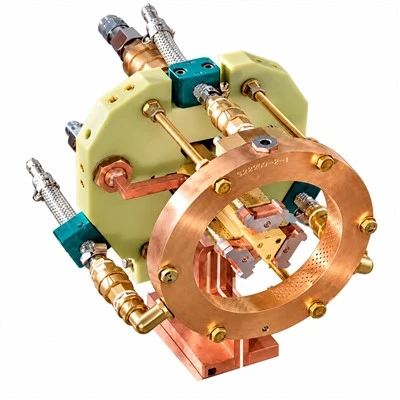
Water-Cooled Induction Coil
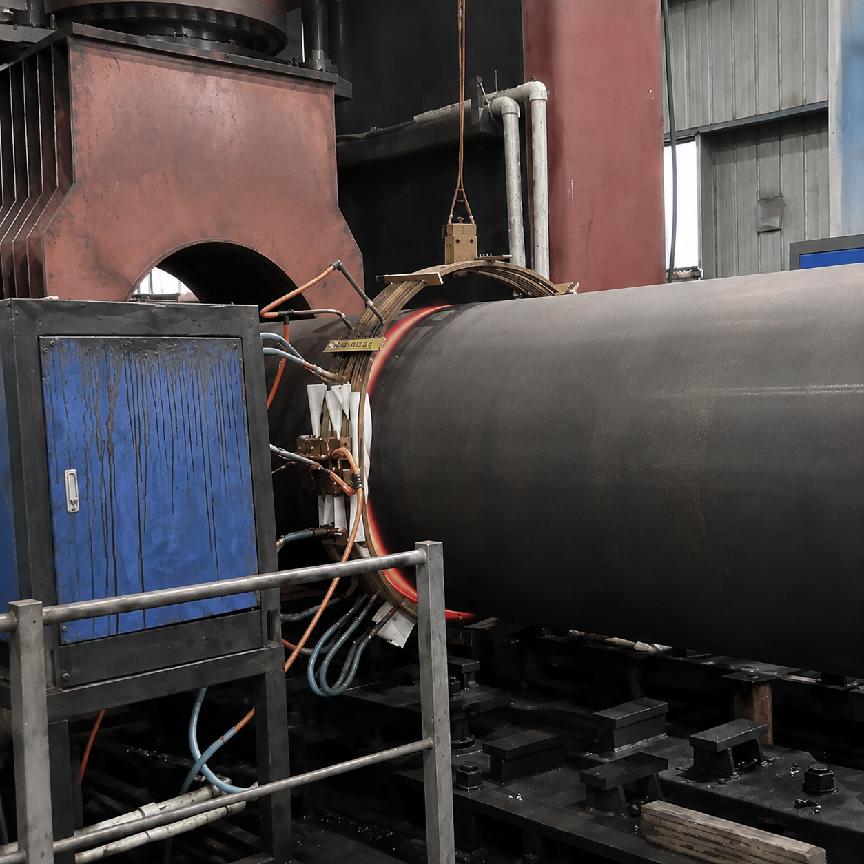
The copper inductor is designed around the tube diameter range and required heating pattern and is internally water cooled. Insulation, mechanical support and any magnetic flux concentrators are selected according to coupling conditions, power level and service environment.
01
Protective-Atmosphere Channel (Optional)
When oxidation control or bright annealing is required, a sealed atmosphere section can be engineered separately. Tube or muffle material, gas composition, sealing method, purge sequence, oxygen or dew-point monitoring and safety devices are selected for the specific temperature, alloy and plant safety standard; they are not assumed as standard equipment on every annealing line.
02
Cooling Arrangement
Cooling method is selected from the required thermal cycle and surface condition. Water cooling, controlled gas cooling or a staged combination can be engineered as needed. Tank, pipe and spray materials are selected for the coolant and operating environment rather than fixed to one stainless-steel grade.
03
Tube Guidance & Line Interface
Guide rollers and support geometry are arranged to keep the tube on the intended centerline through the induction zone. Guide material, adjustment method and line-speed signal interface are selected around tube surface sensitivity, diameter range and the layout of the existing production line.
04
Core Functional Features
Process Modes by Application
Localized weld-seam annealing and broader full-section heating require different coil layouts and process settings. Recrystallization, stress relief or solution treatment is specified only where it is appropriate for the alloy and production route. Power and frequency are selected from the required heating pattern rather than switched across an assumed universal range.
01
Line-Speed Coordination
The control system can use the tube-line speed signal to adjust heating commands as residence time changes during acceleration or deceleration. Temperature monitoring may be used as an additional process check. Allowable temperature variation is established during process qualification for the actual tube family and is not stated as a universal ± value.
02
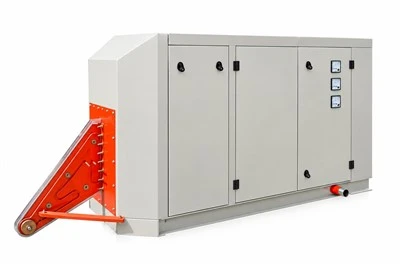
Induction Power Supply
The inverter power supply is selected according to tube material, diameter, wall thickness, target temperature, heating length and line speed. Rated power, operating frequency, power factor and electrical efficiency are documented for the chosen power-supply model rather than presented as one universal specification.
03
Temperature Monitoring (Optional)
A suitable infrared pyrometer or other process measurement method can be integrated where temperature feedback is useful. Sensor type, aiming position, temperature range and control function are selected according to tube surface condition and process needs. Alarm or reject interfaces are included only when specified in the project scope.
04
Atmosphere Control (Optional)
For applications requiring oxidation control or bright annealing, a protective-atmosphere system can be engineered with the required gas composition, flow control, sealing, purge sequence and safety interlocks. Surface result depends on alloy, incoming cleanliness, atmosphere quality and thermal cycle; a scale-free or mirror finish is not assumed without process qualification.
05
Key Advantages
Process Results Defined by Metallurgy
For suitable stainless steels, solution annealing can restore the required microstructure and properties after forming or welding when the specified thermal cycle and cooling conditions are achieved. For welded carbon-steel tube, local heat treatment can reduce undesirable hardness differences in the weld-affected region. Final results are verified against the customer's metallurgical and mechanical requirements.
Localized, On-Demand Heating
Induction heating starts on demand and concentrates energy in the required region without direct combustion at the heating point. Energy use and cycle-time advantages depend on the product and the process used for comparison. Protective-atmosphere treatment may reduce oxidation, but any downstream cleaning or pickling requirement is determined by the specified surface quality.
A Tube Annealing Machine can often be installed in a relatively short in-line section because the heating zone is localized. Actual footprint still depends on heating length, atmosphere section, cooling zone, tube guidance and maintenance access.
Control & Data Interface
HMI operation, recipe storage, line-speed communication and production-data interfaces can be configured according to the customer's automation standard. Screen size, communication protocol, recipe capacity and MES connection are confirmed in the electrical scope for each project.
Typical Application Fields
Stainless Steel Tubing
Local or full-section induction heating can be engineered for suitable stainless-steel tube grades. Bright solution annealing requires the appropriate atmosphere, thermal cycle and cooling method and is treated as a project-specific process.
Copper & Aluminum Tubing
Online softening or annealing can be evaluated for compatible copper or aluminum tube products according to alloy, wall thickness, target temper and production speed.
Welded Steel Tube
Localized weld-region heat treatment can be engineered where the tube specification requires control of weld or heat-affected-zone properties. Material grade, weld process, target property and inspection requirement must be provided before equipment selection.
Special Tube Applications
Heat treatment for high-temperature, corrosion-resistant or other critical tube products is evaluated case by case from the applicable material specification and acceptance standard. Any regulated-industry qualification must be documented separately for the specific project.
Frequently Asked Questions
Q: What is the difference between weld-seam annealing and full-tube annealing?
A: Seam annealing concentrates heat in the welded region to modify the microstructure and properties affected by the welding operation. Full-tube annealing heats the complete cross section for broader stress relief, recrystallization or solution treatment depending on the alloy. The induction coil arrangement, power level, line speed and atmosphere requirements can be very different, so the desired metallurgical result must be specified before equipment design.
Q: When is a protective atmosphere required for tube annealing?
A: A controlled atmosphere is used when oxidation, scale or surface chemistry must be limited during high-temperature treatment. Stainless steel bright annealing is a typical example, but the gas composition and dew point depend on material and process specification. Atmosphere handling should be engineered with appropriate safety measures; it is not simply an accessory added after the heating power has been selected.
Q: How does line-speed tracking improve annealing consistency?
A: Residence time in the induction zone changes directly with tube speed. A speed-linked control strategy adjusts energy as the line accelerates or slows so the thermal cycle remains closer to the qualified condition. Temperature measurement can provide an additional check. The relationship is developed for each main tube family because wall thickness, diameter and alloy alter the power needed at the same speed.
Q: Why might a two-color pyrometer be used on a tube line?
A: A ratio or two-color instrument can be less sensitive than a single-color pyrometer to some changes in emissivity or partial optical obstruction, provided its measurement conditions are suitable. It still requires correct aiming, temperature range and a clear view of the target. The reading should be validated against the actual process rather than assumed accurate simply because the sensor is non-contact.
Q: How is the annealing coil selected for different tube diameters?
A: Coil inside diameter, length, turns and coupling gap are designed around the tube range and required heating pattern. A very large gap can reduce efficiency and make power control less responsive; too little clearance is mechanically risky on a moving tube. A product range may need interchangeable coils or an engineered compromise, especially when both small and large diameters are produced on the same line.
Q: What should be checked if the tube exit temperature oscillates?
A: Compare line-speed stability, tube position, power output, cooling-water condition and pyrometer signal. A wandering tube can change coupling, while scale or reflections can disturb optical measurement. If the electrical output is stable but the temperature varies periodically, inspect mechanical guidance and tube geometry. Troubleshooting should separate a real thermal fluctuation from a measurement fluctuation.
Q: What data are needed for an in-line tube annealing proposal?
A: Provide material grade, tube diameter and wall range, required annealing type, target temperature or metallurgical specification, line-speed range, available straight-line space, atmosphere requirement and cooling method. If the system is to be inserted into an existing mill, include the current centerline, control signals and the distance available before the next sizing, drawing or handling stage.
Hot Tags: tube annealing machine, China tube annealing machine manufacturers, suppliers, factory