

Baoding Sitai Induction Heating Equipment Manufacturing Co., Ltd. is one of the leading manufacturers and suppliers of ring gear induction hardening machine in China. We are committed to providing high quality customized products with competitive price. Welcome to contact us for quotation.
The ring gear is a critical transmission component that works under continuous load, impact, and friction conditions. Proper heat treatment is essential to improve its durability and operational reliability.
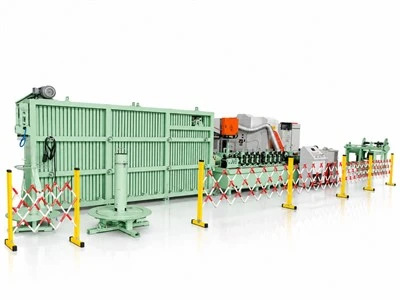
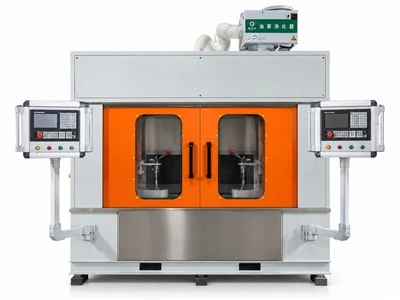
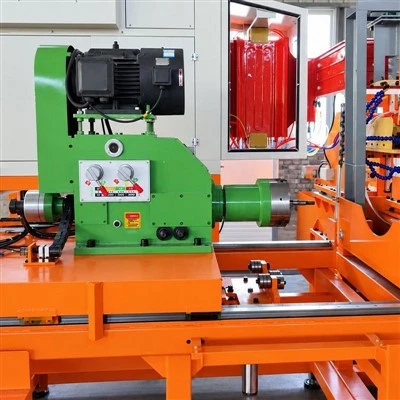
This induction heat treatment system adopts a customized structure for ring-shaped workpieces. The workpiece is positioned in the heating area, where the induction coil generates a controlled electromagnetic field to rapidly heat the required area. After reaching the specified heating condition, the hardened area is quickly cooled through the quenching system to achieve the required metallurgical structure.
Compared with traditional heating methods, induction heat treatment provides faster heating speed, localized heating capability, and better control of the hardened area.
Main Features
Precise Induction Heating
The machine uses induction heating technology to concentrate heat directly on the required treatment area. This helps reduce unnecessary heating of non-treated areas and improves energy utilization.
The heating process can be adjusted according to different workpiece materials, structures, and heat treatment requirements.
01
Uniform Hardening Quality
For ring gears and similar components, uniform heating and controlled cooling are important factors affecting final performance.
The equipment is designed to provide stable heating and quenching conditions, helping achieve consistent hardness distribution and reliable treatment results.
02
Suitable for Ring Gear Applications
This system is mainly designed for circular components such as:
Ring gears
Gear rings
Large gears
Transmission components
Mechanical rotating parts
Different heating processes can be customized according to the customer's workpiece drawings and technical requirements.
03
Stable Mechanical Structure
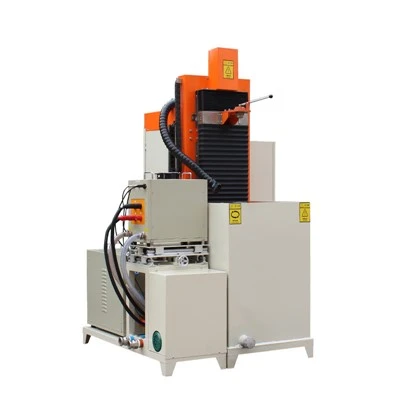
The equipment adopts a heavy-duty machine structure to ensure stable operation during the heat treatment process.
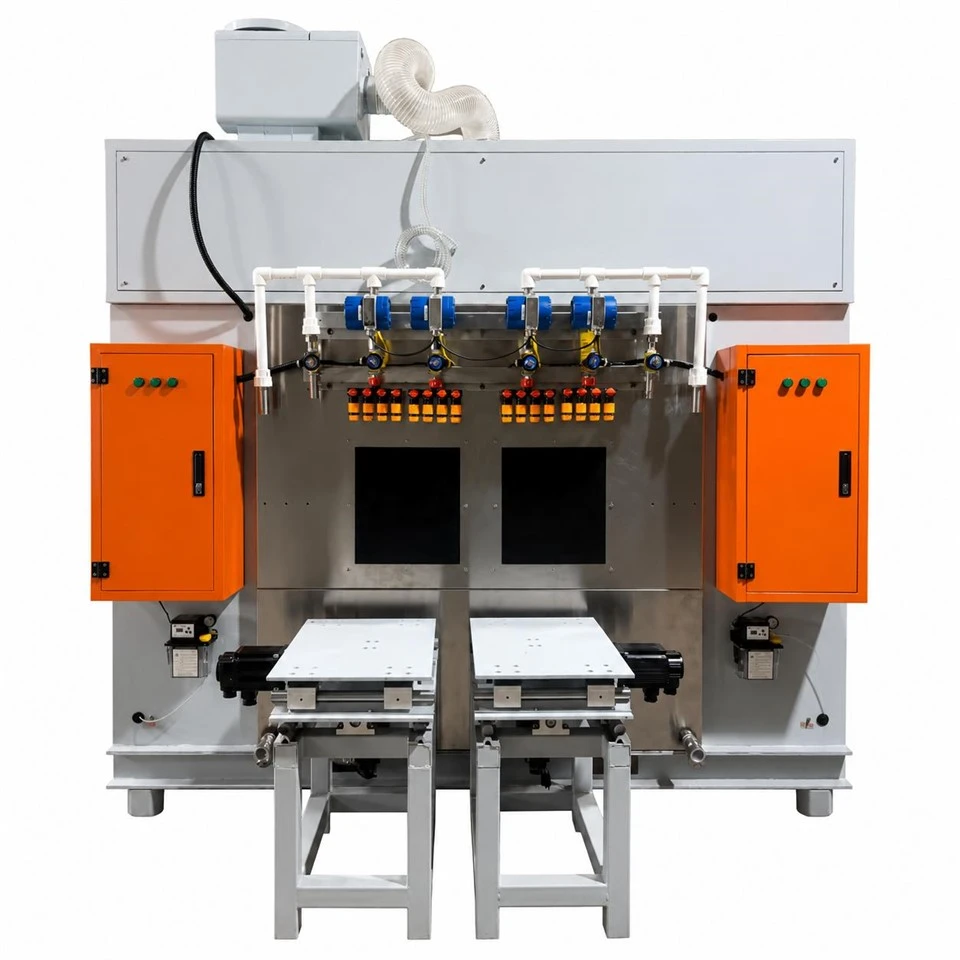
The working area is designed with clear separation between the control components, heating section, and supporting mechanisms, providing convenient operation and maintenance.
04
Flexible Process Control
The system allows adjustment of heating and cooling parameters according to different materials and production requirements.
It can support different induction hardening processes, including continuous heating, scanning hardening, and customized treatment methods depending on the application.
05
Working Principle
The induction heat treatment process includes the following basic steps:
- The ring gear is installed on the working platform.
- The induction coil is positioned according to the required heating area.
- The electromagnetic field generated by the coil heats the metal surface rapidly.
- After reaching the required temperature, the quenching system performs controlled cooling.
- The treated surface obtains improved hardness and wear resistance.
Through precise control of heating and cooling, induction hardening helps improve the fatigue resistance and service performance of gear components.
Advantages of Induction Heat Treatment
Compared with conventional furnace heating methods, induction hardening provides several advantages:
- Fast heating speed
- Localized surface treatment
- Reduced thermal influence on untreated areas
- Improved wear resistance
- Lower material deformation risk
- Suitable for automated production processes
- Clean and efficient operation
Application Industries
Ring Gear Induction Heat Treatment Machine can be considered for the following workpiece families after material and heat-treatment requirements are confirmed:
- Automotive transmission manufacturing
- Construction machinery
- Mining equipment
- Wind power equipment
-
Heavy machinery
-
Gear manufacturing industries
-
Mechanical component production
Customized Heat Treatment Solutions
Every ring gear has different requirements depending on its material, size, tooth structure, and working conditions.
We provide customized induction heat treatment solutions based on:
- Workpiece drawings
- Material specifications
- Hardness requirements
- Hardening depth requirements
- Production capacity requirements
Our engineering team can help customers select suitable heating methods and equipment configurations for their specific applications.
Why Choose Our Ring Gear Heat Treatment Equipment?
- Professional induction heat treatment design
- Stable equipment structure
- Reliable heating and cooling performance
- Customized solutions for different workpieces
- Suitable for industrial production environments
- Support for international customers
Ring Gear Induction Hardening Machine: the ring-gear hardening system provides an efficient solution for improving the performance and reliability of critical gear components through advanced induction hardening technology.
Frequently Asked Questions
Q: How is the induction hardening pattern selected for a large ring gear?
A: The target pattern is defined from tooth geometry, module, face width, material, required hardness and effective case depth. Depending on the component and specification, the process may treat individual teeth or use another scanning strategy. Coil shape and motion are then designed to place energy where the hardened layer is required while controlling heating of adjacent areas. The drawing and heat-treatment specification should be reviewed before equipment selection.
Q: Why is inductor design critical on ring gears?
A: Gear teeth present changing geometry around the root, flank and tip, so a generic circular coil cannot automatically produce a uniform case. The inductor profile, magnetic flux concentrators where used, clearance and motion path determine how energy is distributed. A qualified inductor is therefore part of the process tooling, and replacing it with a visually similar coil can change the hardening pattern.
Q: How is quenching coordinated with induction heating?
A: The quench must reach the heated area at the correct time and with a repeatable flow pattern. Delayed or uneven cooling can change hardness and increase distortion. Spray geometry, pressure, temperature and quenchant condition are established together with the heating recipe. During setup, the transition from heating to quench should be observed on the actual gear rather than verified only by pump pressure.
Q: What causes hardness variation around the circumference of a ring gear?
A: Possible causes include variable coil-to-part gap, runout, inconsistent motion speed, local geometry differences, changing quench coverage or an unstable electrical load. Check gear positioning and mechanical concentricity before changing power. A runout map or dimensional check can reveal whether the thermal variation follows the mechanical rotation of the part.
Q: How should distortion be managed during ring gear hardening?
A: Distortion control starts with part condition, fixturing and a balanced heating/quench strategy. Excessive localized heating, uneven support or nonuniform cooling can move the gear. The process should be qualified with dimensional measurements before and after hardening, and the fixture should support the component without preventing normal thermal expansion. Required post-process correction should be considered in the manufacturing route.
Q: What production data should be stored as a heat-treatment recipe?
A: Record power and frequency settings, motion speed, coil position, gap references, quench delay and flow conditions, part identification and any preheat or tempering steps included in the process. The recipe should also reference the inductor version because the same electrical values can produce a different case pattern with different tooling.
Q: How is hardening quality verified on a ring gear?
A: Verification normally combines surface-hardness measurements with metallographic or case-depth checks on qualified samples according to the customer's standard. The tooth locations to be tested should be defined because tip, flank and root can respond differently. Visual inspection and dimensional checks for cracking or distortion complement, but do not replace, the specified hardness and case evaluation.
Hot Tags: ring gear induction hardening machine, China ring gear induction hardening machine manufacturers, suppliers, factory