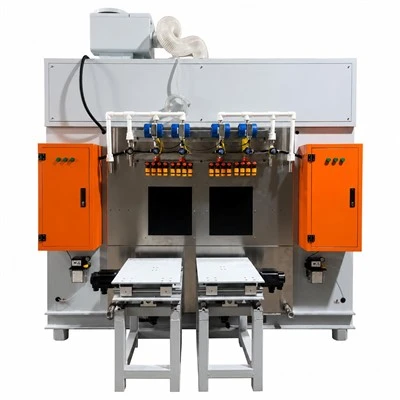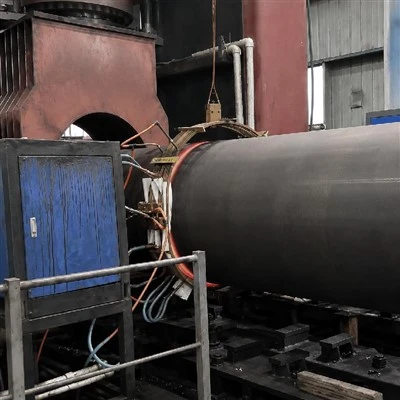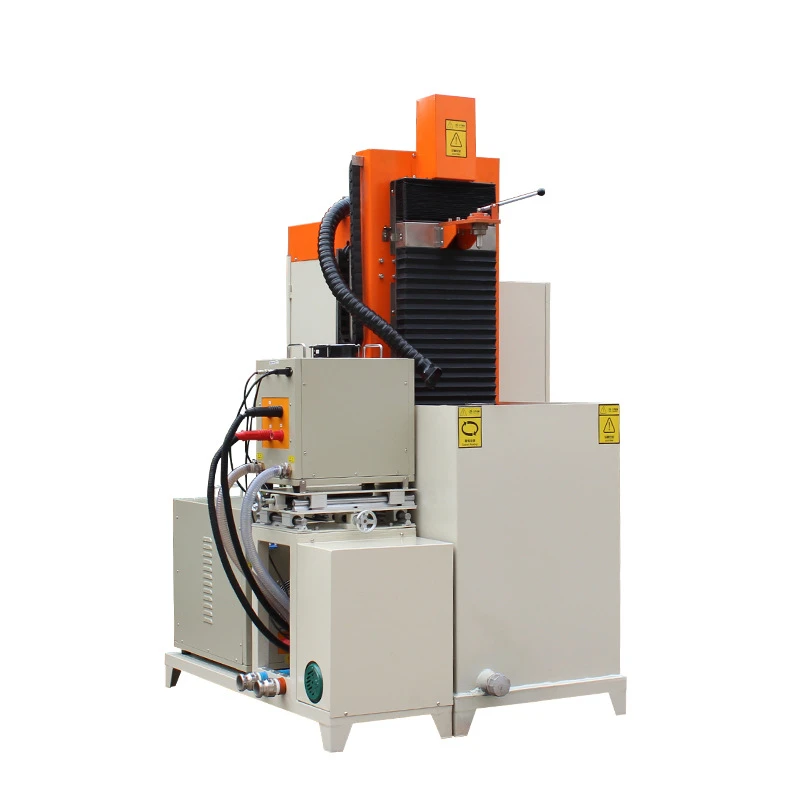
Baoding Sitai Induction Heating Equipment Manufacturing Co., Ltd. is one of the leading manufacturers and suppliers of shaft induction hardening machine in China. We are committed to providing high quality customized products with competitive price. Welcome to contact us for quotation.
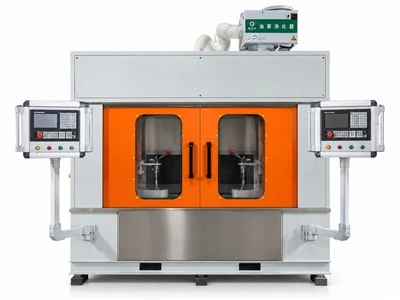
The shaft induction hardening machine is engineered for surface hardening of suitable shaft components such as drive shafts, axle shafts, stepped shafts, splined shafts and piston rods. Depending on the selected configuration, controlled workpiece rotation and axial scanning can coordinate induction heating with quenching. The required hardness pattern and effective case depth are established through process trials and metallurgical verification for the specified steel grade and geometry.
Materials & Manufacturing Process
Machine Frame & Guidance
The frame, guide system and workpiece supports are designed around the shaft length, weight and required scan travel. Structural material, machining method and any stress-relief treatment are confirmed in the final mechanical design.
01
Water-Cooled Inductor
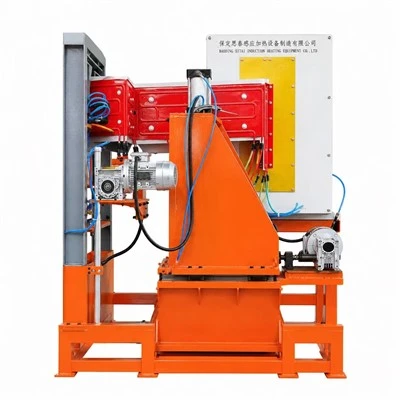
The copper inductor is shaped to suit the target hardening zone and is internally water cooled. Flux concentrators may be used where the geometry and process require tighter control of the electromagnetic field, particularly near shoulders, splines or transitions.
02
Quenching System
Spray ring geometry, flow, pressure and quenchant handling are selected according to the part and required hardening pattern. Corrosion-resistant materials can be used where appropriate, but material grade and spray design are confirmed for the project rather than assumed as a fixed standard.
03
Motion & Workpiece Support
The machine can coordinate scanning motion and workpiece rotation where required by the hardening process. Centers, tailstock arrangements and steady supports are selected for the actual shaft size and loading method. Concentricity and runout capability are specified only after the mechanical design and acceptance method are agreed.
04
Core Functional Features
Hardening Modes by Configuration
Continuous scanning, segmented local hardening or stationary treatment can be engineered according to the shaft geometry and required hardened zones. Simultaneous full-length hardening is treated as a separate process option and is not assumed for every machine.
01
CNC Motion Coordination
The control system can coordinate scan position, workpiece rotation and power commands according to a programmed recipe. For stepped shafts, qualified process zones can use different scan speeds or power settings; the values are established during process development rather than inferred automatically from diameter.
02
Power & Process Control
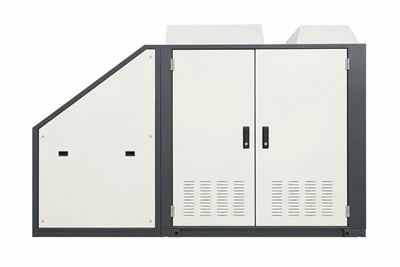
The induction power supply is selected for the required frequency and power range. Power, scan speed, rotation and quenching conditions are controlled as part of the qualified process. Infrared temperature monitoring may be added where suitable, while effective case depth is verified metallurgically on representative parts rather than guaranteed from temperature feedback alone.
03
Workpiece Support Options
Adjustable steady rests or follow supports may be fitted for long or slender shafts when required. Their role is to maintain a repeatable workpiece position while allowing the movement and thermal expansion needed by the process; they do not eliminate distortion by themselves.
04
Quench Monitoring
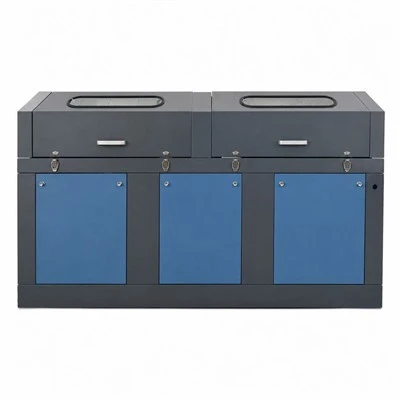
Depending on project scope, the system can monitor quenchant temperature, flow and pressure and can interface with a heat exchanger or cooling unit. The required instrumentation is selected from the process control plan.
05
Key Advantages
Induction heating concentrates energy in the required zone and can reduce unnecessary bulk heating compared with processes that heat the complete component. Distortion still depends on shaft geometry, prior stress, support, heating pattern and quench severity, so straightness must be verified after qualification.
For suitable hardenable steels, the process can produce a hardened surface layer while retaining a tougher core. The final microstructure, hardness and effective case depth depend on steel composition, prior condition, thermal cycle and quench and must be confirmed by the specified inspection method.
Induction heating delivers energy directly to the required zone and starts without the long furnace warm-up associated with some conventional systems. Cycle time and energy use depend on the shaft, hardening depth, production route and comparison baseline, so savings are evaluated for the actual application rather than stated as a fixed percentage.
The control system can store qualified process recipes for different shaft families. A change in product may require a different inductor, support position, quench arrangement and program; the actual changeover procedure is defined for the selected machine and product mix.
Induction heating does not require direct combustion at the heating zone and can be integrated with water-based or other approved quench media according to process requirements. Fume extraction, fluid handling and automation are engineered to suit the actual material, quenchant and production environment.
Typical Application Fields
Automotive & Rail Transit
Axle shafts, drive shafts, splined shafts, crankshafts, camshafts, and transmission output shafts.
Construction Machinery & Heavy Industry
Hydraulic cylinder piston rods, pin shafts, drive shafts, and excavator track roller shafts.
General Machinery & Machine Tools
Ball screws, machine tool spindles, gear reducer shafts, sprocket shafts, and stepped shafts.
Frequently Asked Questions
Q: When is scanning hardening preferred for a long shaft?
A: Scanning is useful when a long or stepped surface must be heated progressively with controlled case depth. The induction coil and quench move relative to the rotating shaft, allowing the heated zone to travel along the required length. The choice between scanning and a more stationary method depends on diameter, hardened length, geometry and production rate, so the process is selected from the shaft drawing and heat-treatment requirement.
Q: Why is shaft rotation used during induction hardening?
A: Rotation helps average circumferential heating and quench exposure when the geometry permits. It can reduce the effect of small coil asymmetries, but it does not correct a bent or eccentric part. Rotation speed should be coordinated with scan speed and power. Before hardening, shaft runout and support alignment should be checked because excessive eccentricity changes the coil-to-part gap during every revolution.
Q: How are stepped diameters handled in one hardening cycle?
A: A stepped shaft may need changes in power, scan speed, coil position or even a dedicated inductor profile as the geometry changes. A single constant recipe can overheat a small diameter and under-treat a larger section. The CNC program should divide the part into process zones and apply the qualified parameters for each zone while keeping the transition between them controlled.
Q: What is the purpose of the anti-distortion support system?
A: Long shafts can move under their own weight and during rapid heating and quenching. Supports or centers keep the workpiece on a repeatable axis while allowing the required rotation and thermal expansion. Their position should avoid marking the finished surface or creating excessive restraint. Distortion is evaluated on the complete cycle, including loading, heating, quenching and unloading.
Q: How is effective case depth controlled on a shaft?
A: Case depth is influenced by frequency, power density, heating time or scan speed, material hardenability and the quench condition. The equipment provides controllable energy and motion, but the required depth is verified metallurgically on a representative part. Once qualified, the recipe and inductor setup are controlled so subsequent shafts reproduce the same thermal cycle.
Q: What should be checked if one side of the shaft is softer than the other?
A: Inspect coil centering, shaft runout, rotation, inductor condition and quench coverage. A mechanical offset can create a larger gap on one side and reduce heating there. If hardness variation rotates with the part position, workpiece geometry is suspect; if it remains fixed relative to the machine, the coil or spray system deserves closer inspection.
Q: What information is needed to quote a shaft hardening machine?
A: Provide shaft drawings with all diameters and hardened zones, material grade, required surface hardness, effective case depth, production rate and allowable distortion. State the heaviest and longest part and whether loading must be manual, crane-assisted or automatic. These inputs determine power, frequency range, machine travel, fixturing and quench-system capacity.
Hot Tags: shaft induction hardening machine, China shaft induction hardening machine manufacturers, suppliers, factory