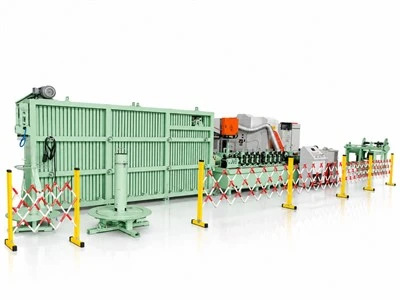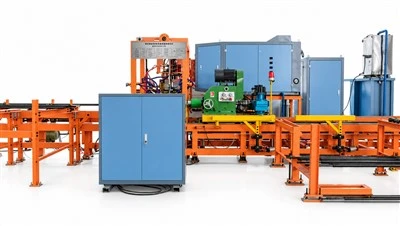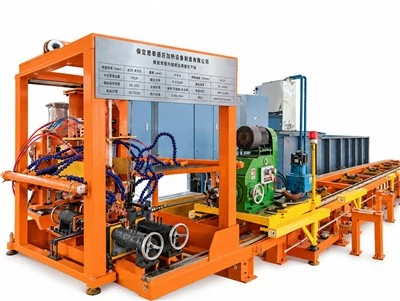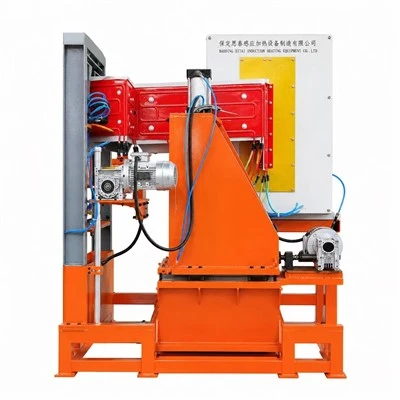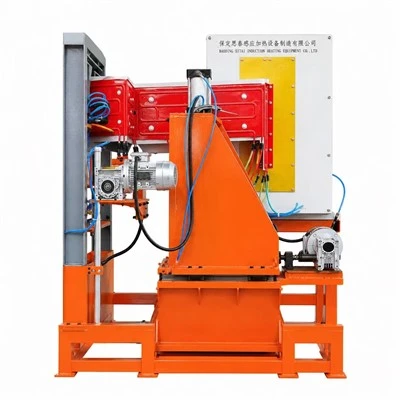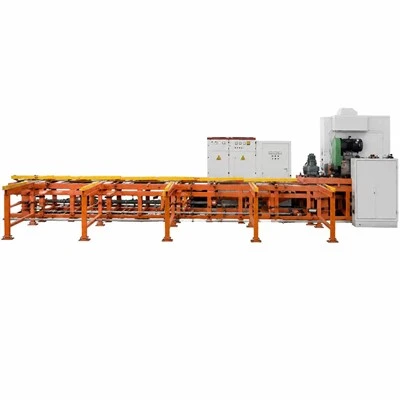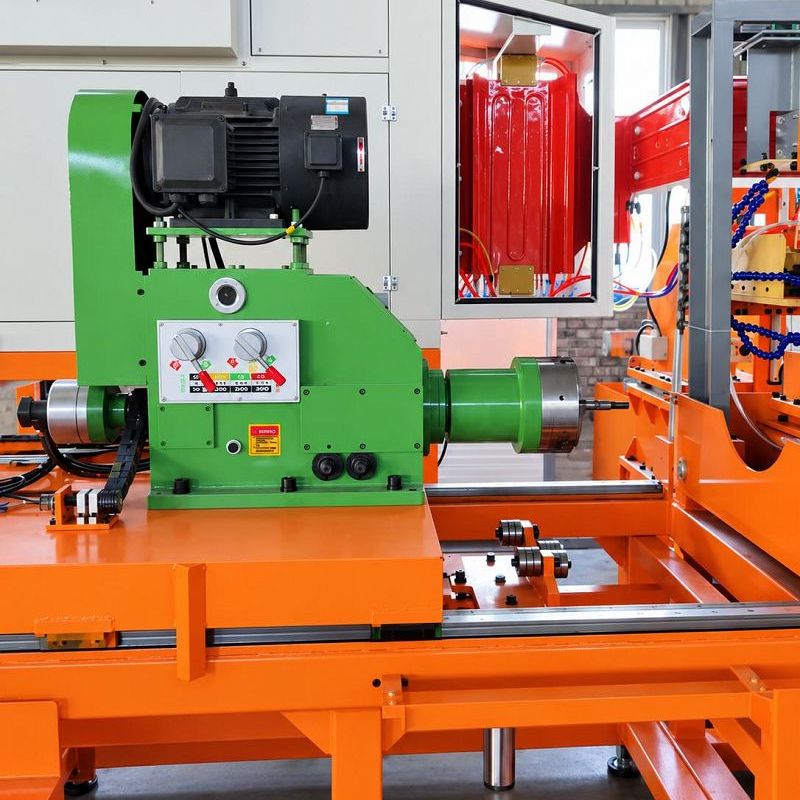


Baoding Sitai Induction Heating Equipment Manufacturing Co., Ltd. is one of the leading manufacturers and suppliers of finned tube machine in China. We are committed to providing high quality customized products with competitive price. Welcome to contact us for quotation.
Products Manufactured
Solid helical finned tubes - continuous fin with a smooth outer edge, used in clean gas applications where low pressure drop and stable long-term performance are required.
Serrated helical finned tubes - fin edge is segmented by notches, disrupting the gas boundary layer and increasing convective heat transfer; the standard choice for waste heat boilers, incineration plants and high-dust flue gas service.
Both types are produced on the same machine by changing the fin strip profile and feed mechanism.
Technical Specifications
| Parameter | Standard Range |
| Base tube outer diameter | Φ20 – Φ159 mm (larger diameters available on extended models) |
| Maximum finished tube length | 8 m / 12 m / 16 m (configurable) |
| Fin strip thickness | 0.8 – 3.0 mm |
| Fin strip width | 10 – 30 mm |
| Fin pitch | 3.5 – 30 mm, continuously adjustable |
| Fin material | Carbon steel, alloy steel, stainless steel |
| Base tube material | Carbon steel, alloy steel, stainless steel |
| Welding method | High-frequency resistance welding (solid-state) |
| Generator power | 200 – 300 kW |
| Power supply | 380 V / 480 V, 3-phase, 50/60 Hz |
| Control system | PLC with HMI, recipe storage, production parameter logging |
| Cooling | Closed-loop water cooling for electrodes and welding head |
Specifications outside these ranges can be accommodated on custom-configured machines.
Key Performance Characteristics
Full metallurgical bond
The fin root is fused to the tube wall, giving low thermal contact resistance and no risk of fin loosening under thermal cycling.
Consistent fin pitch
The synchronized tube rotation and strip feed maintain uniform spacing across the full tube length, which is critical for even heat distribution in tube bundles.
High welding speed
Continuous helical welding allows production rates suitable for industrial tube bundle manufacturing.
Material flexibility
Carbon steel, alloy steel and stainless steel fin-and-tube combinations can be welded by adjusting power and pressure parameters.
Repeatable setup
PLC-stored recipes allow operators to switch between tube diameters, fin pitches and materials without trial-and-error adjustment.
Solid and serrated capability
One machine covers both standard fin profiles, reducing the capital investment needed for a full product range.
Application
Finned tube machines supply the heat transfer components used in:
- Waste heat recovery boilers
- Economizers (power and industrial boilers)
- Air-cooled heat exchangers and air coolers
- Flue gas heat recovery systems
-
Process heat exchangers in petrochemical, incineration and power generation plant
Delivery and Commissioning
Send your base tube diameter range, fin specifications and target production output - we will configure a finned tube machine to match your product range and floor layout.
Frequently Asked Questions
Q: How does the finned tube machine change from solid helical fins to serrated fins?
A: The main tube rotation and welding concept can remain the same, while the strip preparation and feeding arrangement is configured for the required fin form. Serrated strip needs the correct notching or pre-processing setup before it reaches the winding and welding point. The changeover should include a new strip guide, feed and welding recipe where required; simply loading serrated material without confirming the path can make the helix unstable.
Q: How is fin pitch controlled on the machine?
A: Fin pitch is created by the relationship between tube rotation, axial travel and strip feed. These motions must remain synchronized over the full tube length. A pitch error can therefore come from a motion-control setting, mechanical slip or inconsistent strip delivery. During setup, measure pitch at several positions rather than at one end only, because a small synchronization error can accumulate along a long tube.
Q: What tube information should be supplied before choosing a machine model?
A: Provide base-tube material, outside diameter, wall thickness, finished length, straightness condition and maximum weight. The proposed machine range on this page covers specific standard sizes, but the actual configuration is confirmed from the customer's product envelope. Long or heavy tubes can change the required support and drive arrangement even when their diameter is within the nominal range.
Q: How do fin-strip width and thickness affect machine setup?
A: Wider or thicker strip changes bending force, contact behavior and the load on the feeding and winding mechanism. It also changes the thermal mass at the weld. The strip guide, winding geometry and welding recipe should be reviewed as one setup. When changing strip size, operators should not adjust only the fin pitch while leaving pressure and electrical conditions unchanged.
Q: What should be checked when pitch is correct but the fin leans to one side?
A: Inspect strip entry angle, guide alignment, tube centerline and the point where the strip first contacts the tube. A fin can follow the correct axial spacing while still being tilted if the winding geometry is biased. Mechanical correction should be made before increasing welding pressure, because extra pressure can lock an incorrectly positioned fin more firmly rather than straighten it.
Q: How is the appropriate HF generator power range determined?
A: Generator rating must cover the most demanding combination of tube material, fin strip, dimensions and production speed planned for the line. The 200–300 kW range shown in the standard specification is a machine-family reference, not a rule that every product needs the same power. Final selection considers duty cycle, coupling efficiency and the welding trials or process data available for the intended product.
Q: What is included in commissioning for a finned tube production machine?
A: Commissioning should verify tube loading and support, rotation, axial travel, strip threading, pitch control, weld formation, finished-tube discharge and the safety/interlock sequence. At least one representative product should be run long enough to demonstrate stability through normal acceleration and steady production. Operators should also receive the qualified recipe and the mechanical reference settings used for that sample.
Hot Tags: finned tube machine, China finned tube machine manufacturers, suppliers, factory