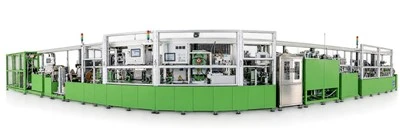
Categorized by fin forming process
This is the industry's primary classification method, as it directly determines the equipment's heat transfer performance and service life:
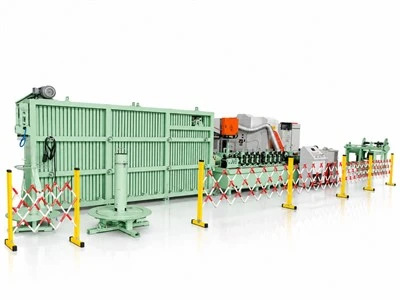
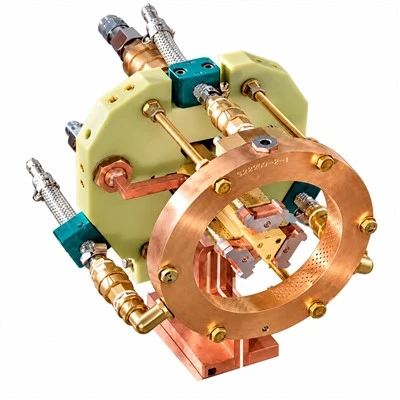
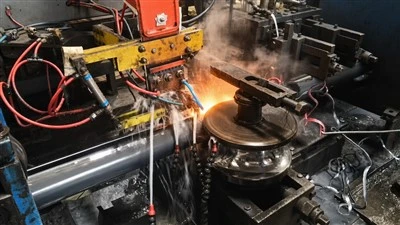
High-frequency welded spiral finned tube equipment: Uses resistance heat generated by high-frequency current to melt the contact interface between the steel strip and the base tube, followed by pressure welding. It achieves a bonding rate of 90%–95% and a weld tensile strength exceeding 200 MPa; featuring a high degree of automation, it is the most widely used type in industrial applications.
Integrally rolled spiral finned tube equipment: Uses a specialized rolling mill to extrude and roll spiral fins from an aluminum tube (containing an inner steel or copper liner) in a single pass. The fins and base tube form a seamless, integrated unit with near-zero contact thermal resistance; heat transfer efficiency is 5–6 times higher than that of bare tubes, and the service life is more than three times longer than that of welded types.
Brazed spiral finned tube equipment: Involves filling the gap between the fin and the base tube with a low-melting-point filler metal; upon heating, the filler melts and wets the contact surfaces to form a joint. While the bonding rate is slightly higher than that of high-frequency welding, the high-temperature strength of the joint is somewhat lower, making it better suited for medium-to-low temperature operating conditions.
Wound-fin spiral finned tube equipment: Involves mechanically winding a metal strip directly onto the surface of the base tube. This process is simple and low-cost, with a low barrier to entry for equipment investment; it is suitable for small-to-medium batch production and heating applications with low pressure-bearing requirements.