
Baoding Sitai Induction Heating Equipment Manufacturing Co., Ltd. is one of the leading manufacturers and suppliers of high frequency tube welding machine in China. We are committed to providing high quality customized products with competitive price. Welcome to contact us for quotation.
High Frequency Welding Equipment for Copper and Aluminum Tube Production
Copper and Aluminum Tube Welding Equipment provides the high-frequency welding power and agreed control interface for a tube-forming line. The power package is selected from alloy, tube geometry, wall thickness and target line speed.
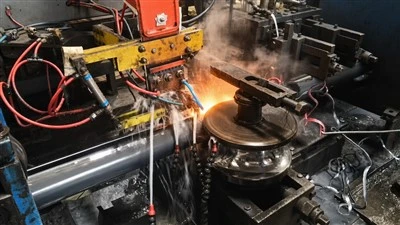
The equipment applies controlled high-frequency electrical energy to the longitudinal seam of the formed tube, creating localized heating at the welding area and forming a continuous welded joint.
The welding system is configured according to the specific characteristics of copper and aluminum, as well as the required tube diameter, wall thickness and production speed.
High Frequency Welding Principle
- During the production process, the copper or aluminum strip is gradually formed into a tubular shape.
- The two edges of the formed strip are brought together at the welding point.
- High-frequency electrical energy is applied to the seam area, producing localized heating at the contacting edges.
- Under controlled welding conditions, the heated edges are joined together to form a continuous longitudinal weld.
- The welded tube then continues through the subsequent sizing process.
Copper and Aluminum Tube Welding
Copper and aluminum have high thermal conductivity and specific electrical characteristics.
These properties affect the distribution and transfer of welding energy at the tube seam.
Therefore, the high-frequency welding system must provide suitable electrical energy and controlled welding conditions according to the actual copper or aluminum tube specifications.
The welding configuration is determined according to:
- Tube Material
- Tube Diameter
- Tube Wall Thickness
- Strip Thickness
- Production Speed
- Welding Requirements
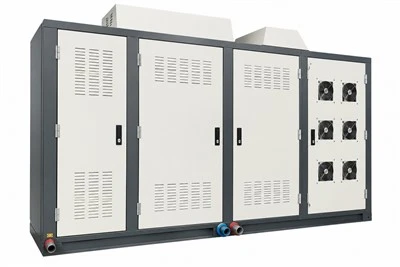
High Frequency Welding System
The core high-frequency welding system consists of:
Rectifier
The rectifier converts incoming AC power into DC power for the high-frequency inverter.
01
High Frequency Inverter
The inverter converts DC power into high-frequency electrical energy required for tube seam welding.
02
High Frequency Power Supply
The high-frequency power supply provides controlled electrical energy to the welding zone.
03
Welding Output
The output section transfers the high-frequency energy to the tube seam for continuous welding.
04
Cooling System
The cooling system maintains suitable operating conditions for the high-frequency power components during continuous operation.
05
Key Advantages
Designed for Copper and Aluminum Tubes
The welding system is configured specifically for copper and aluminum tube production and can be adjusted according to the actual material and tube specifications.
Concentrated Welding Energy
High-frequency electrical energy is concentrated at the longitudinal seam, providing localized heating for continuous tube welding.
Stable Welding Process
Controlled power output helps maintain stable heating conditions at the welding point during continuous production.
Continuous Welding
The system is designed for continuous longitudinal seam welding of copper and aluminum tubes.
Adjustable Welding Conditions
The welding parameters can be configured according to tube material, diameter, wall thickness and production speed.
Customized Power Configuration
The required high-frequency power and operating conditions are determined according to the actual copper and aluminum tube production requirements.
Copper Tube Welding
For copper tube production, the high-frequency welding system provides controlled electrical energy to the longitudinal seam.
The welding configuration is selected according to the copper material, tube dimensions, wall thickness and required production speed.
The objective is to provide stable and concentrated heating at the welding zone for continuous tube seam welding.
Aluminum Tube Welding
For aluminum tube production, the high-frequency welding system is configured according to the aluminum material and actual tube specifications.
The welding power and operating conditions are selected according to the tube diameter, wall thickness, production speed and required weld quality.
Controlled high-frequency energy is delivered to the longitudinal seam to support continuous aluminum tube welding.
Technical Configuration
The equipment is configured according to the actual production requirements.
Important technical information includes:
Tube Material
Copper / Aluminum
Tube Diameter
According to production requirements
Tube Wall Thickness
According to production requirements
Strip Thickness
According to production requirements
Production Speed
According to production requirements
Welding Requirements
According to the required tube quality and application
Based on these parameters, SiTai determines the appropriate high-frequency power and welding configuration.
Application
Copper and Aluminum Tube Welding Equipment can be engineered for the tube range confirmed in the project, including:
- Copper Tubes
- Aluminum Tubes
The equipment can be configured according to different tube specifications and production requirements.
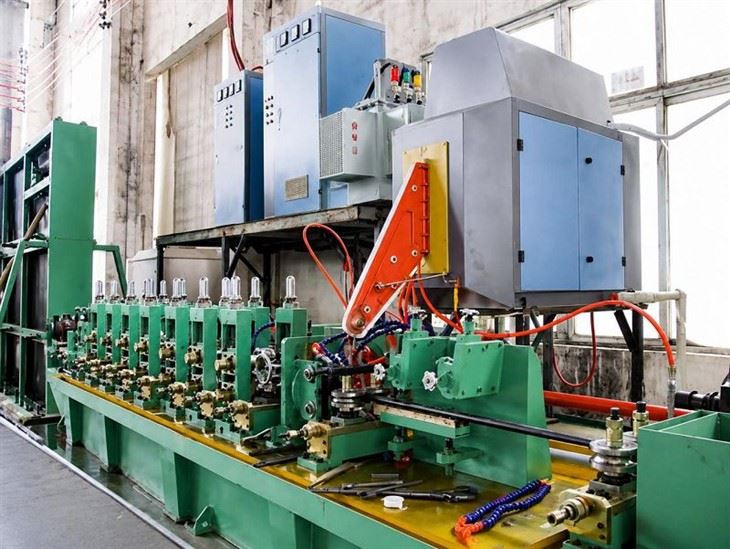
SiTai tube welding system
SiTai provides dedicated high-frequency welding equipment for copper and aluminum tube production.
The system focuses on three essential functions:
- Stable High-Frequency Power
- Controlled Seam Heating
- Continuous Tube Welding
The high-frequency power configuration is selected according to the actual copper or aluminum tube material, dimensions and production requirements.
Stable HF Power. Controlled Seam Heating. Continuous Copper and Aluminum Tube Welding.
Frequently Asked Questions
Q: Why does aluminum tube welding require different process attention from steel tube welding?
A: Aluminum has high thermal conductivity and a persistent oxide film, so heat input, edge condition, shielding or cleanliness strategy and mechanical squeeze conditions need to be engineered for the alloy and wall thickness. The high-frequency power system supplies energy, but stable welding also depends on how the formed edges arrive at the weld point. A setting taken from carbon steel tube production is not a valid starting recipe for aluminum.
Q: How is the welding system configured for very thin-wall copper or aluminum tube?
A: Thin wall requires controlled, localized heating and precise mechanical alignment because the thermal margin between an incomplete weld and local overheating is small. The project review therefore looks at strip thickness, tube diameter, alloy, edge preparation and planned line speed together with the output connection. Trials with the actual material are valuable when the product is near the lower wall-thickness range of the line.
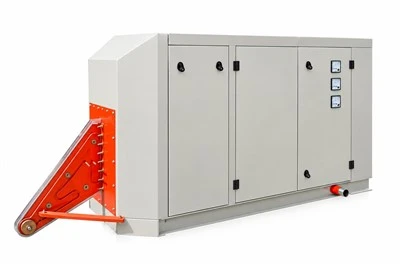
Q: What is the function of the DC power cabinet and inverter cabinet in the welding package?
A: The DC section rectifies and conditions the incoming electrical supply, while the inverter converts that DC energy into high-frequency power for the welding process. The output bus or matching arrangement then carries the energy toward the welding station. Keeping these functions clearly defined simplifies installation, cooling and maintenance and allows the local operator panel to concentrate on process commands and status.
Q: Why is the output busbar layout important on a copper or aluminum tube line?
A: High-frequency current is sensitive to conductor geometry and stray inductance. An unnecessarily long or poorly arranged output path can reduce effective coupling or make adjustment less predictable. During engineering, the cabinet location and bus route should therefore be coordinated with the forming mill and welding point rather than treating the power cabinet as equipment that can be placed anywhere in the factory.
Q: How should the welding controls interface with the local mill operator panel?
A: The agreed functions can be concentrated on the local HMI so the operator sees welding status together with line operation. Typical interfaces include run permission, power command, speed reference, fault state and emergency stop. The exact signal list should be documented during design so neither controller assumes the other system will handle a safety or process function that has not actually been implemented.
Q: What cooling arrangement should be considered for continuous high-speed production?
A: Power electronics and the high-frequency output section require stable thermal management. Depending on the installation, this can include cabinet air conditioning and a closed water circuit with a stainless steel water-to-air cooler. The cooler is sized from heat load and plant ambient conditions, while water flow and temperature are monitored so a gradual loss of cooling does not become a welding-quality problem.
Q: Which data are needed to prepare a welding proposal for copper or aluminum tubing?
A: Provide alloy designation, strip condition, tube shape, outside dimensions, wall thickness, target speed, current forming-line layout, available mains supply and cooling conditions. If an existing welding system is being replaced, include its output arrangement and photographs of the weld station. The proposal can then address both electrical capacity and the physical interface to the tube mill.
Hot Tags: high frequency tube welding machine, China high frequency tube welding machine manufacturers, suppliers, factory