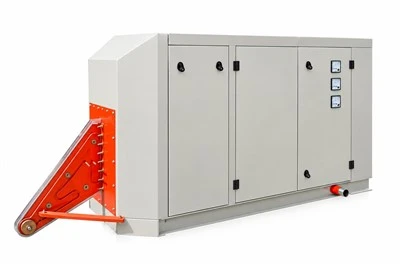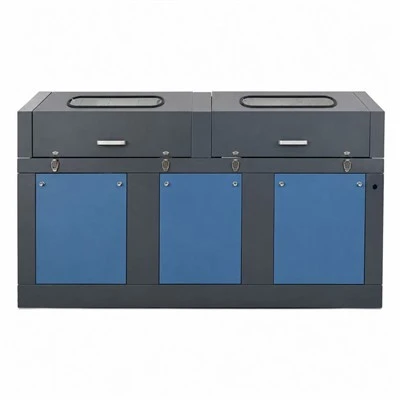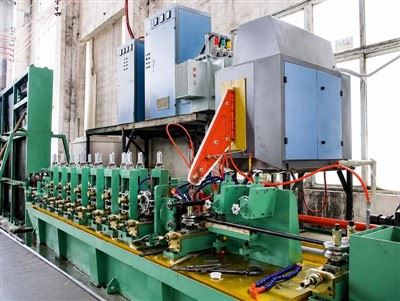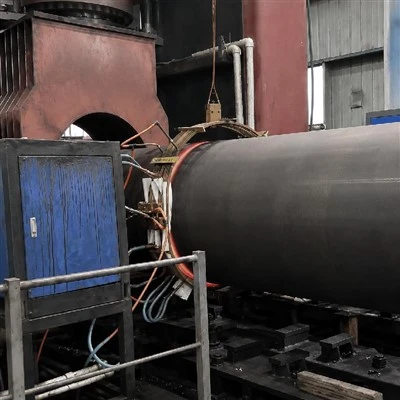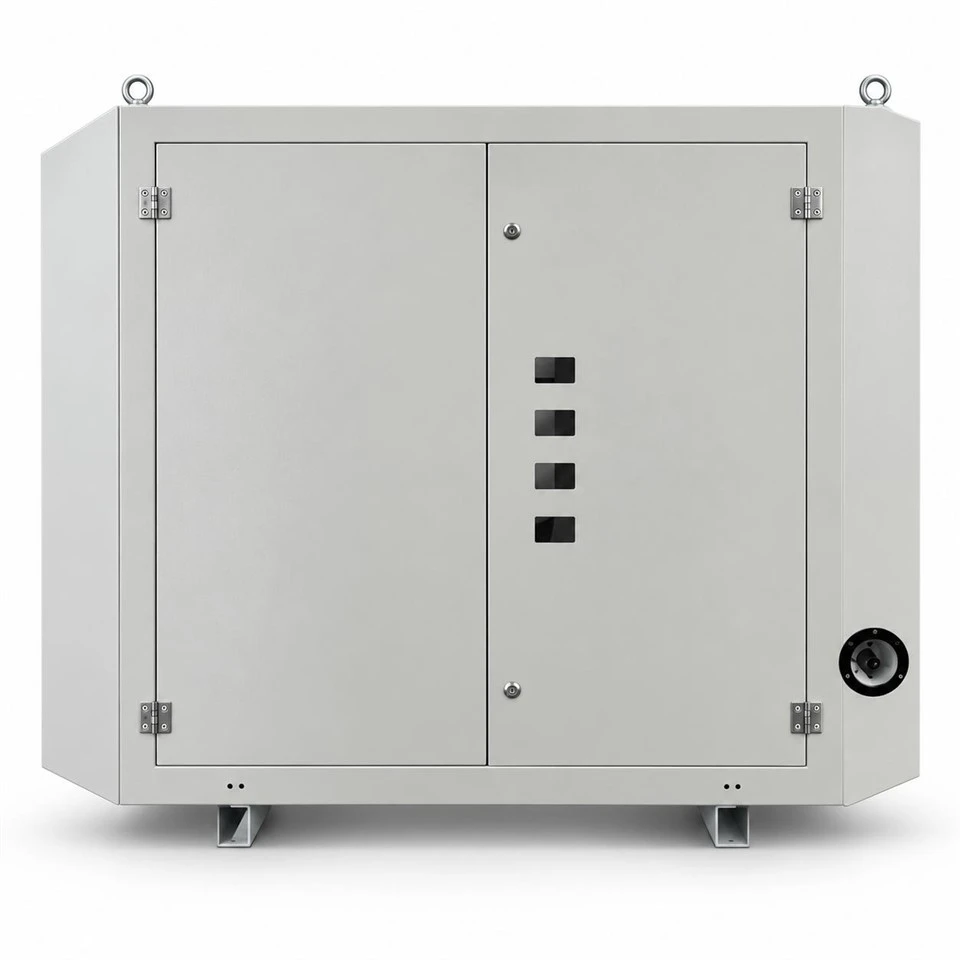


Baoding Sitai Induction Heating Equipment Manufacturing Co., Ltd. is one of the leading manufacturers and suppliers of high frequency steel pipe welding machine in China. We are committed to providing high quality customized products with competitive price. Welcome to contact us for quotation.
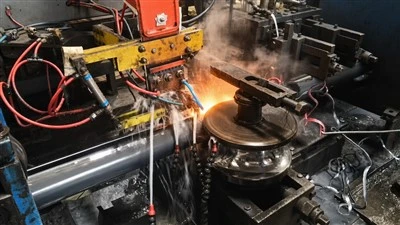
In high-frequency induction or contact welding, current is concentrated near the strip edges by skin and proximity effects. The heated edges are brought together at the weld V and pressure from the squeeze rolls forms the joint without conventional filler wire. Stable welding requires coordination between electrical power, operating frequency, impedance/matching, induction or contact geometry, weld V condition, tube-mill speed and cooling. SiTai focuses on the HF power and welding system and can engineer it for new tube mills or replacement of aging welding equipment.
Key Features
- Solid-state high-frequency power platform for continuous steel pipe and tube welding.
- Rectifier and inverter architecture designed for industrial tube-mill duty.
- Output and matching system configured for the required induction or contact welding arrangement.
- Fast power adjustment to support line-speed and product changes within the confirmed operating range.
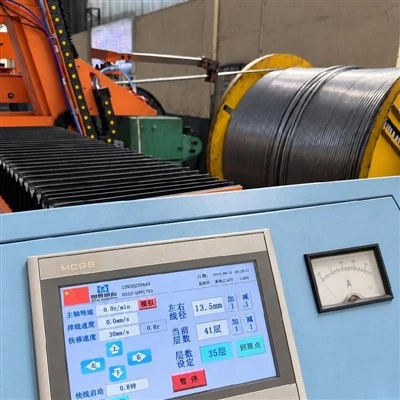
- Operator interface for power setting, operating status, alarms and protection monitoring.
- Protection functions for abnormal current, voltage, temperature, cooling and other critical operating conditions according to system design.
- Closed-loop or dedicated cooling solution configured for power electronics and welding components.
- Electrical interface available for integration with the existing tube-mill control system.
Typical System Configuration
|
Module / Component |
Function |
|
Rectifier / DC Power Section |
Converts incoming industrial power into the controlled DC supply required by the inverter. |
|
High-Frequency Inverter |
Generates the high-frequency electrical output used for welding. |
|
Matching / Output System |
Transfers HF energy efficiently to the welding load. |
|
Induction Coil or Contact Arrangement |
Selected according to tube size, material and welding method. |
|
Control & Protection System |
Manages power commands, monitoring, alarms and interlocks. |
|
Cooling System |
Maintains acceptable operating temperature for electrical and process components. |
|
Operator Interface |
Provides settings and real-time machine status for production personnel. |
Applications
- ERW carbon steel pipe production
- Round tube mills
- Square and rectangular tube mills after forming-process confirmation
- Structural and mechanical welded tube production
-
Replacement or modernization of older high-frequency tube welders
Technical Parameters
Final technical parameters are confirmed according to the customer's product drawing, material, required output and factory conditions. The table below defines the main engineering inputs without creating unverified fixed claims.
|
Parameter |
Configuration / Required Data |
|
Rated HF power |
Selected according to tube OD, wall thickness, material and speed |
|
Operating frequency |
Selected to match welding application |
|
Tube outside diameter range |
Customer to provide |
|
Tube wall thickness range |
Customer to provide |
|
Material grade |
Customer to provide |
|
Maximum line speed |
Customer to provide |
|
Welding method |
Induction or contact, project-specific |
|
Input power supply |
Customized for destination country |
|
Cooling requirement |
Matched to selected power configuration |
Why Choose SiTai
SiTai specializes in rectification, inversion, HF output and industrial induction/welding power integration.
01
Power-system selection is based on the real tube range, wall thickness and line speed.
02
Retrofit engineering can evaluate existing cabinets, output bus, matching components and line-control interface.
03
Operator controls and protection logic are designed for continuous production rather than laboratory operation.
04
Engineering support covers installation interface, commissioning conditions and welding-process coordination.
05
What We Need to Prepare a Technical Proposal
For a fast and accurate proposal, please send the relevant product drawing and the following information: Rated HF power, Operating frequency, Tube outside diameter range, Tube wall thickness range, Material grade, Maximum line speed. Existing-line photos, layout drawings and destination-country electrical requirements are also helpful for retrofit or integration projects.
Request a Custom Solution
Send your product drawing, material specification, production range and target output to SiTai. Our engineering team will review the process and recommend a machine configuration matched to your application.
Recommended Image ALT Text
- SiTai solid-state HF welder for steel pipe production
- SiTai HF tube-mill welding equipment
- customized high-frequency welding system for a steel tube mill
Publishing Notes
Use the primary keyword naturally in the page title, H1, first paragraph, one H2, image ALT text and URL. Use secondary keywords only where they match the sentence meaning. Avoid repeating exact keywords unnaturally; semantic coverage and buyer-focused technical content are more important than keyword density alone.
Frequently Asked Questions
Q: What tube-mill information is needed before selecting a high-frequency steel pipe welder?
A: Provide steel grade, strip thickness, finished tube diameter or section range, maximum mill speed, weld-V geometry and the existing squeeze-roll arrangement. Electrical supply, cabinet position, cooling-water data and the distance to the welding point are also important. The welder is selected around the real tube-mill duty rather than from a simple diameter-to-kilowatt table.
Q: Can a new solid-state HF welder replace an older vacuum-tube or legacy unit?
A: A modernization project can be evaluated when the existing mill mechanics remain suitable. The review covers power requirement, output connection, induction or contact arrangement, plant supply, cooling and control signals. The physical footprint and cable or bus routing also matter. A replacement should be engineered as a system interface so the new cabinet does not inherit an unsuitable welding-head geometry from the old equipment.
Q: What causes a weld seam to look overheated even when the displayed power is not high?
A: Local heating depends on current concentration, weld-V length, edge condition, mill speed and squeeze pressure in addition to the displayed power command. A long or unstable weld V, poor edge presentation or a change in coupling can concentrate energy differently. Troubleshooting should compare electrical values with the physical weld zone before concluding that the power percentage itself is incorrect.
Q: How should production speed be included in a steel pipe welding recipe?
A: Speed determines how long a given section of strip remains in the heating zone. A stable recipe therefore links speed with the required power and mechanical condition. During acceleration and deceleration, the power command should track the qualified relationship so the seam does not alternate between cold weld and overheating. The usable transition curve is confirmed during commissioning for each main product family.
Q: Why is squeeze-roll condition important to an HF welding machine?
A: High-frequency energy heats the strip edges, but the final bond is formed when the heated edges are brought together under the required pressure. Worn, misaligned or incorrectly positioned squeeze rolls can create a defective seam even with stable electrical output. Mechanical inspection of the weld stand should therefore be part of HF-welder troubleshooting, especially when defects repeat at the same tube position.
Q: What should be checked in the water system before starting the HF welder?
A: Confirm adequate flow and pressure through the inverter and output components, clean filters, correct return temperature and no trapped air or leaking connections. If the welding head contains water-cooled parts, check those circuits as well. Start permissives should be tied to the required cooling conditions so the machine cannot run at full duty with a restricted circuit after maintenance.
Q: Is the HF welder a complete steel pipe production line?
A: No. It provides the high-frequency welding function and its related electrical/control package. Strip uncoiling, accumulation, forming stands, squeeze rolls, sizing, cutting and tube handling are separate mill systems unless they are explicitly included in a broader project. Defining this boundary is important when comparing quotations from a power-supply supplier with quotations for a complete tube mill.
Q: Why is weld-V length monitored on an ERW steel pipe mill?
A: The weld V is part of the current path immediately before the strip edges meet. If its length or position changes because of forming or guide movement, heating distribution can change even at the same generator setting. Operators should therefore observe weld-V behavior together with mill speed and squeeze-roll position when tuning a steel-pipe recipe or investigating an intermittent seam defect.
Q: What should be reviewed when moving an HF welder to a different position on the same mill?
A: Relocation changes the output-conductor length, cabinet ventilation, cooling-pipe routing and possibly the distance to the induction or contact point. Those details can affect both electrical performance and service access. The new arrangement should be reviewed as an engineered installation, with output geometry and grounding preserved, rather than treating the cabinet like a conventional low-frequency power panel.
Q: How does steel grade influence the welding setup?
A: Carbon content, alloying, strip condition and edge quality affect heating and forge behavior. Two tubes with the same dimensions but different steel grades may not use identical power and speed settings. The mill recipe should therefore identify material grade as well as size, and any new grade should be qualified with the customer's seam-quality checks before it is released for routine production.
Q: Why should edge condition be inspected before blaming the HF power source?
A: Burrs, damaged edges or unequal strip presentation change where the edges meet and how current concentrates near the weld V. The generator can deliver stable energy while a mechanical edge defect produces intermittent seam quality. When a problem follows a strip coil or slitting batch, inspect edge condition and forming before making large electrical adjustments.
Q: What is the value of keeping reference weld samples for each main pipe size?
A: A retained sample provides a physical comparison for seam appearance, upset and any destructive test used by the plant. When a future run drifts, operators can compare the new product with a known accepted condition and the associated recipe record. This is more reliable than relying on memory of a power percentage that may have been used with a different steel batch or line speed.
Q: How should an HF welder be tuned after a major forming-roll change?
A: Treat the mechanical change as a new setup because weld-V position, edge presentation and squeeze behavior may have moved even if the tube size is nominally unchanged. Begin at a conservative production condition, re-establish the physical weld geometry, then adjust electrical power in relation to speed. Comparing the new seam with the previous accepted sample helps prevent electrical settings from compensating for an incorrect roll setup.
Q: Why can a tube seam defect appear only at one part of the strip coil?
A: Localized slitting damage, thickness variation, camber or surface contamination can change edge behavior for a limited length while the welder itself remains stable. Mark the time or coil position where the defect occurs and compare incoming strip condition. If the problem disappears with the next section of material without an electrical change, raw-material or forming variation should be investigated before servicing the inverter.
Hot Tags: high frequency steel pipe welding machine, China high frequency steel pipe welding machine manufacturers, suppliers, factory