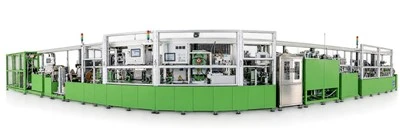
Customized Material-Adaptive Architecture
Asymmetric Thermal Compensation Design:Addressing the fact that copper's thermal conductivity is 1.7 times that of aluminum, the PLC is configured to allocate 40% of the power to the copper side and 60% to the aluminum side. This maintains the welding temperature differential between the two sides within ±20°C, preventing thermal imbalance.
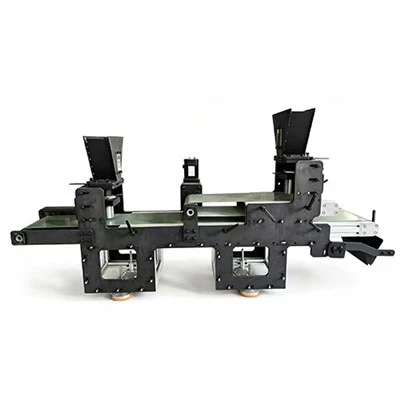
Dual-Station Parallel Operation System: Features a symmetrical left-right layout; each station accommodates copper-aluminum tubes with diameters of 6–30 mm. The servo-driven table switching cycle is ≤15 seconds, making it suitable for continuous batch production.
Precision Tooling and Positioning: Pneumatic fixtures provide dual-axis (axial and radial) positioning with an accuracy of ±0.05 mm. Controllable clamping force (50–200 N) ensures a stable butt-joint gap of 0.08–0.2 mm, optimizing capillary flow of the filler metal.
High-Efficiency, Stable Welding Process System
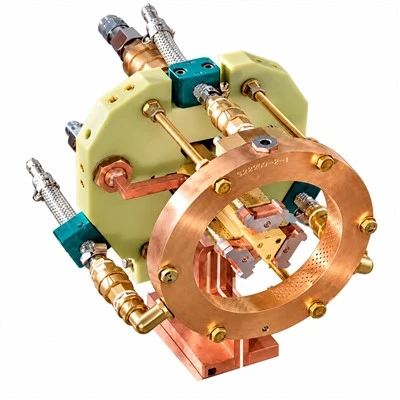
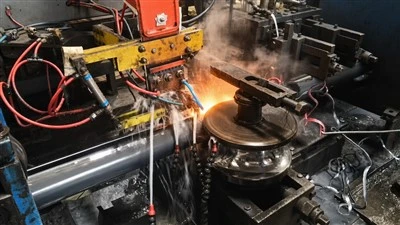
High-Frequency Induction Rapid Welding: Utilizes a 200–400 kHz high-frequency power supply with a heating rate of 100°C/second. Welding a single copper-aluminum tube takes only 5–7 seconds-more than four times the efficiency of traditional flame brazing.
Composite Filler Metal to Suppress Brittle Phases: Uses standard Al-Si-Cu-Ni series filler metal (e.g., 4047 Al-Si alloy with a copper foil interlayer) with a melting point of 560–580°C. This strictly limits the thickness of the interfacial intermetallic compound layer to under 5 μm, preventing the formation of continuous, brittle CuAl₂ phases.
Closed-Loop Pulsed Temperature Control:Employs a "1-second pulse heating + 0.5-second intermittent holding" cycle. Real-time feedback from an infrared pyrometer (±1°C accuracy) keeps temperature fluctuations within ±3°C, preventing overheating or burning of the base materials.