Core Welding Process Technologies
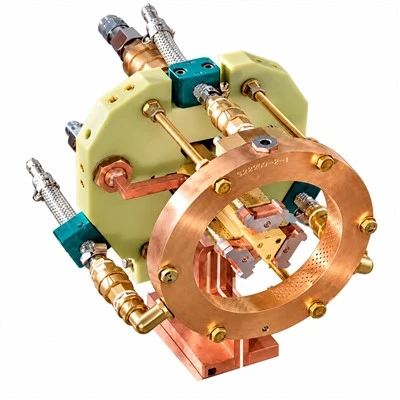
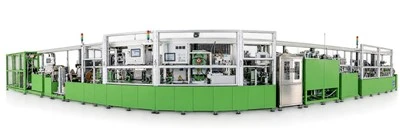
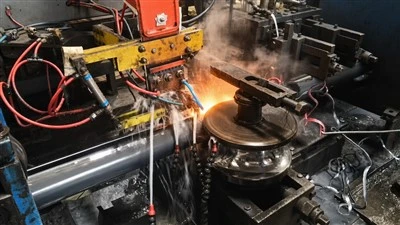
High-Frequency Induction Welding: Utilizes non-contact heating via 200–400 kHz high-frequency electromagnetic induction to weld a single tube in 5–7 seconds. It employs asymmetric power output (40% on the copper side, 60% on the aluminum side) to compensate for differences in thermal conductivity, keeping the temperature difference between the two sides within ±20°C. Suitable for tubes with diameters under 30 mm, this method offers a single-shift capacity of up to 3,500 units and is the mainstream solution for mass production.
Copper-Aluminum Brazing: Uses Al-Si-Cu-Ni or Zn-Al filler metals (melting point: 520–580°C). Capillary action fills joint gaps of 0.08–0.2 mm, while strictly controlled holding times limit the thickness of the brittle interfacial compound layer to under 5 μm. The joint tensile strength exceeds 80 MPa, with fractures occurring in the aluminum base material; the process involves low equipment investment costs, making it ideal for small-to-medium batch production.
Laser Composite Welding: Designed for medium-to-thick-walled or large-diameter tubes, this method combines QCW pulsed/continuous fiber lasers with a wobbling welding head. An energy negative feedback system suppresses instantaneous vaporization and spatter on the copper side, while CCD visual positioning ensures an accuracy of ±0.03 mm, effectively resolving issues such as weak welds and poor batch consistency found in traditional laser welding.
Cold Pressure Welding: Requires absolutely no heat or flux; high pressure applied via molds causes plastic deformation at the metal interface, achieving atomic bonding. As there is no risk of oxidation, it is suitable for butt-welding small-diameter copper-aluminum wires or tubes (under 25 mm) and is widely used in the wire and cable industry.