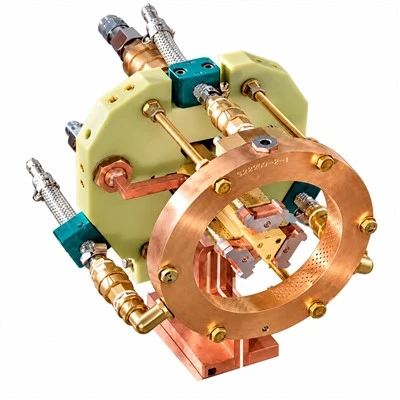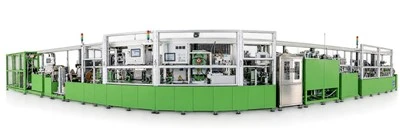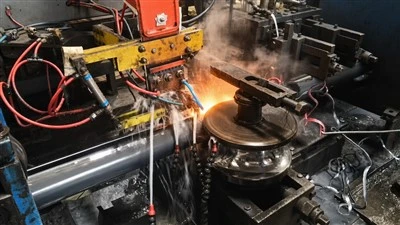

Heating System: Serving as the core heat source, different methods are employed based on the equipment type. Resistance furnaces generate heat via resistive elements, offering high temperature control precision. Induction heating equipment utilizes IGBT/MOSFET power components to generate an alternating magnetic field through a copper induction coil, inducing eddy currents within the workpiece itself to produce heat, achieving thermal efficiency exceeding 90%. Laser heat treatment units center on high-power lasers, using beam delivery systems to precisely focus energy onto the workpiece surface.
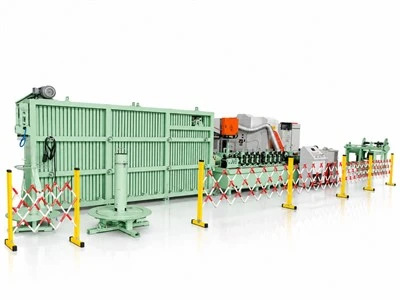
Furnace Body/Processing Chamber Structure: Conventional heat treatment furnaces use refractory insulation materials to minimize heat loss. Vacuum furnaces feature a fully sealed metal shell with a water-cooled jacket; externally heated vacuum furnaces include an additional independent sealed retort to isolate the heating zone from the vacuum environment. High-frequency heat treatment equipment utilizes an enclosed processing chamber integrating loading/unloading ports and support mechanisms to create a relatively isolated heating space.
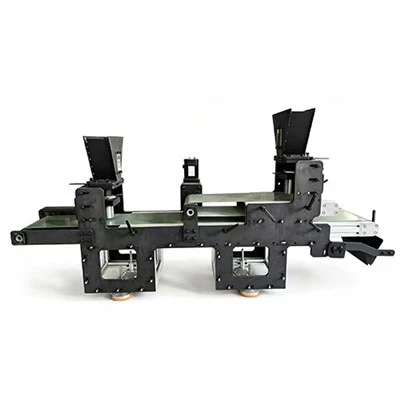
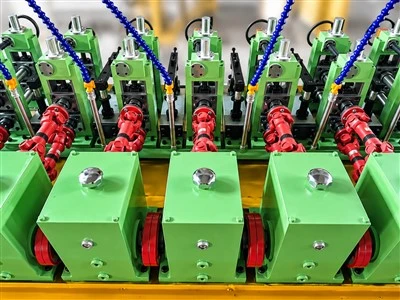
Temperature Control and Motion Mechanisms: These systems generally feature PLC controls capable of storing hundreds of process parameter sets, utilizing infrared pyrometers to achieve closed-loop temperature control with ±2°C precision. Most units are equipped with multi-station rotary tables or multi-axis CNC worktables-offering positioning accuracy up to ±0.02mm-to move workpieces at a constant speed, ensuring uniform heating.
Cooling and Circulation Systems: Independent cooling units are integrated; high-frequency equipment features annular water spray assemblies and filtration tanks for closed-loop cooling water recycling. Laser equipment provides dedicated cooling circuits for the laser source and optical components to ensure stable, long-term operation. Quenching processes allow for the adjustment of cooling medium flow rates and composition, with cooling speeds adjustable within the 50–200°C/s range.
Environmental and Safety Protection Structures: Controlled-atmosphere furnaces feature precise gas mixing and circulation systems to prevent workpiece oxidation and decarburization. Vacuum furnaces employ multi-stage sealing structures, achieving ultimate vacuum levels better than 10⁻³ Pa. Laser equipment is equipped with fully enclosed protective housings, safety interlocks, and laser shielding components to prevent injury from laser leakage.