
Universal Core Components
Furnace Body/Processing Chamber: Serves as the structural foundation for pressure containment and thermal insulation. Standard furnaces utilize a steel shell with multi-layer refractory insulation to minimize heat loss, while vacuum furnaces employ a double-walled, water-cooled stainless steel structure capable of withstanding pressures ≥0.1 MPa; the outer wall temperature is kept below 60°C, and the ultimate vacuum level can reach the 10⁻³ Pa range.
Heating Elements: Acting as the primary heat source, resistance furnaces typically use nickel-chromium resistance wires or silicon carbide rods, whereas high-temperature vacuum furnaces often employ graphite felt heating elements. These achieve 85% thermal efficiency at 1300°C, and a 3D mesh layout allows for temperature uniformity within the furnace to be controlled to within ±5°C.
Temperature Control System: Centered on a PLC and PID controller paired with high-precision Type B or S thermocouples, this system achieves temperature control accuracy of ±1°C. It stores hundreds of process profiles to enable closed-loop control across the entire heating, soaking, and cooling cycle, directly determining the hardness consistency of the treated workpieces.
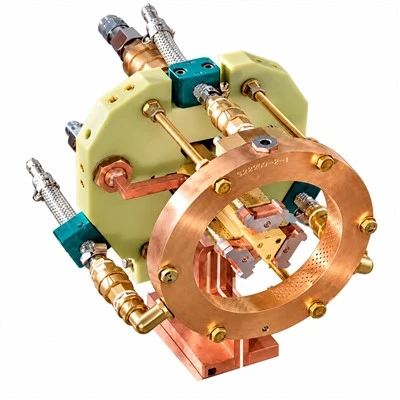
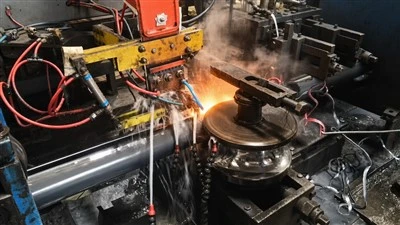
Cooling and Circulation System: Comprises internal forced circulation and external cooling units. Vacuum furnaces can be backfilled with high-purity nitrogen to achieve cooling rates of 20°C/s, while high-frequency equipment features annular water spray assemblies and a filtered water tank for closed-loop quenching medium circulation, ensuring stable cooling during continuous production.
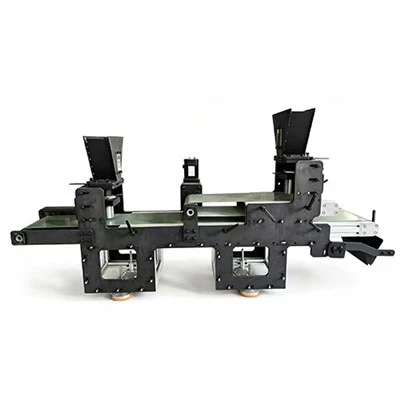
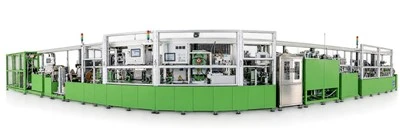
Drive and Loading Mechanisms: Continuous furnaces transport workpieces using heat-resistant steel mesh belts, roller conveyors, or walking beams. High-frequency quenching machines come standard with 6–12 station rotary tables offering ±0.02 mm positioning accuracy; paired with adaptive pneumatic fixtures, they enable rapid changeovers for diverse workpiece types.