Raw Material Pre-treatment
This step establishes the foundation for stable subsequent processing; the base tube and fin strip require separate treatments:
Base Tube Pre-treatment: Seamless tubes made of 20# carbon steel, 304/316L stainless steel, or alloy steel (diameter: 15–150 mm; wall thickness: 2–10 mm) are selected. Ultrasonic flaw detection is used to identify and reject tubes with wall defects; sandblasting or pickling removes oxide scale; and degreasing/cleaning removes oil residue, ensuring surface roughness is controlled within the Ra 12.5–25 μm range.
Fin Strip Pre-treatment: Strips of low-carbon steel, aluminum, or alloy steel (thickness: 0.3–1.5 mm; width: 10–50 mm) are selected. A leveling machine corrects flatness; low-temperature annealing (600–650°C) enhances plasticity; and cleaning removes rolling oils and oxide layers to prevent poor bonding during the subsequent winding process.
Fin Forming and Winding
This is the core stage determining the product's structural precision and directly influencing heat transfer efficiency:
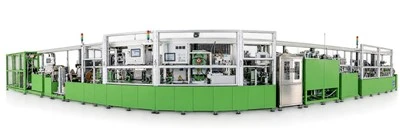
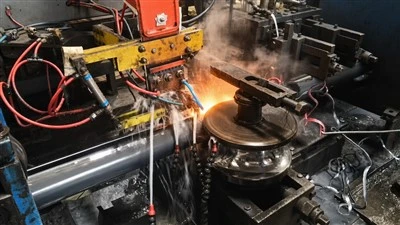
A CNC spiral winding machine feeds the pre-treated strip into a forming die, where rollers compress and continuously bend it into a spiral shape; fin height is controllable between 5 and 30 mm, with a pitch deviation of ≤0.2 mm.
The formed fin is tightly wound onto the outer wall of the base tube under a constant tension of 500–1,500 N. Servo motors precisely control the base tube's rotation and feed speeds, while high-end equipment features a visual inspection system to correct fin pitch deviations (±0.1 mm) in real time.