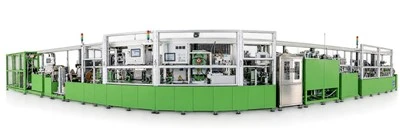
Modular, Integrated Machine Architecture
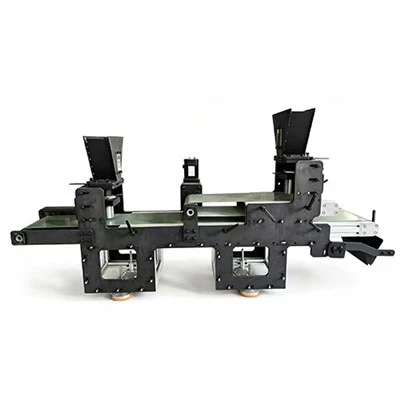
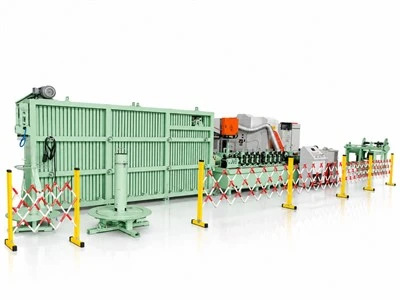
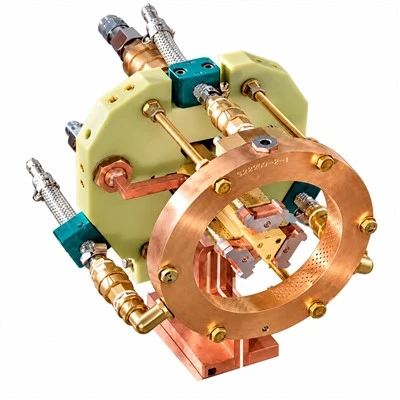
The system is not a standalone unit but an integration of multiple highly coordinated process modules. Core components include an uncoiling and leveling unit, a metered core-material filling system, a multi-pass forming roll assembly, an online closed-loop tension control system, a cooling/sizing/hauling unit, and a fully automatic coiling system; high-end models may also feature high-frequency welding units and online visual inspection modules. The machine features a compact layout-the main unit of the typical GBX-6 series occupies only 3840 × 820 mm-and the entire production process can be managed by just 2–3 operators, making it well-suited for the spatial constraints of small-to-medium-sized workshops.
Progressive Multi-Pass Forming Mechanism
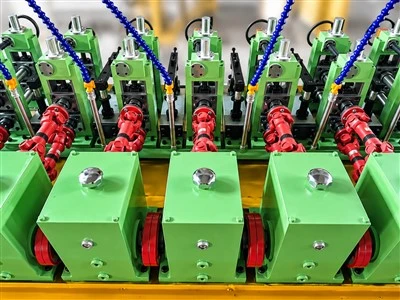
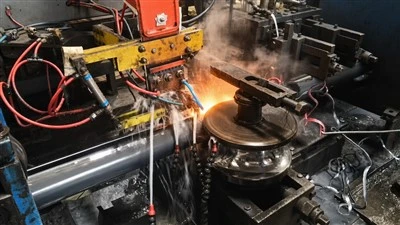
The forming roll assembly serves as the core operational component. Typically constructed from Cr12MoV steel or carbide-coated materials, these rolls offer a cumulative service life exceeding 3,000 hours.
The steel strip passes through more than 11 sets of progressive forming rolls, sequentially undergoing cold bending, U-shape forming, powder filling, and edge locking, thereby gradually transitioning from a flat strip into a closed tubular structure.
Roll angles and pressures are independently adjustable. Combined with guiding funnels and limiting sleeves, this setup controls the straightness deviation of the finished wire to within ≤0.5 mm/m (with high-end models capable of achieving 0.2 mm/m).
The multi-pass, incremental deformation process prevents cracking caused by localized stress concentrations in thin-walled steel strips. It ensures a locking seam engagement angle of at least 45°, effectively preventing core exposure during subsequent production and end-use.