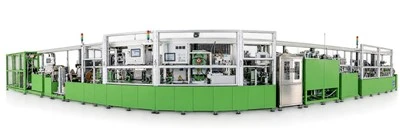
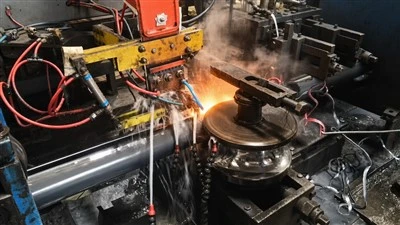
Core Structure and Basic Operational Logic
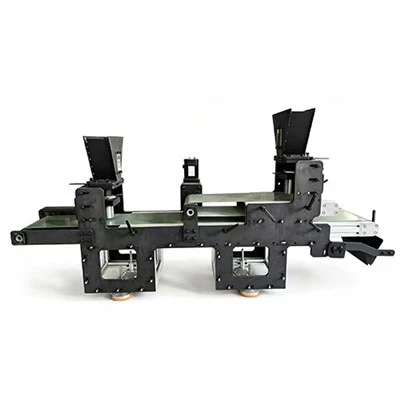
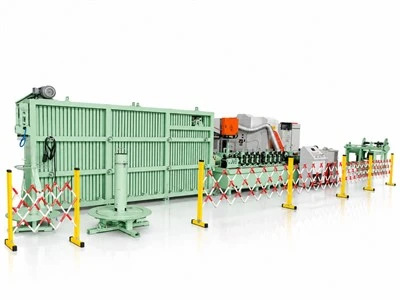
Cored wire equipment primarily consists of a pay-off unit, a powder feeding unit, a main forming unit, a traction unit, and a take-up unit, enabling continuous, automated production. Through the precise coordination of these units, the equipment combines a cold-rolled low-carbon steel strip (0.2–0.6 mm thick) with alloy powders-such as calcium or silicon powder-to produce a cored wire featuring a uniform cross-section and a fully packed core, achieving production speeds ranging from tens to over a hundred meters per minute.
Core Principles of the Three-Stage Forming Process
Steel Strip Pre-forming Stage
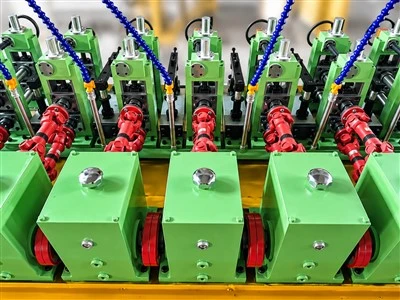
The flat steel strip passes through multiple sets of progressive rollers, where it is gradually cold-rolled into a U-shaped channel. This creates a height difference between the two sides of the strip, preparing the structure for powder filling and preventing spillage during the subsequent filling process.
Powder Filling and Seaming Stage
Precisely metered alloy powder is evenly deposited into the U-shaped steel strip channel via a vibrating feeder. Subsequently, the sides of the strip are gradually brought together and interlocked by rollers, completely enclosing the powder to form the initial tubular cored wire body.
Finishing and Sizing Stage
The initially formed cored wire body undergoes further compression through multiple finishing roller passes. This gradually reduces the cross-section to the standard φ4–φ6 mm specification while compacting the loose internal powder, ensuring uniform filling density and a tightly sealed outer sheath to prevent powder leakage during transport and use.