Baoding Sitai Induction Heating Equipment Manufacturing Co., Ltd. is one of the leading manufacturers and suppliers of roll forming and sizing mill in China. We are committed to providing high quality customized products with competitive price. Welcome to contact us for quotation.
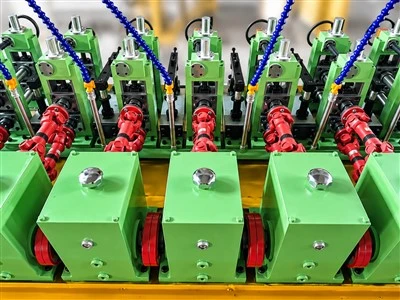
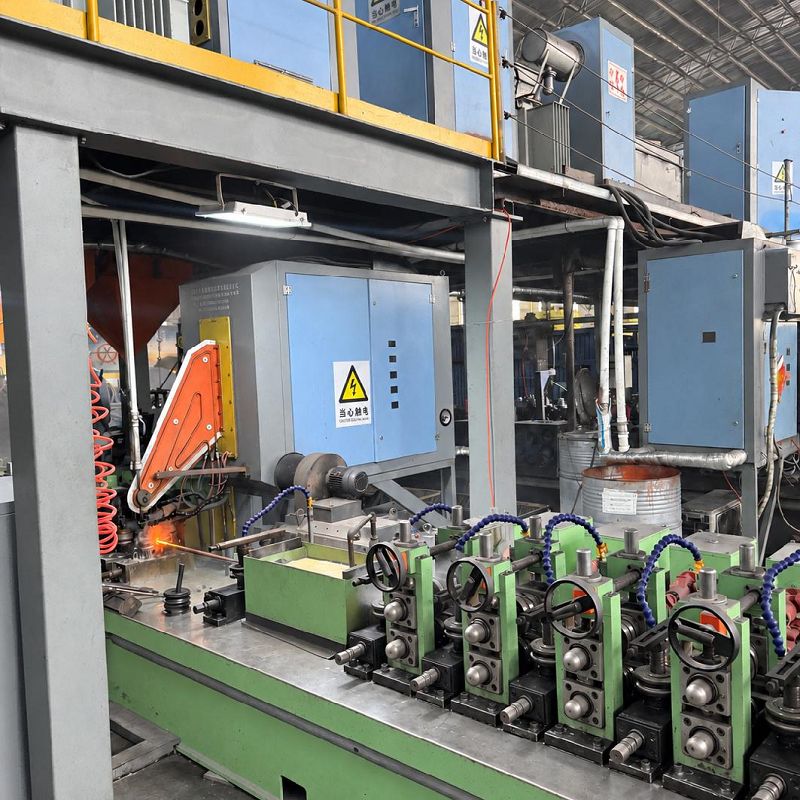
In a cored wire production line, the forming mill converts flat steel strip into a controlled tubular profile. The sizing section then calibrates the outside diameter, roundness and final geometry. Correct pass design is critical: excessive deformation can damage the strip or disturb core distribution, while insufficient forming control can cause unstable closure, dimensional variation or poor downstream welding conditions. SiTai designs the roller sequence around the customer's strip specification, target wire size, core material and sealing process.
Key Advantages
- Progressive multi-pass roll forming designed around the target cored wire geometry.
- Precision sizing passes for improved outside-diameter consistency and roundness.
- Rigid mill structure to reduce vibration and pass-to-pass misalignment during continuous production.
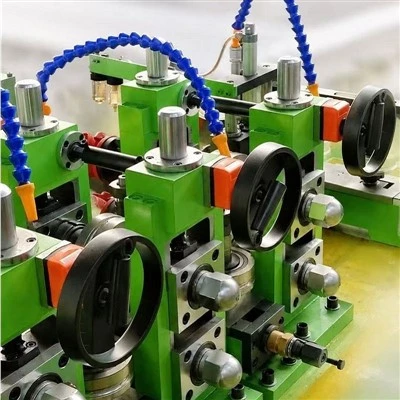
- Adjustable roller positions for setup, correction and process optimization.
- Replaceable roller tooling manufactured to the confirmed strip width, thickness and finished wire size.
- Line-speed synchronization with upstream powder filling or core feeding and downstream welding/coiling systems.
- Guiding and centering arrangements that help maintain stable strip tracking through the forming section.
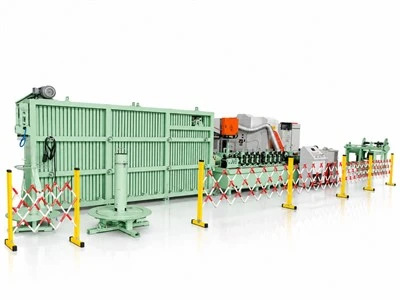
- Safety guarding and operator-access points configured according to the final line layout.
Typical System Configuration
|
Module / Component |
Function |
|
Forming Stands |
Progressively bend steel strip from flat condition to a controlled tubular profile. |
|
Sizing Stands |
Calibrate final wire diameter, roundness and dimensional stability. |
|
Roller Tooling |
Custom pass geometry selected for strip thickness, width, wire diameter and sealing method. |
|
Drive & Transmission |
Matched to production speed, torque demand and line synchronization requirements. |
|
Guiding System |
Supports strip centering and stable entry between successive roller passes. |
|
Local Adjustment |
Allows controlled setup of roller position and line alignment. |
|
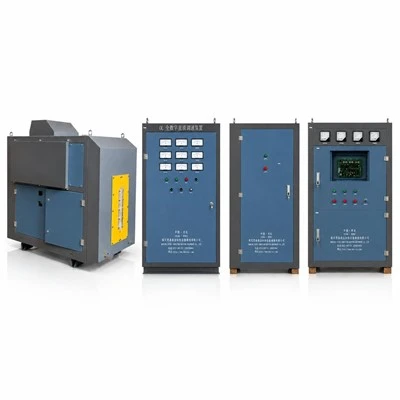
Control Interface |
Integrated with the production line control architecture when required. |
Applications
- Metallurgical cored wire production
- Powder-filled cored wire forming
- Alloy and additive cored wire manufacturing
- Welded or mechanically closed cored wire lines, subject to process design
-
New production lines and existing-line forming/sizing upgrades
Technical Parameters
Final technical parameters are confirmed according to the customer's product drawing, material, required output and factory conditions. The table below defines the main engineering inputs without creating unverified fixed claims.
|
Parameter |
Configuration / Required Data |
|
Steel strip material |
Defined by the cored wire process and customer specification |
|
Steel strip width |
Project-specific |
|
Steel strip thickness |
Project-specific |
|
Finished wire outside diameter |
Project-specific |
|
Number of forming/sizing passes |
Designed according to deformation schedule |
|
Production speed |
Matched to complete line requirements |
|
Roll material / heat treatment |
Selected according to strip material and service life target |
|
Drive method |
Selected according to line load and synchronization |
|
Electrical standard |
Customized for destination-country power supply |
Why Choose SiTai
Specialized engineering for cored wire production rather than generic profile roll forming.
01
Roll-pass design coordinated with powder filling, seam closing or HF welding and final coiling requirements.
02
Custom mechanical design based on customer drawings and finished-wire targets.
03
Integration support for new lines, line expansion and retrofit projects.
04
Factory assembly and functional verification before shipment according to the agreed project scope.
05
What We Need to Prepare a Technical Proposal
For a fast and accurate proposal, please send the relevant product drawing and the following information: Steel strip material, Steel strip width, Steel strip thickness, Finished wire outside diameter, Number of forming/sizing passes, Production speed. Existing-line photos, layout drawings and destination-country electrical requirements are also helpful for retrofit or integration projects.
Request a Custom Solution
For a Roll Forming and Sizing Mill proposal, send the finished-wire drawing, strip material and dimensions, closure route, target speed and the available line interfaces. SiTai can then define the stand arrangement and tooling scope around the actual process.
- SiTai cored-wire forming equipment
- SiTai forming and sizing equipment for metallurgical cored wire
- customized cored-wire forming and sizing equipment
Frequently Asked Questions
Q: What information is required to design new forming and sizing equipment?
A: The engineering package should include the strip material, width and thickness, core type, target outside diameter, closure method, required line-speed range and a drawing or sample of the finished wire. If the mill will be installed in an existing line, the entry and exit centerline, available length, drive arrangement and control interface are also important. These inputs determine the stand layout and roll-tooling concept.
Q: Can an existing cored wire mill be retrofitted instead of replaced?
A: A retrofit can be considered when the machine frame, shafts, bearings and drive system still have enough rigidity and capacity for the intended product. The review normally looks at stand alignment, shaft condition, available adjustment, roll dimensions and the way the mill interfaces with the feeder or downstream equipment. If the original geometry imposes a limitation that tooling cannot correct, a partial or complete mill replacement may be more practical.
Q: How is a pass design validated before production use?
A: A pass design should be reviewed against material deformation, strip-edge behavior, core space and the required final section. During commissioning, intermediate profiles are checked progressively rather than judging only the last stand. Small corrections are made where the deviation begins. This approach makes setup more repeatable and avoids using the final sizing stands to compensate for a forming error created much earlier in the mill.
Q: What causes poor roundness even when the final diameter looks correct?
A: A single outside-diameter reading can hide an oval or asymmetric section. Possible causes include unequal roll gaps, shaft or stand misalignment, incorrect roll profile, uneven core distribution and excessive reduction concentrated in one direction. Measuring the wire at several angular positions and checking the preceding stands usually gives a clearer diagnosis than tightening the last sizing roll.
Q: How should replacement roll tooling be specified?
A: Use the mill shaft dimensions and stand arrangement together with the strip and finished-product geometry. If the existing tooling has been modified in service, provide measured roll dimensions or a physical sample rather than relying only on an old drawing. Material and heat treatment should be selected for expected wear and production duty, while the actual groove profile is confirmed from the intended pass schedule.
Q: Can this mill serve both welded and mechanically closed cored wire processes?
A: The machine concept can be engineered for different closure routes, but the pass design is not identical. A welded line must present controlled strip edges to the welding point; a mechanically closed wire requires the specific fold or overlap geometry needed for locking. When both products are planned, the changeover method and tooling sets should be defined at the project stage instead of treating the closure process as a downstream detail.
Q: What should be inspected after a long production campaign?
A: Check roll-groove wear, shaft play, bearing condition, stand fasteners, guide alignment and the repeatability of adjustment references. Product measurements should be compared with the original stable setup. A gradual increase in correction at later stands can be an early sign that wear or alignment has changed upstream, allowing maintenance to be planned before finished-wire dimensions become unstable.
Hot Tags: roll forming and sizing mill, China roll forming and sizing mill manufacturers, suppliers, factory