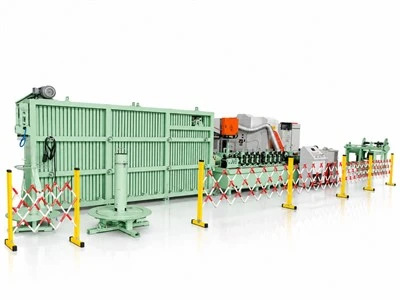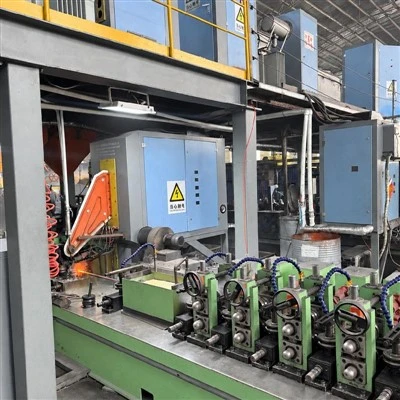


Baoding Sitai Induction Heating Equipment Manufacturing Co., Ltd. is one of the leading manufacturers and suppliers of seamless calcium cored wire production line in China. We are committed to providing high quality customized products with competitive price. Welcome to contact us for quotation.
Seamless Calcium Cored Wire Production Line is the electrical power section that supplies controlled high-frequency energy to the longitudinal seam after the strip has been formed around the core material.
The system converts industrial AC power into high-frequency electrical energy through rectification, DC power conversion, and high-frequency inversion, providing stable and concentrated welding heat for longitudinal welding of the steel strip.
Designed for continuous and high-speed production, the system provides stable welding power, fast dynamic response, precise power control, and reliable long-term operation.
For a complete line, the Seamless Calcium Cored Wire Production Line is matched to strip geometry, line speed, cooling conditions and the mechanical welding interface rather than selected from rated power alone.
Working Principle
AC Input → Rectification → DC Link → High-Frequency Inversion → Welding Output
The high-frequency welding system operates through the following stages:
AC Power Input
Industrial AC power is supplied to the high-frequency welding system.
Rectification
The incoming AC power is converted into stable DC power through the rectifier unit.
DC Link
The rectified DC power is filtered and stabilized to provide a reliable energy source for the inverter.
High-Frequency Inversion
High-power semiconductor switching devices convert DC power into high-frequency AC power.
High-Frequency Welding Output
The high-frequency electrical energy is delivered to the welding section of the cored wire production line.
Seam Welding
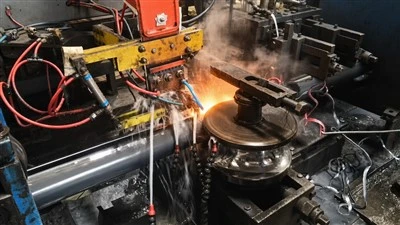
The high-frequency current generates concentrated heat along the longitudinal seam of the formed steel strip, allowing the strip edges to be continuously heated and welded.
Designed for Seamless Cored Wire Production
SiTai High Frequency Welding System is specifically designed for welded seamless cored wire production.
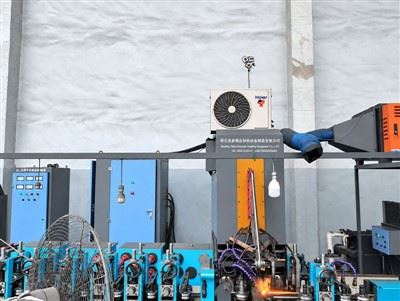
During production, the steel strip is continuously formed around the filling material. The longitudinal seam is then continuously welded by high-frequency heating to create a closed steel shell around the core material.
The high-frequency welding system provides stable and controllable welding energy while the production line operates continuously at high speed.
This process enables the production of seamless cored wire with a continuously welded outer steel shell.
Core System Components
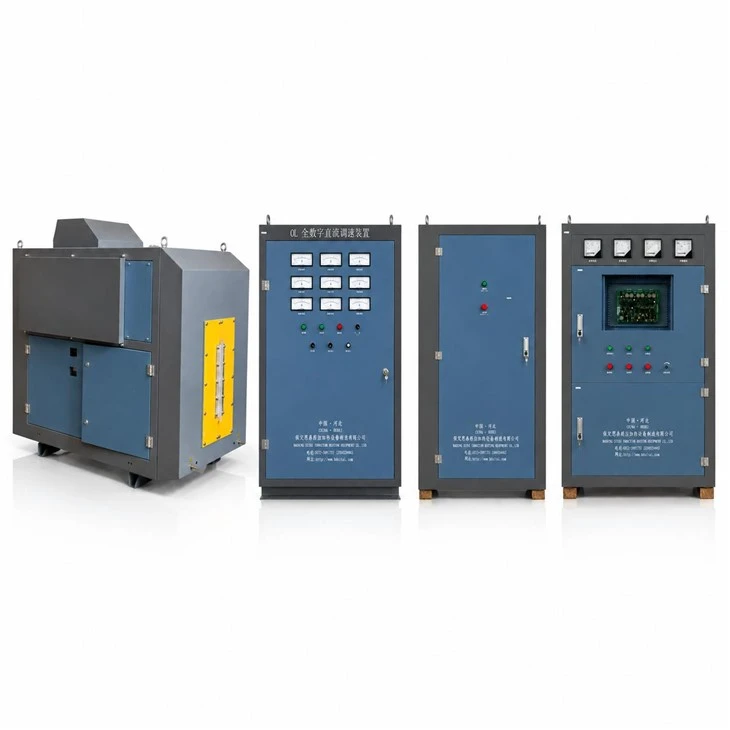
High Frequency Rectifier Unit
The rectifier unit converts industrial AC power into stable DC power for the high-frequency inverter.
It provides a reliable DC power source for the subsequent power conversion stage and supports continuous industrial operation.
01
DC Link System
The DC link filters and stabilizes the rectified electrical energy before it enters the inverter.
A stable DC link helps maintain consistent power delivery and improves the overall operating stability of the welding system.
02
High Frequency Inverter
The inverter is the core power conversion section of the system.
High-power semiconductor switching devices rapidly convert DC power into high-frequency AC power, providing the required energy for continuous cored wire welding.
The optimized inverter structure provides fast dynamic response, stable output, and efficient power conversion.
03
High Frequency Welding Power Supply
The high-frequency power supply delivers controlled welding energy to the welding section.
The output power and operating frequency can be configured according to the cored wire diameter, steel strip specifications, filling material, production speed, and welding requirements.
04
Key Advantages
Stable Welding Power
Provides consistent high-frequency energy for continuous longitudinal welding of the steel strip.
Fast Dynamic Response
The solid-state inverter responds rapidly to changes in welding load and production conditions.
Integrated Production Line Solution
The system can be integrated with the complete seamless cored wire production line and synchronized with forming, powder filling, cooling, sizing, and take-up systems.
Precise Power Control
Welding power can be accurately adjusted according to different cored wire production specifications.
High-Speed Continuous Welding
Designed for continuous and high-speed seamless cored wire production.
High Electrical Efficiency
Solid-state power conversion technology provides efficient electrical energy conversion and helps reduce energy losses.
Reliable Continuous Operation
Designed for demanding industrial environments and long-term continuous production.
Seamless Cored Wire Production Process
Steel Strip Decoiling
The steel strip is continuously supplied to the production line.
Strip Forming
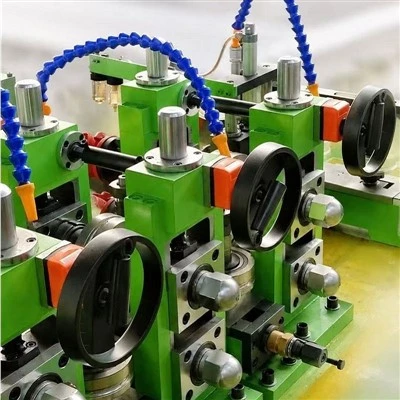
The steel strip is gradually formed into a tubular shape around the filling material.
Powder Filling
The required alloy or metallurgical powder is continuously filled into the formed steel strip.
High-Frequency Welding
The longitudinal seam is continuously heated and welded using high-frequency electrical energy.
Water Cooling
The welded cored wire is rapidly cooled to stabilize the welded structure.
Sizing
The welded wire passes through the sizing section to achieve the required finished diameter.
Online Annealing
Online annealing can be configured according to the production requirements and material characteristics.
Wire Take-Up
The finished cored wire is continuously collected by the take-up system.
Finished Wire Coiling
The finished cored wire is wound into compact and uniform coils.
Technical Specifications
|
Item |
Specification |
|
Product Name |
High Frequency Welding System |
|
Application |
Seamless Cored Wire Production |
|
Welding Type |
High-Frequency Longitudinal Welding |
|
Power Conversion |
AC → DC → High-Frequency AC |
|
Main Components |
Rectifier + DC Link + Inverter + HF Power Supply |
|
Technology |
Solid-State High-Frequency Inverter |
|
Cooling Method |
Water Cooling |
|
Output Power |
Customized |
|
Operating Frequency |
Customized |
|
Control Method |
Digital / Automatic Control |
|
Protection Functions |
Over-Current / Over-Voltage / Over-Temperature / Water Flow Protection |
|
Production Mode |
Continuous Production |
|
Line Integration |
Seamless Cored Wire Production Line |
Technical parameters are configured according to the cored wire diameter, steel strip specifications, filling material, welding requirements, and target production speed.
Applications
The SiTai High Frequency Welding System is suitable for seamless cored wire production using various filling materials, including:
- Calcium Cored Wire
- Silicon Calcium Cored Wire
- Ferroalloy Cored Wire
- Carbon Cored Wire
-
Metallurgical Alloy Cored Wire
-
Other Specialized Cored Wires
The system can be configured for different cored wire diameters, steel strip specifications, and production speeds.
Integration with SiTai Seamless Cored Wire Production Line
The High Frequency Welding System can be integrated into a complete SiTai seamless cored wire production line.
Complete Production Line
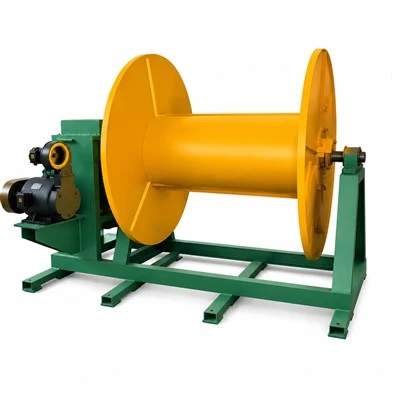
- Vertical Steel Strip Decoiler
- Strip Forming System
- Automatic Powder Filling System
- High Frequency Welding System
-
Closed Loop Water Cooling System
-
Online Wire Annealing System
-
Sizing System
-
Online Wire Take-Up Machine
-
Automatic Wire Traversing System
-
Finished Wire Coiling Machine
Customized High Frequency Welding Solutions
The high-frequency welding system is configured according to the complete production process rather than simply the finished wire diameter.
Key production parameters include:
- Finished Cored Wire Diameter
- Steel Strip Thickness
- Steel Strip Width
- Filling Material
- Filling Ratio
- Production Speed
- Welding Requirements
- Target Production Capacity
Based on these parameters, SiTai engineers select and configure the appropriate high-frequency power, operating frequency, inverter system, cooling system, and control configuration.
Why Choose SiTai?
SiTai specializes in high-frequency welding and induction heating equipment and provides dedicated high-frequency power solutions for seamless cored wire production.
The complete system integrates the rectifier, DC link, high-frequency inverter, welding power supply, cooling system, and control system into a coordinated production solution.
SiTai can provide both standalone high-frequency welding systems and complete seamless cored wire production lines according to customer requirements.
With a focus on continuous production, welding stability, equipment reliability, and production efficiency, SiTai provides customized high-frequency welding solutions for metallurgical cored wire manufacturers worldwide.
Request a Technical Solution
Send us your production requirements, including:
- Finished Cored Wire Diameter
- Steel Strip Thickness
- Steel Strip Width
- Filling Material
- Filling Ratio
- Target Production Speed
- Required Production Capacity
Our engineers can recommend a suitable HF welding power system based on your specific production requirements.
Frequently Asked Questions
Q: Why does a seamless cored wire welding power supply need fast response when line speed changes?
A: The longitudinal seam receives heat while the strip is moving, so a speed increase changes the energy delivered to each unit length of seam. A welding system with suitable dynamic response can follow acceleration, deceleration and normal speed variation without forcing the operator to make large manual corrections. During commissioning, power command, line speed and the mechanical closing condition should be checked together; stable electrical output cannot compensate for a seam that is physically misaligned.
Q: How are welding power and operating frequency selected for a new cored wire specification?
A: Selection starts from the steel strip material and thickness, finished wire size, intended line speed, weld-joint geometry and the physical arrangement of the welding head. The inductor or contact arrangement, current path and distance to the weld point also affect coupling. For that reason, frequency and power should be treated as process variables to be engineered around a defined product rather than as universal settings copied from another production line.
Q: What should be checked when the oscilloscope waveform or welding current becomes unstable?
A: First separate the power-source condition from the load condition. Inspect the output connections, inductor or contact components, resonant capacitors, bus connections, cooling-water flow and any signs of overheating or looseness. Then verify strip tracking, weld-V position and the mechanical closing point. If the instability changes with line speed or product position, record power, current and mechanical observations at the same time so the cause can be isolated instead of replacing components by trial and error.
Q: Can one high-frequency welding system be used for several seamless cored wire diameters?
A: It may be possible when the required products fall within the electrical and mechanical operating window of the installed system. A diameter change can also change strip thickness, seam geometry, forming position and the optimum coupling arrangement, so the output network and welding head may need adjustment. Before adding a new size, SiTai recommends reviewing the complete product route and confirming the process with actual strip and target line speed.
Q: Why is cooling-water quality important to the high-frequency welding unit?
A: The inverter, output circuit, capacitors, bus connections and welding components can carry high electrical and thermal loads. Stable flow and suitable water quality help keep these parts within their intended temperature range and reduce scale or contamination in narrow cooling passages. Flow, pressure and temperature interlocks should therefore be part of the operating check, especially after maintenance or when the plant cooling-water source has changed.
Q: What information is needed when replacing an older cored wire HF welder?
A: A retrofit review should include the existing electrical supply, cabinet location, available cooling system, strip specification, finished wire size, production speed, current welding-head arrangement, control signals and photographs or drawings of the installation. The objective is not only to match rated power, but also to make sure the new rectifier, inverter and output section can interface with the existing forming and line-control equipment.
Q: How can an operator distinguish an electrical welding problem from a forming problem?
A: Electrical problems are more likely when power or current is erratic while strip position remains stable; forming problems often appear as seam wandering, changing edge contact, local gaps or a weld point that moves even though the electrical output is steady. In practice both systems interact. A useful troubleshooting method is to compare the electrical trend, seam position and finished weld appearance over the same production interval before changing any setting.
Q: Which production data should be recorded during commissioning?
A: Keep a product-specific record that links steel strip specification, finished wire size, line speed, power command, measured current or voltage where available, cooling conditions, welding-head position and the observed seam result. Recording the stable window for each qualified product makes later startup and troubleshooting much faster and prevents operators from relying on a single power percentage without the surrounding process conditions.
Q: What should be investigated when a resonant capacitor fails in a seamless-cored-wire welder?
A: A capacitor failure can be a symptom rather than an isolated event. Review cooling, connection tightness, current loading, operating frequency, nearby component temperature and any recent change in the welding load. Inspect the full capacitor bank and bus structure for discoloration or looseness. The replacement component should match the required electrical rating, but the underlying abnormal condition should be corrected before the line resumes full duty.
Q: Why is a welded sample still needed when the power waveform looks normal?
A: Electrical measurements show how the power system is behaving, but the final requirement is a sound longitudinal joint in the steel sheath. Forming alignment, edge condition and closing pressure can create a poor seam with an apparently stable waveform. A qualified setup therefore links oscilloscope or power data with physical weld inspection and finished-wire measurements instead of using either source of evidence alone.
Hot Tags: seamless calcium cored wire production line, China seamless calcium cored wire production line manufacturers, suppliers, factory