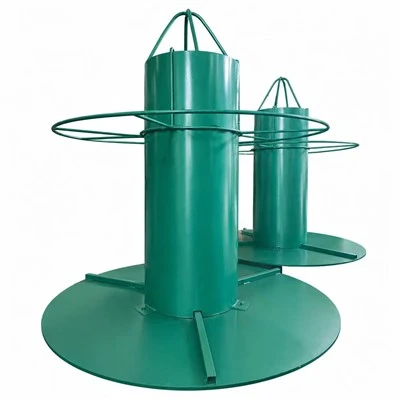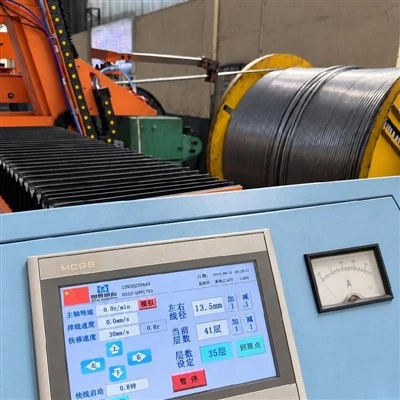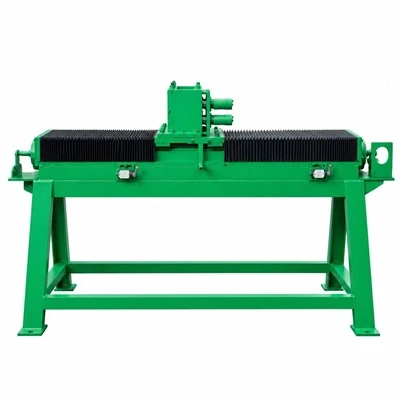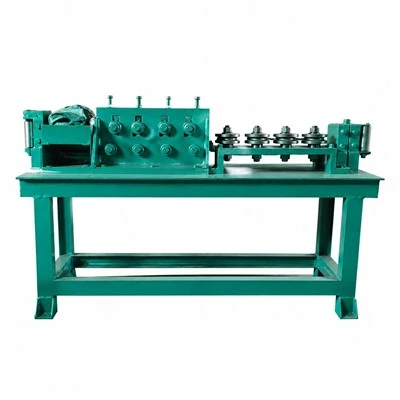
Baoding Sitai Induction Heating Equipment Manufacturing Co., Ltd. is one of the leading manufacturers and suppliers of automatic wire winding machine in China. We are committed to providing high quality customized products with competitive price. Welcome to contact us for quotation.
Continuous Wire Collection Solution for Automated Cored Wire Manufacturing
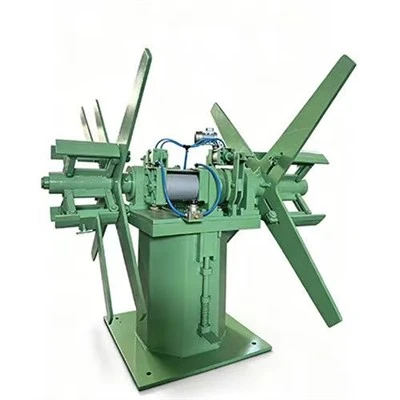
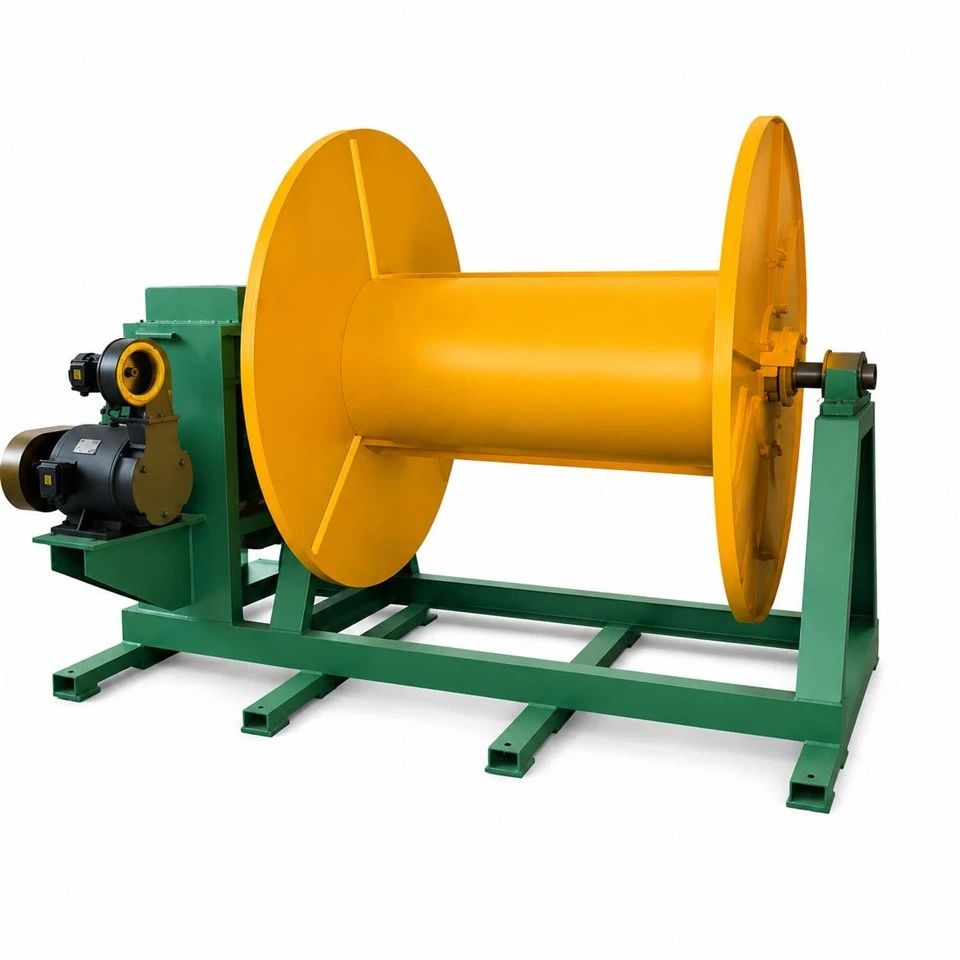
Automatic Wire Winding Machine collects finished wire directly from the running line and builds it into a controlled package for later handling.
The machine adopts an automatic winding structure to continuously collect finished wire while maintaining stable tension and orderly arrangement. It is suitable for high-efficiency production environments requiring continuous operation and consistent coil quality.
Main Features
Continuous Online Wire Take-up
In normal operation, the Automatic Wire Winding Machine receives the wire at line speed while take-up torque, package growth and traverse motion are coordinated to avoid loose or unstable winding.
01
Stable Tension Control
The take-up system maintains smooth wire winding tension during operation, helping prevent wire loosening, deformation, or irregular coil formation.
02
Uniform Coil Arrangement
Combined with an automatic traversing system, the machine ensures neat and compact wire winding, improving the appearance and handling convenience of finished wire coils.
03
Adjustable Take-up Parameters
The winding speed, coil size, and operating parameters can be adjusted according to different wire diameters, production speeds, and customer requirements.
04
Reliable Industrial Structure
The machine is built with a strong mechanical structure and durable components, ensuring stable operation for long-term continuous production.
05
Applications
The Online Wire Take-up Machine is mainly used for:
- Seamless cored wire production lines
- Welded cored wire production lines
- Metal powder filled wire manufacturing systems
- Automatic wire winding and collection systems
Technical Advantages
- Continuous automatic wire collection
- Reduces manual handling and production interruptions
- Improves finished coil consistency
- Suitable for high-efficiency production lines
- Easy integration with complete cored wire manufacturing systems
Customized Cored Wire Production Solutions
SITAI provides complete solutions for cored wire production lines, including strip pay-off units, powder filling systems, welding equipment, sizing machines, straightening systems, wire traversing systems, and online take-up equipment.
According to different wire specifications, production capacity, coil requirements, and factory conditions, SITAI can provide customized designs to achieve reliable and efficient automated production.
SITAI - Professional Manufacturer of Cored Wire Production Equipment and Industrial Automation Systems
Frequently Asked Questions
Q: How should an online take-up machine respond when the upstream cored wire line changes speed?
A: The take-up drive should follow the production line without creating a pull that disturbs sizing or a slack loop that can tangle. During acceleration, the control system must increase take-up speed smoothly; during deceleration, it must reduce torque before excess wire accumulates. The final tuning is made with the real wire because coil diameter, wire stiffness and upstream buffer behavior all influence the required response.
Q: What is the difference between tension control and simply matching motor speed?
A: Motor speed alone does not define the force applied to the wire. As the coil builds, its effective winding diameter changes, so the same rotational speed corresponds to a different surface speed. A proper take-up strategy accounts for coil growth and uses the selected feedback or torque method to keep the wire path controlled. This is especially important when the line runs continuously over a wide speed range.
Q: Where should slack be allowed in an online cored wire take-up system?
A: Any intentional accumulation should be created in a controlled buffer or dancer zone, not as an uncontrolled loop on the floor. The location and amount of slack depend on how the coiler changes speed and whether coil changeover is performed while the upstream line is moving. The wire path should keep bends gentle enough for the finished product and prevent the loop from contacting guards or adjacent equipment.
Q: How is a take-up machine tuned for a newly qualified wire size?
A: Begin with the finished wire diameter, stiffness, target coil dimensions and the line-speed range. Set the winding surface speed and tension response conservatively, then observe the wire between the last upstream guide and the coiler. Adjust the control so the path remains stable at low, normal and transition speeds. Coiling quality should be checked after a complete layer has formed, not only during the first few turns.
Q: What causes an online take-up machine to pull the wire off the line center?
A: Misaligned entry guides, excessive lateral force from the traverse, a coiler axis that is not square to the line or overly high winding tension can all shift the product. Check the mechanical centerline before changing drive parameters. If the wire moves sideways only near traverse reversal, the traversing mechanism and guide geometry should be investigated separately from the take-up torque.
Q: Can coil changeover be completed without stopping the production line?
A: That depends on the take-up architecture and on whether an upstream buffer or dual-station arrangement provides enough time for the transfer. A single coiling station does not by itself guarantee continuous changeover. The project should define the required change procedure, finished coil weight and acceptable buffer time before the mechanical layout and control sequence are selected.
Q: What data should operators record when take-up instability appears?
A: Note the current coil diameter or approximate fill level, line speed, whether the event occurs during acceleration or steady running, traverse position, tension or drive command and the exact location of any slack. A problem that appears only on a large coil may be related to changing winding diameter, while a problem at every traverse reversal points to a different mechanism. This information makes troubleshooting far more targeted.
Q: How should an online take-up machine be tested during factory or site acceptance?
A: Use representative finished wire and run through low speed, normal speed, acceleration, deceleration and a controlled stop. Observe the wire path, coil build and drive response over more than one layer. If a changeover procedure is part of the supply, test that sequence separately. Acceptance criteria should focus on stable line interaction and product handling rather than motor operation with an empty reel.
Q: Why does take-up behavior change as the coil becomes larger?
A: The winding radius increases continuously, changing the relationship between motor rotation, surface speed and torque. A control scheme that is acceptable on an empty mandrel can become too aggressive or too weak near the final coil diameter. Commissioning should therefore observe the full build range and verify that compensation for coil growth remains stable rather than tuning only the first layer.
Q: How should an online take-up fault be isolated from an upstream line-speed problem?
A: Compare the main-line speed reference with the take-up command and the physical wire path. If both drives change together but slack still appears, inspect winding-diameter compensation and mechanical traction. If the take-up command is steady while the upstream speed oscillates, the source may lie elsewhere. Time-synchronized trend data is much more useful than judging which motor sounds faster.
Hot Tags: automatic wire winding machine, China automatic wire winding machine manufacturers, suppliers, factory