

Baoding Sitai Induction Heating Equipment Manufacturing Co., Ltd. is one of the leading manufacturers and suppliers of steel coil uncoiler in China. We are committed to providing high quality customized products with competitive price. Welcome to contact us for quotation.
Reliable Strip Feeding Solution for Continuous Cored Wire Manufacturing
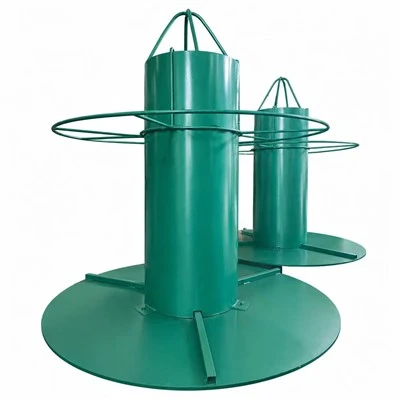
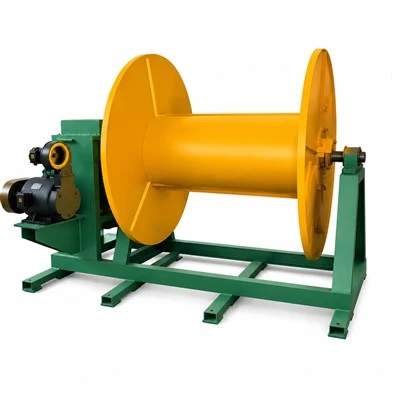
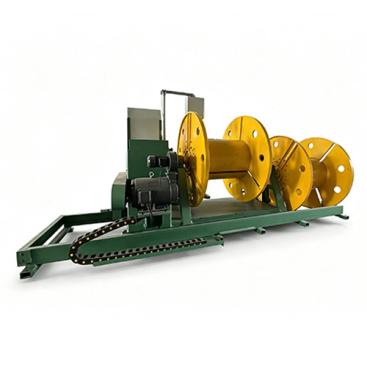
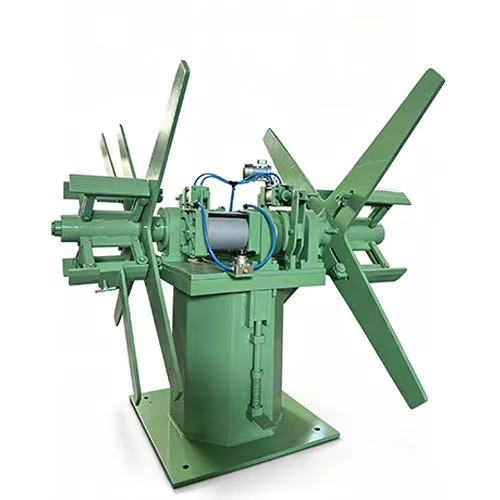
Steel Coil Uncoiler feeds steel strip from the coil into the upstream buffer or forming section. Its dual-position arrangement allows the standby coil to be prepared while the active side is running.
Pneumatic expansion and clamping secure the coil on the support during loading and unwinding. Correct centering, suitable unwinding resistance and alignment with the downstream strip path help provide stable feed conditions for the forming section.
Main Features
Dual Pay-off Design (One Working + One Standby)
On the Steel Coil Uncoiler, the standby position shortens coil-change preparation time; uninterrupted line operation still depends on strip joining and buffer capacity elsewhere in the process.
01
Pneumatic Expansion & Clamping System
The pneumatic mechanism provides radial support and secure coil holding. Strip tracking still depends on correct coil centering, exit guidance and alignment with the downstream equipment.
02
Stable Strip Pay-off
The vertical layout supports controlled strip unwinding and a repeatable entry path toward the accumulator or forming section. It is not described as a closed-loop tension-control system unless dedicated tension sensing and control hardware are included.
03
Compact Structure & Easy Operation
The machine features a compact design with a rigid frame structure, making it suitable for integration into automatic cored wire production lines with convenient operation and maintenance.
04
Applications
The Vertical Pneumatic Strip Pay-off Unit is mainly used as the strip feeding equipment for:
- Seamless welded cored wire production lines
- Mechanically locked cored wire production lines
- Metal powder injection wire manufacturing systems
- Continuous strip forming and wire filling equipment
Technical Advantages
- Pneumatic coil expansion for reliable strip fixing
- Dual-position preparation for quicker coil changes
- Stable strip feeding performance
- Suitable for automatic production lines
- Designed for long-term industrial operation
Customized Solutions Available
According to different cored wire specifications, strip materials, coil dimensions, and production requirements, SITAI can provide customized pay-off solutions to achieve better compatibility with complete cored wire production systems.
SITAI - Professional Manufacturer of Cored Wire Production Equipment and Industrial Automation Solutions
Frequently Asked Questions
Q: What is the advantage of a dual-position strip pay-off arrangement?
A: One position can feed the production line while the second is prepared with the next coil. This reduces the time required for loading and threading when the active coil is exhausted. Whether the line can remain fully continuous still depends on a joining method and sufficient strip accumulation; the second payoff station alone reduces preparation time but does not create a material buffer.
Q: How does pneumatic expansion hold the steel strip coil?
A: The expanding mechanism applies radial support to the coil bore so the coil is centered and retained during unwinding. The available expansion range must match the actual coil inner diameter, and air pressure should be set for secure holding without damaging the coil. Before rotation, the operator should confirm full engagement rather than using the pneumatic system as a substitute for correct coil positioning.
Q: What should be checked if strip unwinding becomes unstable?
A: Check coil centering, strip path, guide alignment, bearing condition and the amount of unwinding resistance or drive torque provided by the selected configuration. Excessive restraint can make rotation jerky or pull thin strip sideways, while insufficient restraint can allow overrun and loose loops. The correct setting should be established with a representative coil and reviewed as coil diameter changes during the run.
Q: How should strip direction be confirmed before loading a coil?
A: Identify which surface and edge orientation must enter the forming rolls, then load the coil so the strip unwinds along the intended path without an unnecessary twist. Marking the standard payoff direction at the machine helps prevent setup errors. This is particularly useful on dual stations where the operator may prepare the standby coil while the other side is still running.
Q: Can coils with different bore sizes use the same pneumatic payoff unit?
A: Only if the expansion mechanism and support components cover those bore dimensions safely. Adapters or interchangeable segments may be required for a wider range. The maximum outside diameter and coil weight must also be checked because bore compatibility alone does not confirm that the stand and bearings are suitable for the complete coil.
Q: What should be inspected during routine maintenance of the pneumatic system?
A: Check air hoses, fittings, seals, pressure regulation and the movement of the expanding components. Loss of pressure can reduce coil retention, while contamination or corrosion can prevent smooth release during changeover. Mechanical bearings and any unwinding-resistance or drive components fitted to the machine should be inspected separately because a sound pneumatic circuit does not guarantee stable unwinding.
Q: Which information is required to configure the payoff for a cored wire line?
A: Provide strip width and thickness, coil bore, maximum outside diameter, maximum coil weight, payoff direction, normal line speed and the method used to join successive coils. Also indicate the centerline and available loading access. These details determine the expansion range, support capacity and how the unit interfaces with the downstream accumulator.
Q: What should be done if a steel strip coil telescopes on the payoff stand?
A: Stop the changeover and stabilize the coil before attempting to run it. Telescoping can shift the strip path sideways and may make the coil unsafe to rotate. Check the incoming coil condition, centering, clamping and any side restraint. The payoff unit is designed for controlled unwinding; it should not be used to pull a badly displaced coil back into shape at production speed.
Q: How is the standby coil prepared without disturbing the running side?
A: The operator can load, center and secure the next coil on the inactive position, confirm strip direction and prepare the leading end for the joining procedure. The standby station should remain mechanically isolated from the active strip path until changeover is required. Clear operating rules prevent an adjustment on the prepared side from affecting the unwinding setting of the coil currently feeding the line.
Q: How should a heavy steel strip coil be loaded onto the vertical payoff unit?
A: Use the handling method defined for the coil weight and plant layout, align the bore with the expanding support and keep personnel clear of the suspended load. The coil should be fully supported before the lifting device is released. Crane or forklift access, loading direction and operator space should be considered during layout design rather than left to the installer after delivery.
Q: What does a damaged strip edge cause downstream of the payoff?
A: An edge dent or burr can disturb tracking through the accumulator and later affect forming or seam position. If damage is discovered on the outside turns, identify and remove the affected length according to the quality procedure rather than increasing side-guide force. Payoff rollers and nearby structures should also be checked for contact points that could be creating repeated edge damage.
Q: How can the payoff be prepared for a different coil width?
A: Re-center the coil and adjust guides so the strip leaves on the production-line centerline. Verify that side clearances support the new width without pinching the edges and confirm any unwinding-resistance or drive setting required by the changed coil inertia. The downstream accumulator entry should be checked at the same time because an apparently centered coil can still feed at an angle if the exit guide was not repositioned.
Q: How is the end of one strip coil prepared for joining to the next coil?
A: Trim or prepare the strip end according to the selected joining method, keep the edges aligned and avoid introducing a local twist. The standby payoff should present the leading end at a convenient working position so the operator can complete the joint quickly. After joining, inspect the local thickness and profile because that section must pass through the accumulator and guides before reaching the forming mill.
Q: Why should coil identification remain associated with each payoff position?
A: When two coils are prepared at the same time, clear identification prevents the wrong strip grade or thickness from being fed after changeover. Record coil number, material and dimensions for the active and standby positions and update the status when the joint is made. This simple traceability step is especially useful when several cored-wire products use visually similar steel strip.
Hot Tags: steel coil uncoiler, China steel coil uncoiler manufacturers, suppliers, factory