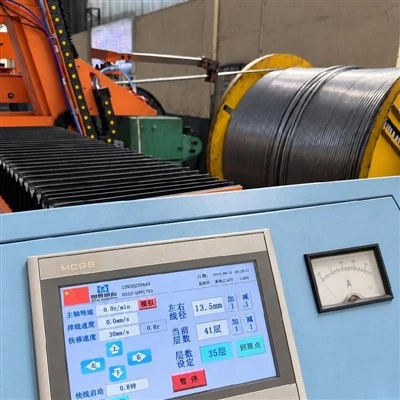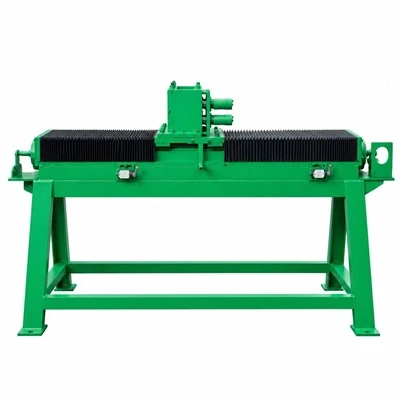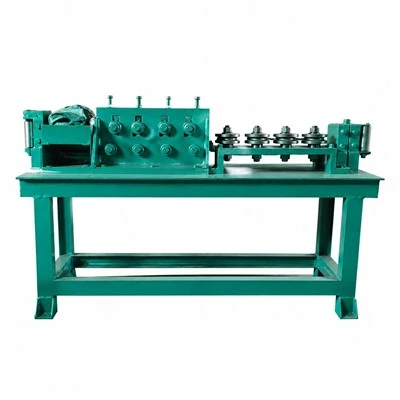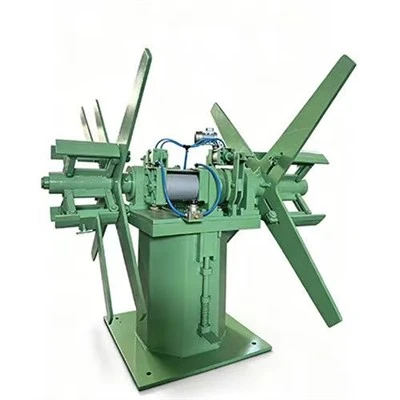

Baoding Sitai Induction Heating Equipment Manufacturing Co., Ltd. is one of the leading manufacturers and suppliers of calcium wire decoiler in China. We are committed to providing high quality customized products with competitive price. Welcome to contact us for quotation.
Stable Calcium Wire Pay-off Solution for Continuous Wire Feeding
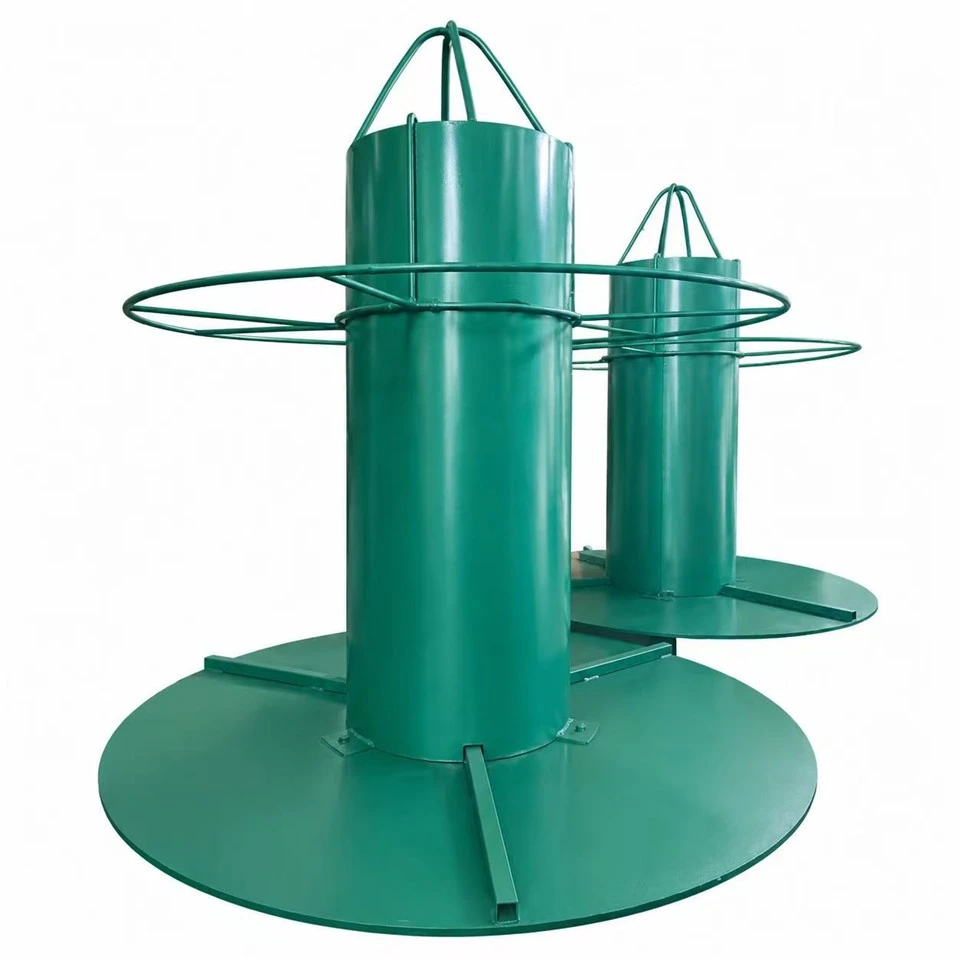
The Vertical Calcium Wire Decoiler is specially designed for calcium wire feeding applications, providing a stable and continuous unwinding solution for calcium wire processing systems.
The vertical structure helps maintain smooth wire release and reliable feeding performance, reducing wire twisting, tangling, and feeding interruption during operation. It is suitable for integration into automated calcium wire injection and cored wire production systems requiring consistent material supply.
Main Features
Vertical Wire Pay-off Design
The vertical decoiler structure allows calcium wire coils to be installed and unwound smoothly, providing stable wire feeding conditions and efficient use of production space.
01
Stable Wire Feeding Performance
The optimized guiding structure helps maintain continuous and uniform wire delivery, reducing irregular feeding caused by coil deformation or wire entanglement.
02
Reliable Coil Positioning System
The wire coil is securely positioned during operation, ensuring stable unwinding and improving the reliability of continuous production.
03
Compact Structure & Easy Operation
The equipment features a simple and practical mechanical design, allowing convenient installation, adjustment, and maintenance in industrial environments.
04
Suitable for Automatic Production Systems
The decoiler can be integrated with calcium wire feeding equipment and related production lines to achieve efficient and stable automatic operation.
05
Applications
The Vertical Calcium Wire Decoiler is mainly used for:
- Calcium wire injection systems
- Cored calcium wire production lines
- Metallurgical wire feeding equipment
- Continuous metal wire processing systems
Technical Advantages
- Stable vertical wire unwinding
- Reduces wire twisting and feeding problems
- Compact structure with easy installation
- Suitable for continuous industrial operation
- Compatible with customized wire feeding systems
Customized Wire Feeding Solutions
SITAI provides professional solutions for calcium wire and cored wire production systems, including wire pay-off units, wire feeding equipment, strip pay-off systems, powder filling systems, welding equipment, and finished wire collection systems.
According to different wire diameters, coil dimensions, production speeds, and customer requirements, SITAI can provide customized equipment designs to ensure stable and efficient production.
SITAI - Professional Manufacturer of Cored Wire Production Equipment and Industrial Automation Systems
Frequently Asked Questions
Q: Why is a vertical decoiler useful for solid calcium wire?
A: Calcium wire can be sensitive to sharp bending, twisting and uncontrolled loops. A vertical payoff arrangement allows the coil to release along a defined path while keeping the core feed aligned with the downstream guide system. The objective is not simply to hold a coil; it is to reduce unnecessary torsion and prevent sudden release that could disturb the forming section where the calcium core is enclosed by the steel strip.
Q: How much back tension should be applied to the calcium wire?
A: Only enough restraint should be used to keep the payoff controlled and prevent loose loops. Excessive braking can stretch, mark or destabilize the wire, while too little restraint can allow overrun when the line decelerates. The correct setting depends on coil inertia, wire diameter, payoff diameter and production speed, so it should be established during commissioning rather than copied from steel strip decoiling.
Q: What should be checked before loading a new calcium wire coil?
A: Confirm coil orientation, inner and outer diameter, coil condition and the intended feed direction. Inspect the first turns for damage and make sure the guide path is clear. The wire should leave the coil without crossing under adjacent turns or rubbing a sharp edge. A controlled threading procedure reduces startup interruptions and avoids introducing bends that later affect core centering in the cored wire.
Q: How can coil overrun be prevented during an emergency stop?
A: The payoff should have a braking or restraint method matched to the rotating mass of the loaded coil. Its stopping behavior must be coordinated with the main line so the decoiler does not continue releasing wire after the downstream section stops. During acceptance, emergency stopping should be tested with a representative coil and the resulting slack loop observed before the final brake setting is approved.
Q: Why does calcium wire sometimes wander before entering the forming section?
A: Possible causes include an off-center payoff, an incorrect guide height, a damaged coil, excessive slack or a guide path that bends the wire sideways. Check the centerline from the decoiler through the final guide rather than correcting only the last roller. A stable entry path helps keep the solid calcium core centered while the strip closes around it.
Q: Can the same decoiler handle different calcium wire diameters?
A: A diameter range may be accommodated when the coil dimensions, guide components and restraint system remain suitable. The smallest bending radius and the way the wire sits in the guides should be reviewed for each product. If coil size or wire stiffness changes substantially, guide inserts, brake setting or support geometry may need modification even if the frame itself is unchanged.
Q: What information is needed to select a calcium wire payoff unit?
A: Provide the solid wire diameter, coil inner and outer diameter, maximum coil weight, normal line speed, feed direction and available floor height. Photographs of the supplied coils are also useful because winding pattern and packaging influence the loading method. These details help define the support, guide and braking arrangement for stable continuous feed.
Q: How should exposed solid calcium wire be handled before it enters the sheath-forming section?
A: Keep the feed path clean and dry and minimize unnecessary exposure or handling. Damaged or contaminated surface can affect reliable guiding and the condition of the finished core. The exact storage and handling procedure should follow the calcium-wire supplier's requirements. The decoiler should support controlled transfer from the coil into the enclosed production path rather than allowing the wire to drag on the floor.
Q: What does an irregularly wound calcium coil change at the payoff station?
A: Crossed or tightly trapped turns can release suddenly, creating a short tension spike or a loop. Operators should inspect coil winding before threading and reduce speed if the package is visibly irregular. The payoff mechanism can control normal rotational inertia, but it cannot completely correct a coil whose turns are mechanically locked under one another.
Q: Why should the first few turns of a calcium wire coil be inspected closely?
A: Transport and packaging can deform the exposed outer turns more easily than the protected inner layers. A kink at the beginning of the coil can create a sudden guide load or prevent accurate centering when production starts. Straighten or remove damaged material according to the handling procedure before threading it through the payoff guides rather than relying on downstream rollers to force the defect through.
Q: How should the decoiler be positioned relative to the calcium-core entry guide?
A: Keep the payoff center and guide path aligned so the solid core reaches the forming section with minimal sideways bending. Long unsupported spans can allow vibration, while a sharp offset can introduce permanent curvature. During layout, consider coil loading access as well as the running centerline so the operator does not have to compromise wire guidance simply to make room for handling equipment.
Hot Tags: calcium wire decoiler, China calcium wire decoiler manufacturers, suppliers, factory