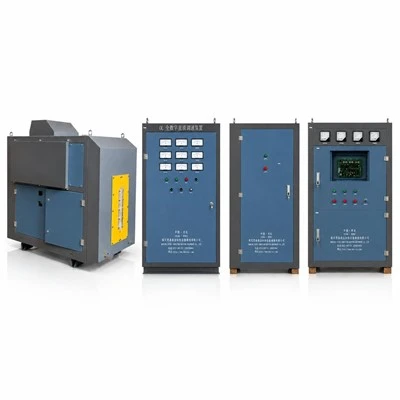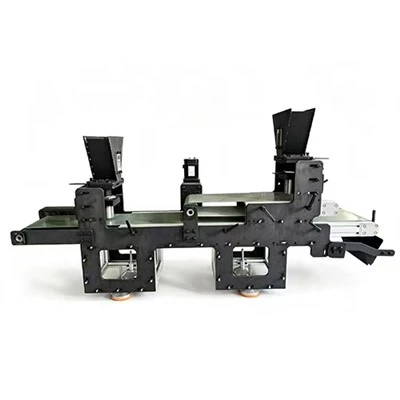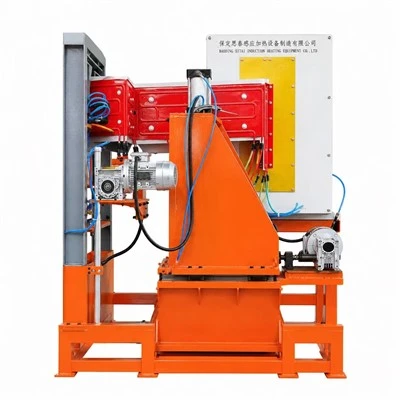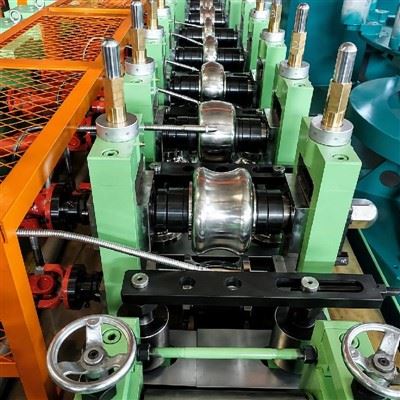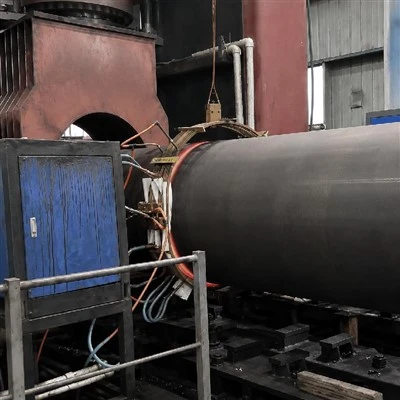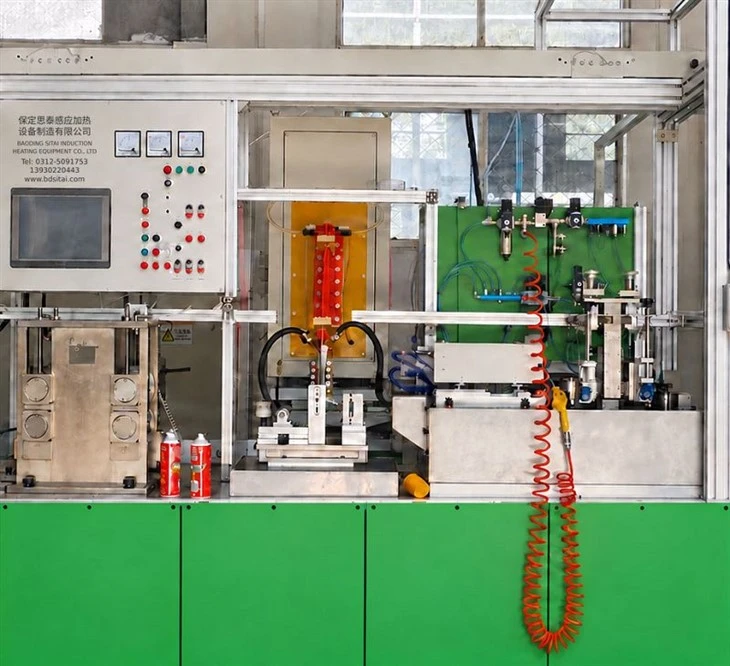
Baoding Sitai Induction Heating Equipment Manufacturing Co., Ltd. is one of the leading manufacturers and suppliers of aluminum tube production line in China. We are committed to providing high quality customized products with competitive price. Welcome to contact us for quotation.
The Aluminum Tube Production Line is an advanced, automated manufacturing system designed for the high-speed processing and continuous production of precision aluminum tubes, pipes, and profiles. By integrating automatic uncoiling, precision cold roll forming, High-Frequency (HF) induction welding or continuous extrusion, online weld seam leveling/sizing, and high-speed flying cutoff mechanisms, this line converts aluminum alloy strips or billets into ultra-precise, high-strength aluminum tubing. It is specifically engineered to meet strict international standards for automotive HVAC systems, heat exchangers, industrial refrigeration, structural framing, and aerospace fluid lines.
Materials & Manufacturing Process
High-Rigidity Heavy-Duty Frame
The base frame and stand housings are constructed from high-strength structural steel, subjected to stress-relief annealing and precision CNC gantry milling to guarantee structural stability, eliminate internal stress, and prevent vibration during high-speed operation.
01
Specialized Alloy Rollers
Forming, sizing, and welding rolls are machined from premium Cr12MoV (D2), SKD11 tool steel, or high-density tungsten carbide. All rollers undergo vacuum heat treatment and precision CNC profile grinding (achieving surface hardness of HRC 60–63) to ensure extreme wear resistance and prevent galling, scratching, or marking on delicate aluminum surfaces.
02
Non-Contact HF Induction Welding & Shielding Unit
Incorporates high-frequency solid-state induction welding paired with an inert gas (Argon/Nitrogen) purging system to protect the aluminum weld seam from oxidation during melting, ensuring a clean, pore-free, and high-strength weld joint.
03
Precision Spray Cooling & Sizing System
Features a multi-stage recirculating spray cooling tank constructed entirely from 304 stainless steel, equipped with precision temperature control and multi-stand sizing rollers to achieve exact outer diameter (OD) and wall thickness tolerances.
04
Core Functional Features
|
Function Module |
Description & Technical Advantages |
|
High-Precision Roll Forming & Uncoiling |
Features a multi-pass forming stand layout with precision guidance, ensuring smooth, gradual bending of aluminum alloy strips without stretching, thinning, or damaging surface finishes. |
|
Solid-State High-Frequency (HF) Welding |
Utilizes digital high-frequency welding technology (300kHz - 800kHz) optimized for high thermal conductivity metals, delivering concentrated heat input, minimal heat-affected zone (HAZ), and ultra-fast line speeds. |
|
Online Weld Seam Planing & Inner Bead Control |
Equipped with precision internal and external weld seam scrapers (bead trimmers) to achieve a smooth, flush surface on both the inside and outside of the tube wall, critical for downstream flaring and bending. |
|
Servo Flying Saw / Rotary Cutoff |
Features a high-precision CNC servo flying saw or chip-free rotary cutter synchronized with line speed, ensuring burr-free, clean tube ends without deformation or contamination. |
|
Automated Eddy Current Testing (ECT) |
Integrates online non-destructive testing (NDT) to scan 100% of the weld seam in real time, automatically marking or flagging defective sections to ensure zero-defect quality export. |
Key Performance Advantages
High Speed & Superior Productivity
Reaches line speeds up to 60m/min - 150m/min (depending on tube diameter and wall thickness), drastically increasing daily tonnage output compared to traditional extrusion methods.
01
Exceptional Dimensional Accuracy
Precision sizing stands and closed-loop CNC control maintain tight tolerances on outer diameter (±0.03mm - ±0.05mm) and concentricity, making the tubing ideal for high-precision heat exchanger assembly.
02
Energy-Efficient & Low Operational Cost
Solid-state HF power supplies achieve electrical conversion efficiencies exceeding 88%, reducing overall power consumption by 25%–35% compared to older vacuum-tube welders or conventional thermal processing lines.
03
High Surface Quality
Non-marking roller profiles and controlled cooling prevent scratches, oxidation, and indentation, preserving the bright, clean metallic finish required for export-grade aluminum products.
04
Smart PLC Control & Easy Changeover
Equipped with an intuitive 15-inch HMI touchscreen storing hundreds of tube specifications. Quick-change roller stand designs minimize changeover downtime when switching between tube sizes.
05
Typical Application Fields
Automotive HVAC & Radiator Tubing
High-frequency welded aluminum parallel-flow micro-channel tubes, radiator headers, condenser tubes, and heater core lines.
HVAC & Industrial Refrigeration
Aluminum evaporator coils, interconnecting refrigerant lines, and air conditioning heat exchanger tubing.
Furniture & Construction Profiles
Lightweight aluminum structural framing, tent poles, outdoor furniture tubing, and ladder rails.
Electrical & Aerospace Applications
Cable shielding aluminum conduits, busbar protection tubes, and lightweight fluid delivery pipes.
Frequently Asked Questions
Q: What makes a high-speed aluminum tube line sensitive to setup errors?
A: Aluminum Tube Production Line: at high speed, a small error in roll alignment, strip tracking or welding position repeats over a large length of product before an operator can react. Thin aluminum strip also has limited tolerance for scratching and local overheating. For that reason, setup references, automatic monitoring and gradual acceleration are important. The maximum line speed should be reached only after the product is stable at lower speed.
Q: How should tooling be selected for thin-wall aluminum tube?
A: Roll profile, surface finish, material and support rigidity must suit the specific alloy, wall thickness and tube geometry. Tooling should form the strip progressively without marking or edge damage that later affects the weld. The smallest wall products may require tighter control of roll gaps and cleaner guide surfaces. Tooling selection should therefore begin with the finished tube drawing and strip condition.
Q: Why is weld-zone shielding or cleanliness especially important for aluminum?
A: The oxide film on aluminum is stable and has different melting behavior from the base metal. A repeatable process requires controlled edge condition and protection appropriate to the selected welding method. Shielding gas, cleaning and the physical welding environment are engineered as part of the process; they cannot compensate for gross edge mismatch created by the forming mill.
Q: How are cooling and sizing coordinated after welding?
A: The tube must reach the sizing section in a condition that allows dimensional correction without damaging a hot or unstable seam. Cooling rate and distance therefore influence the downstream stand setup. Excessive cooling in the wrong location can also affect surface condition. The line layout should define the thermal path from weld point through sizing rather than treating the spray tank as an isolated accessory.
Q: Can the same aluminum tube line produce both straight cut lengths and coiled tube?
A: It can be designed for different finishing routes when the product size, bendability and handling equipment are compatible. Straight product typically uses flying cutoff and runout handling, while coiled product needs tension-controlled take-up and a suitable minimum coil diameter. The desired end formats should be specified during design because switching the final handling section later can require significant layout changes.
Q: What should be monitored when pushing the line toward the upper speed range?
A: Watch strip tracking, forming load, weld stability, cooling condition, sizing temperature, tube dimensions and cutoff or take-up behavior together. A speed increase can expose a bottleneck outside the welding power system. Qualified speed should be defined for a specific alloy and tube size, not as one universal number for every product listed in the catalogue.
Q: How can changeover time be reduced without sacrificing tube accuracy?
A: Use repeatable roll-stand references, organized tooling sets, stored process recipes and a defined first-piece inspection sequence. Quick-change features are helpful only when the new setup is verified before full-speed running. Measuring the first stable tube and correcting the earliest stand that creates a deviation is usually faster than chasing the final dimension with the last sizing rolls.
Hot Tags: aluminum tube production line, China aluminum tube production line manufacturers, suppliers, factory